Created using AI; curated by Glow Protocol. AI tools support research, product comparisons and writing. Our recommendations are editorial selections. How we work.
Quick answer
Read a La Mer review for context: exact product, skin concerns, expectations, duration of use and possible incentives. One person’s experience cannot establish comparative efficacy. This guide helps you interpret customer stories; it does not present a verified review dataset or a new product trial.
Updated : Opening answer clarified; jump navigation added. Check current price, size and seller on the retailer listing.

Affiliate Disclosure: This post contains Amazon affiliate links. If you purchase through our links, we earn a small commission at no extra cost to you. We only recommend products we have researched and believe in.
How to Read La Mer Customer Reviews
This guide is about interpreting customer reviews. For our assessment of the cream itself, see the Crème de la Mer product review.
La Mer reviews can help you explore how people describe texture, comfort and the experience of a luxury moisturiser. They cannot by themselves establish clinical efficacy or predict whether a formula will suit your skin.
When comparing prices, check the exact product, size, retailer and date. A cost-per-millilitre comparison can clarify the financial difference, but it cannot measure how well a moisturiser will work for you.
This is an AI-supported editorial guide to reading La Mer reviews and comparing curated alternatives. Glow Protocol does not have a verified 2,847-review dataset, sentiment analysis or documented customer-outcome comparison behind this article.
What Star Ratings Can and Cannot Tell You
A star rating combines different people’s expectations and experiences. Before interpreting it, check which product and version the reviews concern, the dates and whether reviews are incentivised. No aggregate rating or distribution is reported in this guide.
Ratings from different products, retailers or time periods are not a controlled comparison. A small difference in stars does not establish that one moisturiser is more effective than another.
Separate comments about comfort, texture, price and packaging from claims of a biological effect. An account of repurchasing a product may describe satisfaction without establishing why the skin changed.

Three Profiles to Consider When Reading Reviews
The three profiles below are editorial reading lenses, not clusters identified in a verified review dataset. They can help you identify what a reviewer values and whether that context is relevant to your own decision.
Profile 1: Long-Term Users
For a long-term-use account, look for the exact formula, routine changes and what the person means by improvement. Duration of use is useful context, but it does not establish the cause of a result.
A repeat purchaser’s satisfaction is a personal experience. It does not rule out expectation effects or changes in the rest of the routine, and it should not be treated as a controlled efficacy finding.
The current manufacturer ingredient list includes algae extract, mineral oil, petrolatum and glycerin, alongside other ingredients. It also includes fragrance. The formula should be assessed as a whole, rather than attributing every reported result to a proprietary ingredient. See the manufacturer source below.
Profile 2: Sensitive, Reactive Skin
For a reviewer who describes sensitive or reactive skin, check what that description means. Similar labels do not guarantee similar triggers or tolerance. A personal testimonial cannot establish that La Mer is suitable for everyone with rosacea or allergies.
Editorial note: an account saying a product was the only one tolerated would remain an anecdote. It would not establish a dermatologist endorsement or justify a recommendation for other readers with reactive skin.
The manufacturer’s ingredient list includes fragrance and multiple plant-derived ingredients. It is not accurate to describe the formula as inert or free of potential triggers. Check the label on your package; ingredient lists may change.
A report of comfort is not proof that a product treats chronic reactivity. The American Academy of Dermatology notes that skincare products can cause reactions and advises professional help when the cause is difficult to identify. Its guidance is linked below.
Profile 3: The Ritualised Luxury Consumer
Some readers may value packaging, texture and the ritual of skincare. Treat these as preference-based reasons for a purchase, separate from evidence of a treatment effect. This guide does not measure how often reviewers mention them.
If you enjoy a luxury product and it fits your budget, that preference can be part of your decision. Enjoyment does not establish superior efficacy or a medical benefit.
How to Read Critical Reviews
Critical reviews can highlight an expectation mismatch, an unwanted texture or an individual reaction. Read the details instead of treating a low score as a diagnosis of the formula.
The Expectation Gap
When a review says a product was not worth the price, ask what outcome the reviewer expected and how they assessed it. This guide does not report a percentage of negative reviews or verified testimonial quotations.
A moisturiser comparison should separate hydration and comfort from claims about lifting, pigmentation or structural change. Look for evidence relevant to the exact claim and formula. Customer reviews alone cannot establish a clinically meaningful advantage over CeraVe.
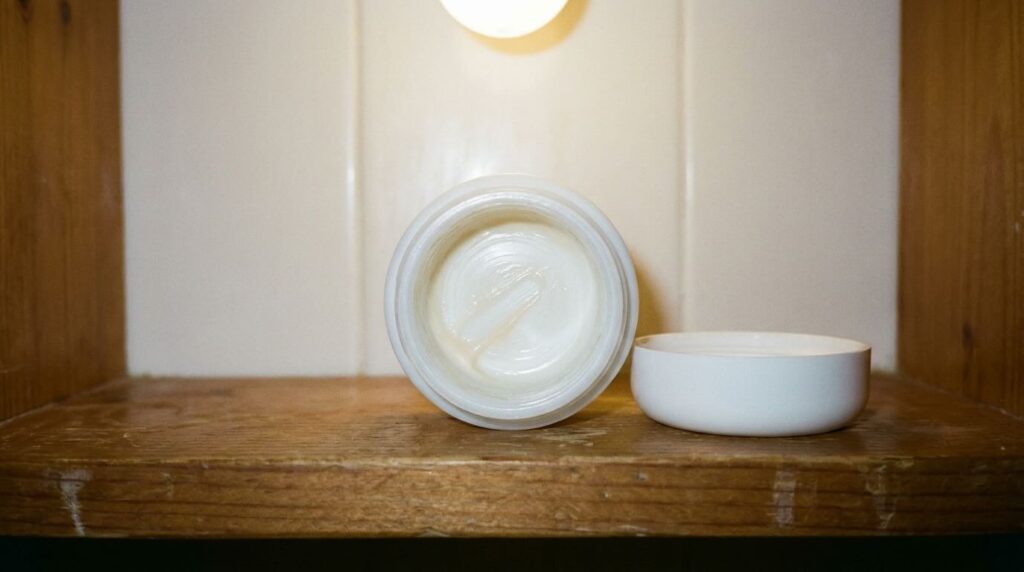
The Product: What’s Actually in La Mer
Luxury
La Mer Crème de la Mer
The manufacturer lists algae extract, mineral oil, petrolatum and glycerin, among other ingredients, including fragrance. Check the current package label and consider the complete formula alongside price and texture preferences.
La Mer and CeraVe are different formulas. The price gap does not establish their relative results. Accounts of decades of compromised barriers also do not demonstrate that one cream is clinically superior to another.
Questions to Ask Before Buying
The following considerations can guide a purchase decision. They are editorial questions, not treatment indications established by a review dataset.
Scenario 1: Persistent Reactivity
Repeated reactions are a reason to seek help identifying the cause, rather than assuming a higher-priced moisturiser is the next solution. The American Academy of Dermatology explains that a dermatologist may help investigate the ingredient responsible.
Scenario 2: Care During Treatment
If you are receiving treatment or recovering from a procedure, follow the treating clinician’s aftercare directions. This guide does not establish that La Mer provides rapid recovery or a two-to-three-month barrier-repair course.
Scenario 3: Choosing for Dryness and Comfort
Age does not establish that a particular moisturiser is necessary. Compare the current formula, comfort, directions and cost in relation to your needs. A claimed age pattern in an undocumented review sample should not guide the choice.
The Honest Alternatives to La Mer
The alternatives below are curated product examples across price ranges. Their inclusion is not based on a verified dataset of customers switching products without losing results.
Budget
CeraVe Moisturising Cream
A lower-priced moisturiser option to compare by current ingredients, size and directions. This guide does not establish clinical equivalence to La Mer or a percentage of users for whom it is sufficient.
Mid-range
La Roche-Posay Toleriane Ultra Rich
A mid-range moisturiser option. Check the exact current Toleriane formula and directions. No verified review dataset establishes that it provides a fixed percentage of La Mer’s benefits.
Budget
Weleda Skin Food Rich
A richer-format alternative to compare using its current ingredient list and directions. Plant-based ingredients do not guarantee low irritation, and equivalent barrier-repair performance is not established here.
Other Premium Moisturisers to Compare
The premium options below offer other formulas and formats to compare. They are editorial selections, not products ranked above La Mer by a verified customer dataset. Evaluate evidence for each exact product and claim.
Luxury
Augustinus Bader The Rich Cream
A premium moisturiser option. Compare the current manufacturer information, formula and price. Research on a proprietary complex should be distinguished from evidence for the exact finished product.
Luxury
Augustinus Bader The Cream
The lighter version of The Rich Cream, suitable for normal skin types. Same proprietary TFC8 formulation, lighter texture. For women concerned about occlusion but wanting luxury ingredient innovation.
Luxury
Dr. Barbara Sturm Face Cream
A higher-priced cream option to assess by its current formula, directions and product-specific evidence. This guide does not provide verified review results for redness or reactive skin.
Mid-range
Charlotte Tilbury Charlotte’s Magic Cream
Mid-luxury pricing with focus on glow and luminosity. Hyaluronic acid, glycerin, and subtle shimmer. More accessible than La Mer if you care about aesthetic glow.
The Cleansing Gel Question
A cleanser from the same brand is an optional additional purchase. This guide does not establish a percentage of customers buying both products or a higher satisfaction score for a complete La Mer routine.
Luxury
La Mer The Cleansing Gel
A cleanser listing to compare by the current ingredients, directions and price. Buying the matching brand does not establish a compounded benefit with its moisturiser.
Choose a cleanser by its role in your routine and your preferences. This review-reading guide does not provide evidence that a matching-brand routine produces better results.
What to Take From Reviews
Reviews can help you explore personal experiences, especially texture and ease of use. They do not establish that La Mer is a treatment for reactive skin after 40, eliminate expectation effects or demonstrate superiority over alternatives.
Luxury brands exist for a reason, and a luxury purchase can reflect preference as well as function. Make the decision using your budget, exact product information and relevant evidence, without assuming every reviewer’s experience will apply to you.
Compare the options that fit your budget and needs. Persistent irritation should prompt investigation of its cause, not an automatic progression from a budget cream to a luxury one. Our focus is sustainable skin health over luxury purchases.
Read La Mer reviews as individual perspectives. Check the current label and distinguish a preference for the product from evidence that it will deliver a particular result.
Related Reading
→ Is luxury skincare worth it? The price per ingredient analysis
→ How to actually repair your skin barrier after 30
Browse product comparisons by category →
Sources
Product and skin-reaction sources, checked 5 September 2026: La Mer’s current ingredient list includes fragrance and notes that formulas can change. American Academy of Dermatology guidance explains product reactions and when professional assessment may help.
Research context: these sources cover ingredients, skin biology or specific tested formulations. Results depend on the concentration, delivery method and population studied. Product selections are editorial curation; these references are not head-to-head tests of all products listed.
- Methodology: This article is an AI-supported editorial guide. It does not report a verified customer-review dataset, sentiment percentages or attributable testimonial quotations.
- Coderch L, et al. (2003). Ceramides and skin function. Am J Clin Dermatol. PubMed 12553851 Background on ceramide biology and skin function.
- Lodén M (2003). Role of topical emollients and moisturizers in the treatment of dry skin barrier disorders. Am J Clin Dermatol. PubMed 14572299
- Farage MA, et al. (2008). Intrinsic and extrinsic factors in skin ageing: a review. Int J Cosmet Sci. PubMed 18377617
- Quan T, Fisher GJ (2015). Role of Age-Associated Alterations of the Dermal Extracellular Matrix Microenvironment in Human Skin Aging: A Mini-Review. Gerontology. PubMed 25660807
Glow Protocol · glowprotocol.beauty · Science-backed skincare for women 30+
Affiliate Disclosure: This post contains affiliate links, which means we may earn a small commission if you make a purchase through these links at no extra cost to you. We only recommend products we've researched and believe offer real value. Our opinions remain our own and are not influenced by any brand or compensation.