Created using AI; curated by Glow Protocol. AI tools support research, product comparisons and writing. Our recommendations are editorial selections. How we work.
At a glance
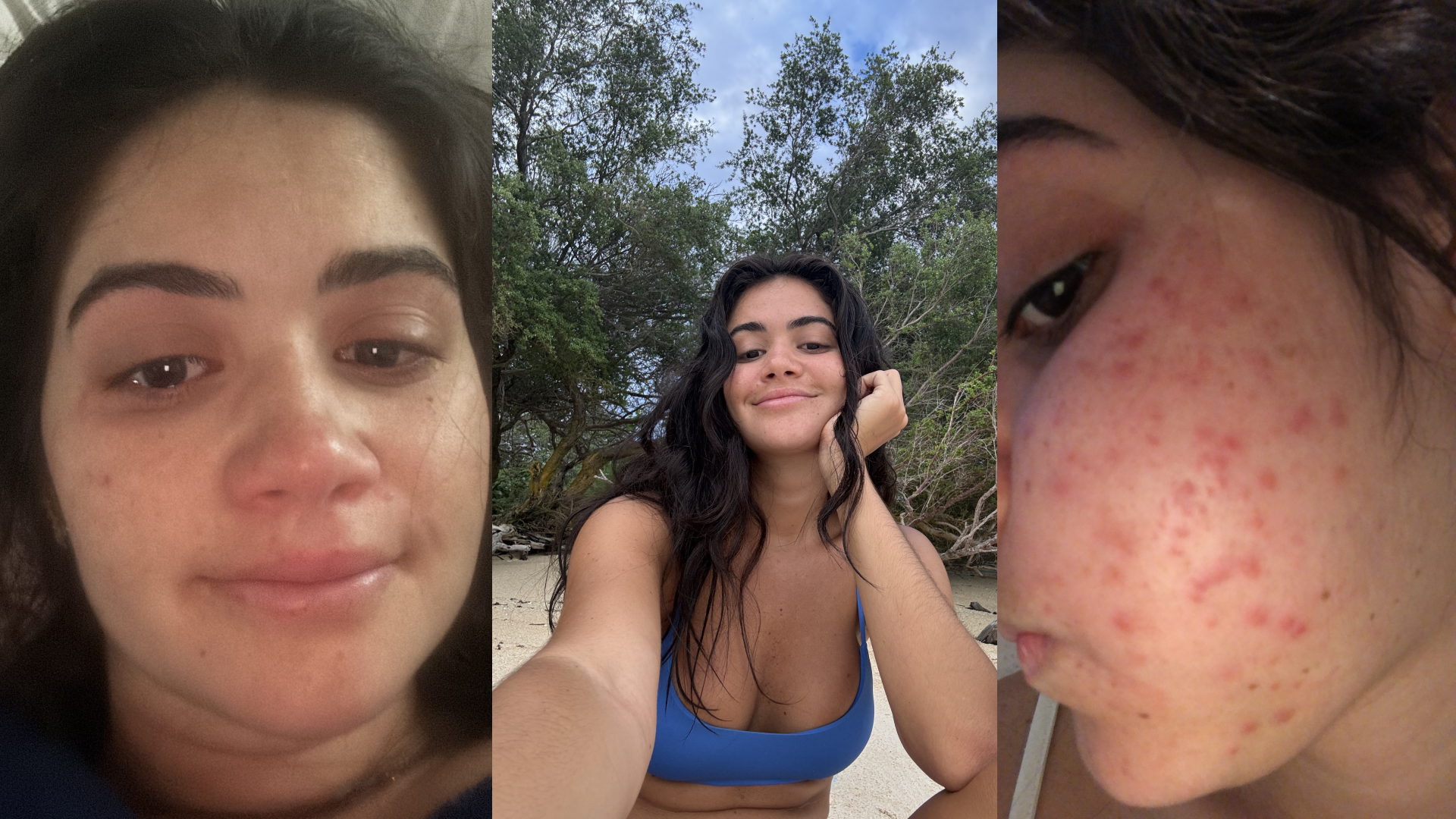
This is Carolina’s personal account of noticing changes in her skin and reconsidering her routine. It can offer perspective, but it does not establish how everyone’s skin changes at 30. Use the linked educational and habits guides for broader context and practical routine choices.
Updated : Opening answer clarified; jump navigation added. Check current price, size and seller on the retailer listing.
Some links in this post go to products we recommend elsewhere on the site. Those posts contain affiliate links. We only recommend products we have researched and believe in.
The Moment I Stopped Recognizing My Own Skin
This is Carolina’s personal story. For the educational overview, read skin changes and ingredients after 30; for everyday routines, explore our skincare habits guide.
My name is Carolina. I am Brazilian. I have lived across Asia, the Middle East, Europe, and South America. And I built Glow Protocol because I could not find what I was looking for when I needed it most. Honest, research-backed skincare information for women whose skin has changed and who have no idea why. That was me. For years.
Good skincare is not about using many products. It is about learning to listen to your skin.
Before Everything Changed: Easy Skin and Too Much Sun
I grew up close to the coast in Brazil, and like most Brazilians, I loved the sun. Like really loved it. Tanning was just part of life. Sunscreen was something I maybe wore at the beach when I remembered. Not a daily thing. Not even close.
What I did not understand then (and honestly what most people still do not understand) is that UV exposure without proper protection is the single biggest accelerator of skin barrier degradation over time. All those years of sun were building a debt. I just did not know I would be paying it later.

The First Warning Signs: Skin Changes After 30 That Nobody Explained
Everything started to change when I hit my 30s. And I mean everything.
There is real science behind this, by the way. Chronic stress triggers elevated cortisol, which messes with sebum production, disrupts your skin’s microbiome, and impairs the barrier function that is supposed to keep moisture in and irritants out. Throw a major climate shift on top of that and your skin’s ability to cope can just get overwhelmed. Like completely overwhelmed.
The $1,000 Mistake: What Happens When You Try Everything at Once
So I did what most people do when their skin stops behaving. I threw money at it.
Instead? It got worse. Like measurably, visibly worse.
Here is what I was actually doing: treating acne, melasma, anti-aging, and rosacea all at the same time. Different products literally working against each other, at the wrong pH, in the wrong order, on a barrier that was already wrecked and getting worse with every single new thing I added to the shelf.
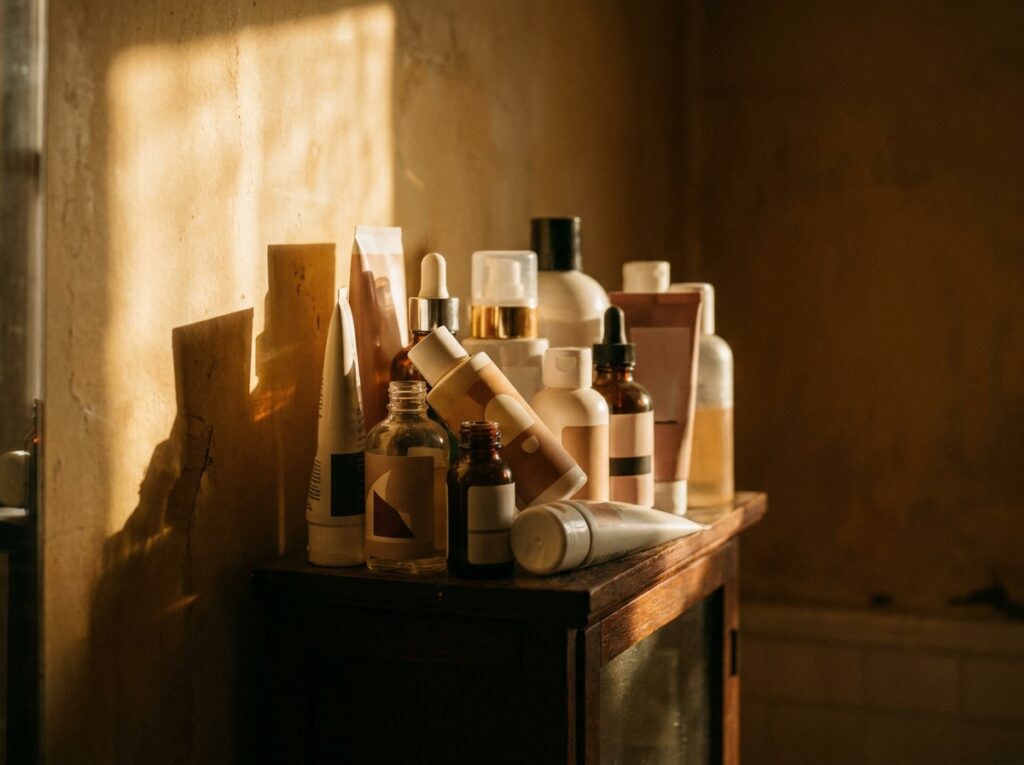
I was treating four different concerns simultaneously with products working against each other. The first thing that actually helped was stopping.
The Turning Point: Slowing Down and Actually Listening
That was when I decided to stop. And I do not mean give up. I mean stop. Stop the frantic searching, the layering of treatments, the trying of everything at once. Just… stop.
Our Skin Changes When Our Environment Changes
I could not understand it at first. I had moved from one hot climate to another warm climate, in the middle of summer. Should be fine, right? But the water was harder, the air was drier indoors, the UV hit differently. And the routine that had been working beautifully for two years was suddenly not doing anything at all.
That was when something really clicked. Our skin does not exist in a vacuum. It exists inside an environment, and that environment is constantly changing. A routine is not a permanent solution. It is a response to a specific set of conditions. When those conditions change, the routine has to change with them. Skin changes after 30 are not a one-time thing you deal with and move on from. They keep happening. Every move, every season, every hormonal shift.
So I adjusted. Again. New products, new routines, more observation, more patience. Life moved on.
2023 in Europe. 2024 in Indonesia. 2025 back to Brazil. And then… I found out I was pregnant.

Pregnancy: First the Chaos, Then the Glow
New kinds of acne started showing up. Inflamed pimples in places I had never had them. Under my chin, along my jawline, deep painful cysts that stuck around for weeks. It was a lot.

Postpartum: When the Glow Disappears and No One Warns You
And then the baby arrived. And everything changed. Again.
The postpartum hormonal shift is honestly one of the most dramatic things the body goes through. Estrogen and progesterone just… drop. Within days of giving birth. And for your skin that means losing all the hormonal support that had been keeping your barrier strong and your hydration up. Just like that, gone.
For me it meant deep pimples coming back. Blackheads I had literally never had before. And melasma starting to appear on my face, that specific type of hyperpigmentation that is triggered by hormonal fluctuations and made worse by sun exposure. Great. Just what you want to deal with when you have a newborn.
And once again? I had to learn. Except this time I was doing it while recovering from childbirth, barely sleeping, with a tiny human who needed me every two hours. I want to be really honest about that. It is hard. The skin changes after 30 that come with pregnancy and postpartum are real and significant and almost nobody in mainstream skincare talks about them properly.
Most skincare advice assumes you have time. Energy. A stable environment. Postpartum life gives you none of those things. What works in that phase is simple. Effective. And kind to a barrier that is already under enormous stress.
Where My Skin Is Today, and Why I Built Glow Protocol
It is mixed but balanced. Before I understood any of this, it would swing between extremely dry and rough or super oily and breaking out. Now it is predictable. I know what it needs in different climates, different seasons, different hormonal moments. That knowledge took years to build. But it is mine now and nobody can take it away.
I did not get here by finding some magic product. I got here by rebuilding my barrier. Genuinely, methodically, patiently. By understanding that the barrier is the foundation and that literally everything else depends on it being intact. That understanding is what changed everything for me. And it is what I want every woman experiencing skin changes after 30 to have access to. Because I should not have had to spend years and thousands of dollars to learn something this fundamental.
When I was searching for answers, what I needed did not exist. Not another account pushing trendy products. Not another before-and-after that conveniently skips the years of failure in between. Not another influencer with perfect skin and a ring light telling me what to buy.
I wanted someone who had actually been through the skin changes after 30 that come with hormonal shifts, climate moves, and the particular complexity of aging skin. Someone who could explain what was actually happening and why. Not sell me something. Explain it. I could not find that person. So eventually, reluctantly (because who wants to put their skin disasters on the internet), I became her.
Every review on this site is backed by real research. Every recommendation starts with one question: what does the evidence actually say? And everything here is written for women who are done with generic advice and ready to actually understand their own skin.
Your skin deserves better than opinions dressed up as expertise. And honestly? You deserve better than spending another thousand dollars figuring that out the hard way. Like I did.
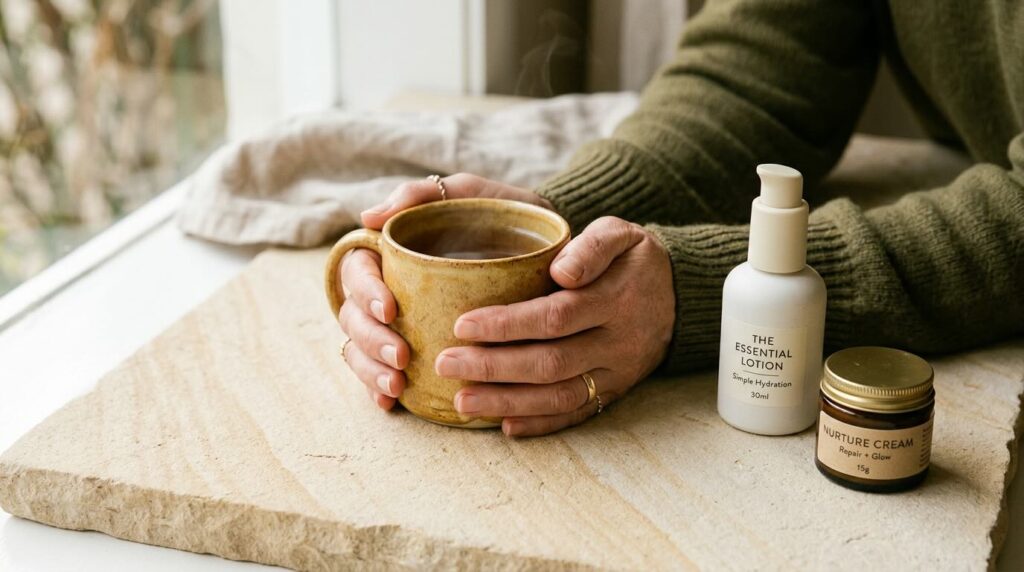
I did not figure this out because I am special. I figured it out because I was desperate, and I was willing to read the research instead of the marketing. That is all Glow Protocol is. The notes I wish I had found when I was the one searching.
Start Here
If any part of this story sounds familiar, if your skin suddenly changed, if products that used to work have stopped, if you are navigating skin changes after 30 and spending money without seeing results, you are in the right place. Truly.
→ Start with our complete guide: Skin Barrier Repair After 30
Browse product comparisons by category →
Sources
Research context: these sources cover ingredients, skin biology or specific tested formulations. Results depend on the concentration, delivery method and population studied. Product selections are editorial curation; these references are not head-to-head tests of all products listed.
- Chen Y, Lyga J (2014). Brain-skin connection: stress, inflammation and skin aging. Inflamm Allergy Drug Targets. PubMed 24853682
- Farage MA, et al. (2008). Intrinsic and extrinsic factors in skin ageing: a review. Int J Cosmet Sci. PubMed 18377617
- Thornton MJ (2013). Estrogens and aging skin. Dermatoendocrinol. PubMed 24194966
- Coderch L, et al. (2003). Ceramides and skin function. Am J Clin Dermatol. PubMed 12553851 Background on ceramide biology and skin function.
Glow Protocol · glowprotocol.beauty · Science-backed skincare for women 30+
Affiliate Disclosure: This post contains affiliate links, which means we may earn a small commission if you make a purchase through these links at no extra cost to you. We only recommend products we've researched and believe offer real value. Our opinions remain our own and are not influenced by any brand or compensation.