Created using AI; curated by Glow Protocol. AI tools support research, product comparisons and writing. Our recommendations are editorial selections. How we work.
Quick answer
There is no single expiry clock for all vitamin C serums. Use the product’s expiry or period-after-opening guidance and storage directions; packaging, formulation and handling affect stability. An unexpected change in colour, smell or texture is a reason to check with the manufacturer, not a way to measure exact remaining potency.
Background guidance: FDA: cosmetic shelf life.
Updated : Opening answer clarified and its supporting references checked; jump navigation added. Check current price, size and seller on the retailer listing.
Affiliate Disclosure: This post contains Amazon affiliate links. If you purchase through our links, we earn a small commission at no extra cost to you. We only recommend products we have researched and believe in.
Vitamin C Serum Guide: Expiry, Storage and Stability
This guide focuses on understanding and storing vitamin C serum. For product-by-product choices, see our vitamin C serum comparison.
Vitamin C is one of the most important ingredients in a post-30 skincare routine. It is well-evidenced for brightening hyperpigmentation, supporting collagen synthesis, providing antioxidant protection against UV and pollution damage, and, when formulated correctly, delivering visible improvements in skin tone and texture within 8 to 12 weeks.
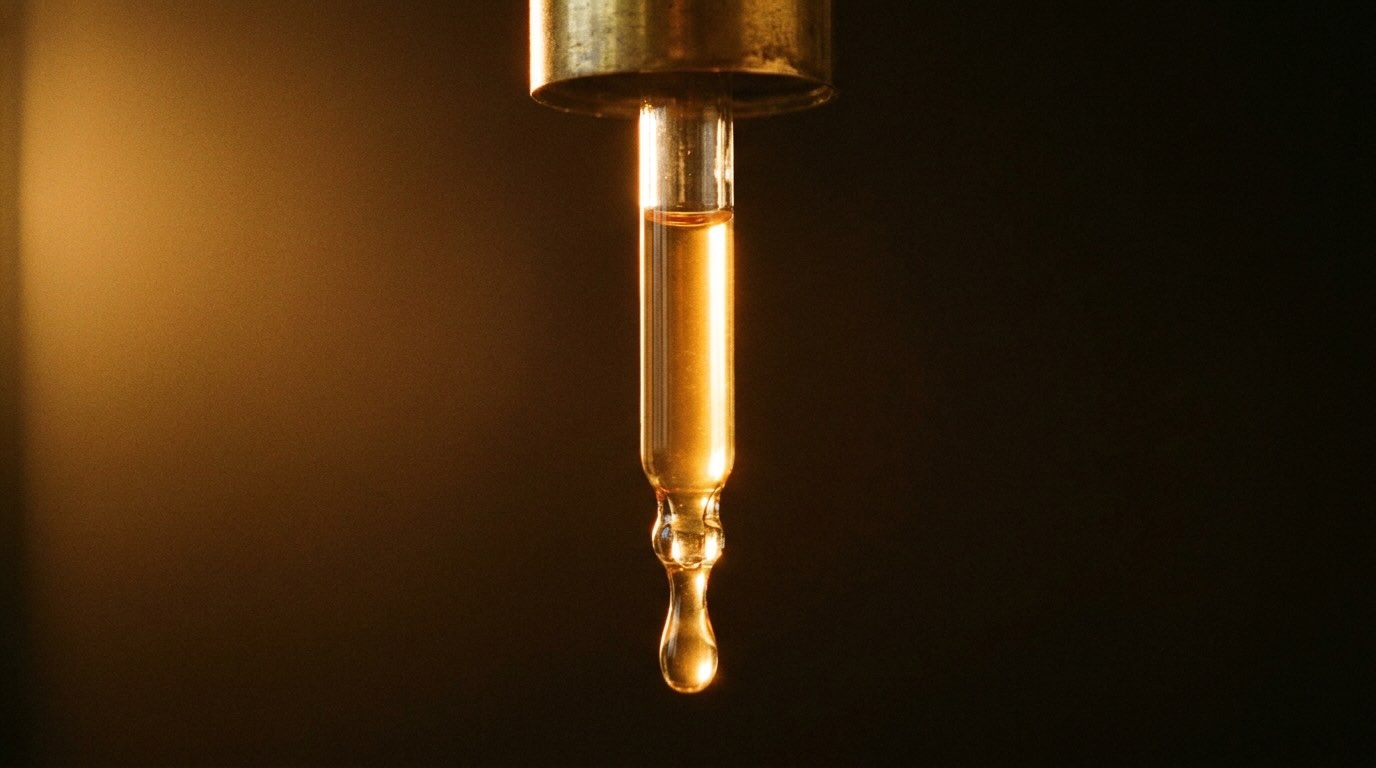
It is also the most commonly wasted ingredient in skincare. Because Vitamin C, specifically the most effective form, L-ascorbic acid, is notoriously unstable. It oxidises when exposed to light, air, heat, and even water. That beautiful golden serum you have been applying every morning? If it has turned amber or orange, it is already oxidised. It is not hurting you, but it has almost certainly lost the majority of its efficacy.
This is not a small problem. Women spend $20 to $200 on a vitamin c serum that is effectively inert by the time they are halfway through the bottle. This guide explains why it happens, how to tell if your vitamin c serum has expired, and which formulations are actually worth buying.
If your Vitamin C serum has turned orange, you are applying antioxidant-free serum to your face.
Why Your Vitamin C Serum Oxidises
L-ascorbic acid (the purest, most bioavailable form of Vitamin C) is inherently unstable in aqueous, water-based solutions. When it is exposed to oxygen, it undergoes a chemical process called oxidation and converts first to dehydroascorbic acid, and then to diketogulonic acid, a compound with no known skin benefit and mild pro-oxidant properties.
This process is accelerated by three things. Light: UV and visible light break down L-ascorbic acid quickly. Heat: temperatures above 30°C significantly increase the rate of oxidation. Air: every time you open a dropper bottle or pump, oxygen enters and the countdown begins. A high-quality vitamin c serum in a transparent glass dropper bottle, stored in a warm bathroom, can lose significant efficacy within weeks of opening.
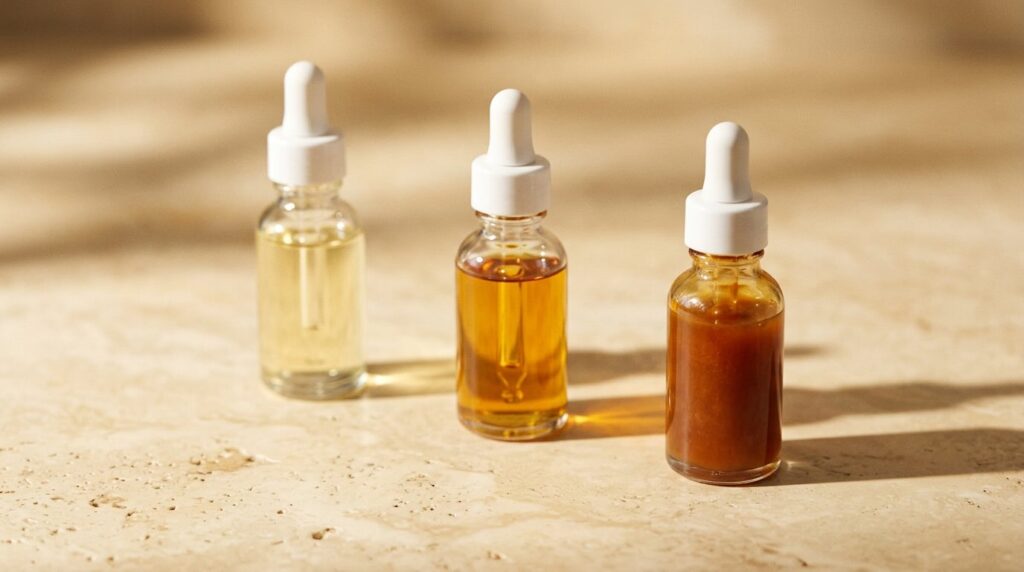
The colour change is the most visible indicator. Fresh L-ascorbic acid is colourless to very pale yellow. As it oxidises, it darkens: pale yellow to golden to orange to brown. By the time a vitamin c serum is orange, it has lost most of its active content.
How to Tell If Your Vitamin C Serum Has Expired
Here are the warning signs that your vitamin c serum may already be oxidised and no longer effective.
The serum has turned noticeably darker since you first opened it (golden, amber, or orange). You have had the bottle open for more than 3 months. You store it in a bathroom where it is exposed to heat and steam. The bottle is transparent glass or clear plastic. It smells slightly off, as oxidised Vitamin C can develop a faint metallic or rancid note. You are not noticing any improvement in brightness or tone after 10 or more weeks of use.
If two or more of those apply, your vitamin c serum is almost certainly past its useful life. Replace it, and this time, store it properly.
The Four Forms of Vitamin C Serum That Actually Work
Not every vitamin c serum uses the same form of Vitamin C. Understanding the four main types helps you choose the right one for your skin type, sensitivity level, and storage habits.
1. L-Ascorbic Acid: Most Effective, Least Stable
This is the gold standard. Direct, bioavailable, and the form used in almost all clinical studies. The effective concentration range is 10 to 20 percent. Below 10 percent is too low to produce meaningful results. Above 20 percent causes more irritation without additional benefit. The pH needs to be below 3.5 for optimal absorption. This form is also the hardest to stabilise and most prone to oxidation. It requires opaque, airless packaging and careful storage.
2. Ascorbyl Glucoside: Stable, Gentler, Effective at Higher Doses
A sugar-bonded form of Vitamin C that is much more stable than LAA. It converts to ascorbic acid on the skin, though less efficiently. Studies show meaningful brightening and antioxidant effects at concentrations of 2 percent and above. It is significantly more stable, less irritating, and better suited to women with sensitive skin. Not as potent as LAA, but likely to still be active when you reach the end of the bottle.
3. Tetrahexyldecyl Ascorbate (THD): Most Stable, Oil-Soluble
An oil-soluble Vitamin C derivative that is extremely stable and well-tolerated by most skin types, including sensitive skin. It penetrates the skin more deeply than water-based LAA. Some studies show comparable brightening and collagen-supporting effects to LAA. It is often used in higher-end formulations and works particularly well in combination with retinoids, since both are oil-soluble. A strong choice for women with dry or mature skin.
4. Sodium Ascorbyl Phosphate: Stable, Mild, Effective for Acne
Water-soluble and significantly more stable than LAA. It has good antioxidant properties and some evidence for brightening. It is also anti-microbial, making it a good choice for women who still experience adult breakouts. Less evidence for collagen support than LAA, but more stable and reliable in use.

How to Store Your Vitamin C Serum Correctly
The difference between a vitamin c serum that works and one that does not often comes down to how you store it. These rules apply to all L-ascorbic acid formulations.
Store in a cool, dark place. Not the bathroom. A bedroom drawer or refrigerator extends shelf life significantly. After opening, use within 2 to 3 months for L-ascorbic acid formulas and up to 6 months for stable derivatives. Buy smaller bottles (15 to 30ml) rather than large ones. You are less likely to use them up before they oxidise. Choose opaque or amber glass bottles with airless pumps or sealed droppers. Apply to clean, slightly damp skin in the morning to improve absorption. Always follow with SPF. Vitamin C and SPF work together, and each amplifies the other.
The Best Vitamin C Serum Options by Budget
These are the formulations we recommend for women in their 30s, 40s, and 50s. Each vitamin c serum here is consistently well-formulated, properly packaged, and will actually deliver results if used correctly and stored well.
Luxury Pick
SkinCeuticals C E Ferulic (30ml)
The benchmark against which all other Vitamin C serums are measured. 15% L-ascorbic acid + vitamin E and ferulic acid. Clinical studies show 8x antioxidant protection and significant improvement in fine lines and brightening over 12 weeks. The combination of ferulic acid + vitamin E is what makes it genuinely worth the premium. Packaged in amber glass.
View on Amazon →
Budget Pick
Timeless 20% Vitamin C + E Ferulic Serum (30ml)
The closest equivalent to SkinCeuticals C E Ferulic. Same concept: high-dose L-ascorbic acid stabilised with vitamin E and ferulic acid. 20% LAA is at the upper end of effective dosing. The packaging is not as robust (clear bottle), so store in a cool, dark place and use within 6 to 8 weeks of opening. Excellent value if stored correctly.
View on Amazon →
Mid-Range Picks
COSRX Vitamin C 23 Serum (20ml)
High-concentration pure L-ascorbic acid serum. 23% LAA is very potent and can cause tingling on first use. Good for women with experience using Vitamin C who want maximum brightening. The small bottle (20ml) is a practical advantage: you are less likely to use it past its freshness window. Opaque packaging is a positive.
View on Amazon →
The Ordinary Vitamin C Suspension 23% + HA Spheres 2% (30ml)
Pure L-ascorbic acid in an anhydrous (water-free) base, which dramatically increases stability. Because there is no water, oxidation is significantly slowed. Does not layer well under makeup due to a slightly textured finish. Best used on days when you are not wearing foundation, or at night. Outstanding value for the formulation innovation.
View on Amazon →
Medik8 C-Tetra Luxe (30ml)
Uses tetrahexyldecyl ascorbate (THD), the most stable oil-soluble Vitamin C derivative. Excellent for women with dry or mature skin, particularly if L-ascorbic acid has felt too irritating. Deeply hydrating formula. Will not change colour in the bottle. A strong choice for sensitive skin or as an alternative to water-based serums.
View on Amazon →
Vitamin C Serum + SPF: The Morning Stack That Matters
Applied in the morning under SPF, a vitamin c serum provides an additional layer of antioxidant protection that extends beyond what SPF alone can offer. Specifically against the free radical damage that UV and pollution cause even when physical UV is blocked. Studies show that Vitamin C + SPF together provide 8x more antioxidant protection than SPF alone. This is the combination every woman over 30 should have in her morning routine.
Clean skin. Vitamin C serum. Wait 5 minutes. SPF. That is the morning stack that the evidence supports. Not 12 steps. That.
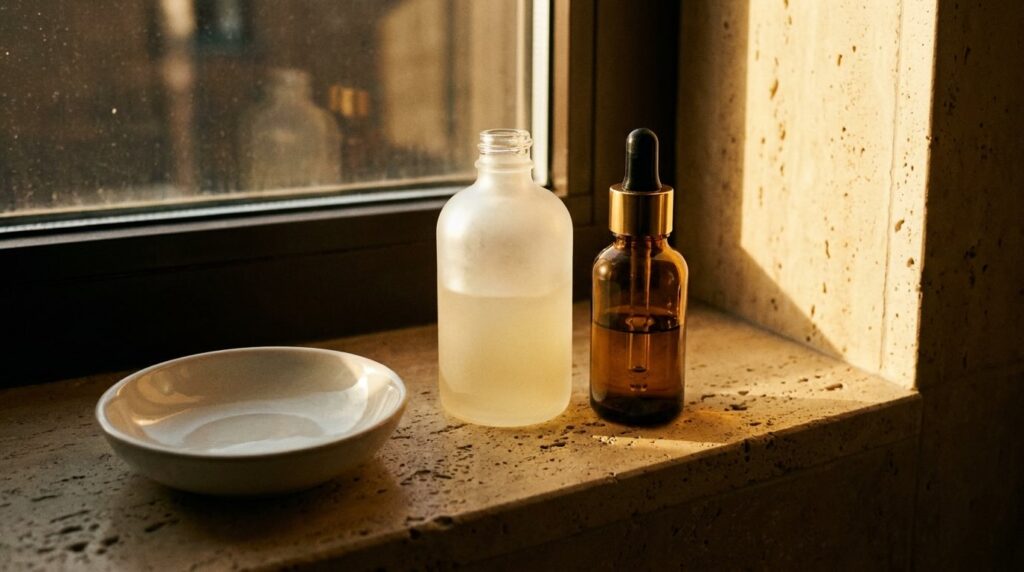
The most expensive vitamin c serum in the world is the one that has oxidised before you finish the bottle. Buy smaller, store smarter, use it up.
The Final Word
If you take one thing from this vitamin c serum guide, let it be this: the formulation matters, but storage matters just as much. A $25 serum stored in the fridge and used within 8 weeks will outperform a $166 serum left on a warm bathroom shelf for six months. The ingredient is only as good as the conditions you keep it in.
For most women over 30, we recommend starting with the Timeless 20% Vitamin C + E Ferulic. It uses the same proven combination as SkinCeuticals at a fraction of the price. Store it in the fridge, use it within 6 to 8 weeks, and apply it every morning under SPF. If you find L-ascorbic acid too irritating, switch to the Medik8 C-Tetra Luxe, which uses a more stable, oil-soluble form that is exceptionally well-tolerated.
Your vitamin c serum should be working for you, not oxidising in your bathroom. Now you know the difference.
→ Start with our complete barrier repair guide
→ Read our breakdown of what you actually pay for in luxury skincare
→ Is La Mer worth $400? Our honest review
If you want to know how I figured all of this out through years of trial and error, read my story here.
Sources
Research context: these sources cover ingredients, skin biology or specific tested formulations. Results depend on the concentration, delivery method and population studied. Product selections are editorial curation; these references are not head-to-head tests of all products listed.
- Pullar JM, et al. (2017). The Roles of Vitamin C in Skin Health. Nutrients. PubMed 28805671 Review covering biological roles and limits of topical evidence.
- Telang PS (2013). Vitamin C in dermatology. Indian Dermatol Online J. PubMed 23741676
- Mukherjee S, et al. (2006). Retinoids in the treatment of skin aging: an overview of clinical efficacy and safety. Clin Interv Aging. PubMed 18046911 Review distinguishing retinoids, formulations and tolerability.
- Quan T, Fisher GJ (2015). Role of Age-Associated Alterations of the Dermal Extracellular Matrix Microenvironment in Human Skin Aging: A Mini-Review. Gerontology. PubMed 25660807
Glow Protocol · glowprotocol.beauty · Science-backed skincare for women 30+
Affiliate Disclosure: This post contains affiliate links, which means we may earn a small commission if you make a purchase through these links at no extra cost to you. We only recommend products we've researched and believe offer real value. Our opinions remain our own and are not influenced by any brand or compensation.