Created using AI; curated by Glow Protocol. AI tools support research, product comparisons and writing. Our recommendations are editorial selections. How we work.
Quick answer
Stinging is a signal to reassess the product, not proof that it is working or a diagnosis of barrier damage. Stop the product if it causes a reaction. Repeated or persistent reactions may need assessment; buying a more expensive cream does not identify the cause.
Background guidance: AAD: product reactions and testing.
Updated : Opening answer clarified and its supporting references checked; jump navigation added. Check current price, size and seller on the retailer listing.
Affiliate Disclosure: This post contains Amazon affiliate links. If you purchase through our links, we earn a small commission at no extra cost to you. We only recommend products we have researched and believe in.
Why Your Moisturiser Stings: The Real Cause Nobody Tells You About
Why your moisturiser stings is the question almost every woman 30+ asks me eventually. Your moisturiser is supposed to comfort your skin. Instead it feels like you have applied dilute acid. You assume you have suddenly developed sensitive skin and buy gentler products. The stinging gets worse. You buy something even gentler. It still stings.
Sensitivity is permanent. You are born with it. Stinging is a symptom of barrier damage. Damage is acquired, and acquired damage is reversible.
This matters because applying “gentle” products to a compromised barrier actually slows healing. You need to repair first, then hydrate. And until you understand why your moisturiser stings in the first place, every product you buy is a guess. So let me show you what is actually happening, how to diagnose it, and exactly how to fix it over the next 2 to 4 weeks.
The Three Reasons Why Your Moisturiser Stings
When you apply moisturiser and feel immediate heat, burning, or sharp pain, your skin is doing one of three things. The first and most common is that your barrier is compromised. The stratum corneum (your skin’s outermost protective layer) contains lipids like ceramides, cholesterol, and fatty acids that cement cells together. When these lipids are depleted, water escapes and irritants penetrate deeper than they should. Your skin reacts with neurogenic inflammation: stinging and redness. This accounts for roughly 70 to 80% of “sensitive skin” complaints I see.
The second reason is chemically-induced irritation from an active ingredient applied before your moisturiser, not the moisturiser itself. Retinoids, acids, or vitamin C can sensitise your skin temporarily, and anything applied on top of them will sting. The third reason is true contact dermatitis, which is uncommon but possible. This is usually to fragrances, essential oils, or preservatives, and it develops after repeat exposure. It is genuinely allergic, not just irritating, and it usually comes with a rash rather than just stinging. The good news: barrier damage is responsible for the vast majority of stinging, and barrier damage is completely fixable.
What Breaks Your Barrier in the First Place
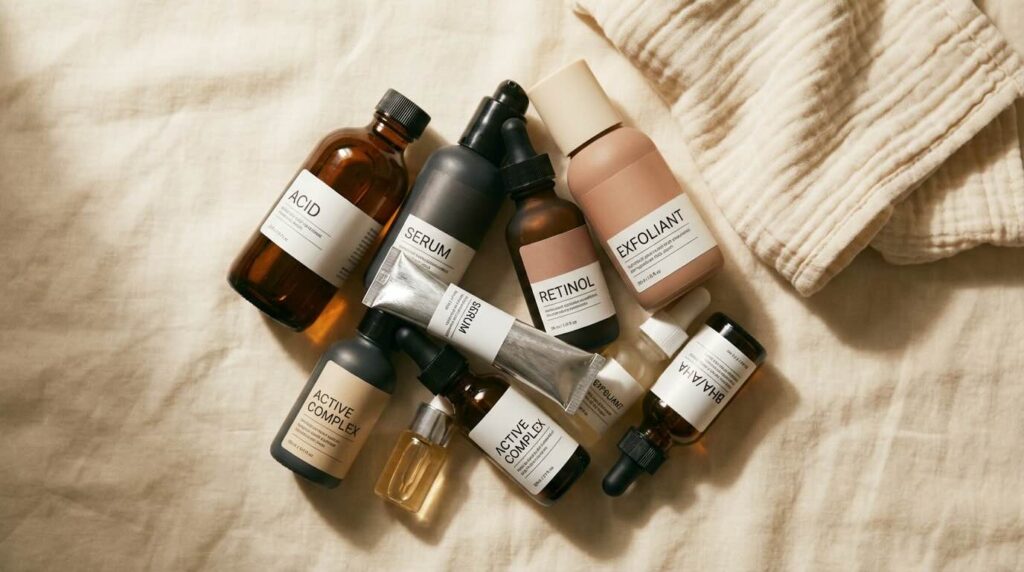
Before you can fix why your moisturiser stings, you need to understand what broke the skin barrier to begin with. The common causes in women over 30 are all related to doing too much. Over-exfoliation is the biggest one: twice-daily AHA or BHA, weekly enzyme peels, and monthly professional treatments all stacked. Your barrier cannot regenerate if you are stripping it every day. I have been there, thinking more exfoliation equals more glow. It does not.
The other common culprits: starting retinol at too high a concentration or too often before your barrier is ready. Using dehydrating lightweight moisturisers that feel nice but do not seal hydration. Hot water showers and over-cleansing. Benzoyl peroxide or salicylic acid used daily when 2 to 3 times weekly would do the job. Environmental stress like winter heating and low humidity. Once you have damaged your barrier through any combination of these, applying “gentle” products and lightweight serums will not fix it, because they are not addressing the actual problem: the missing lipids.
Diagnosing Why Your Moisturiser Stings in 6 Questions
Answer these honestly. Did the stinging start after you began a new active ingredient like retinol or an acid? Does your skin feel tight, look dull, and feel dehydrated even after moisturiser? Is the stinging immediate (within 30 seconds of application) rather than delayed? Have you increased your exfoliation frequency in the last 2 to 4 months? Does your skin look visibly red or feel hot to the touch? Have you recently stopped using a rich moisturiser in favour of something lighter?
If you answered yes to three or more, you almost certainly have barrier damage, not sensitivity. That is the answer to why your moisturiser stings, and it is also the answer to what to do next. Stop all active ingredients immediately. This is not deprivation. It is essential repair work, and trying to push through will only extend how long it takes to heal.
The 4-Week Barrier Repair Protocol
Barrier repair takes 2 to 4 weeks minimum. You are not skipping skincare. You are changing what skincare means right now. Step one: stop all active ingredients immediately. No retinol, no AHA or BHA, no vitamin C, no azelaic acid, nothing. Your barrier cannot repair itself while you are disrupting it daily. This feels counterintuitive (you want to do something) but barrier repair requires doing nothing aggressive.
Step two: cleanse gently. Use lukewarm water only, or a gentle milk cleanser once in the evening. Stop double-cleansing. Pat dry rather than rubbing. Step three: restore lipids with the right products, which is where most women get this wrong. Your barrier needs ceramides, cholesterol, and fatty acids in the right ratios, not more serums.
The Emergency Repair Tier
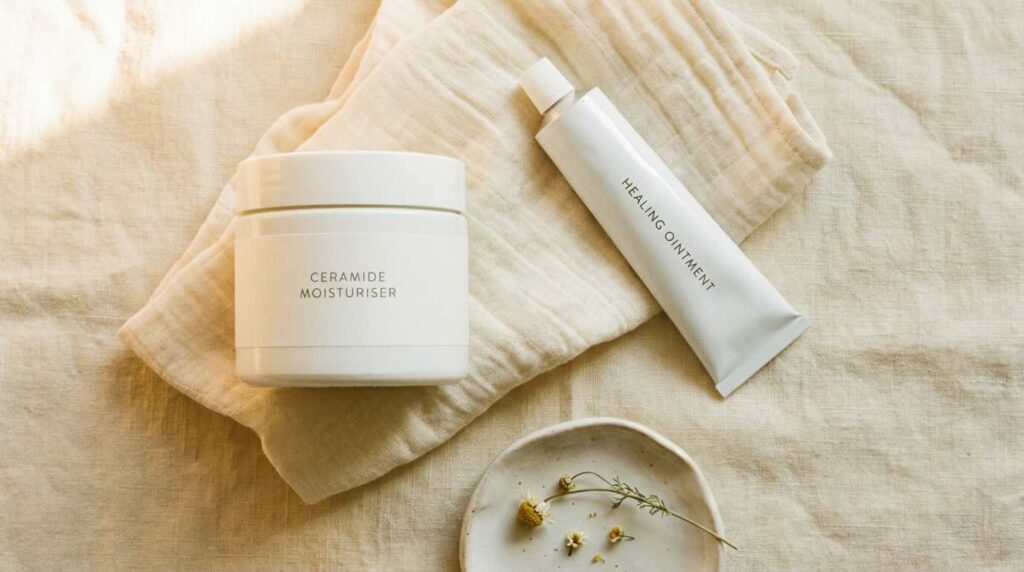
Aquaphor Healing Ointment
Petrolatum 80% plus glycerine and panthenol. No water, no irritants, no fragrance. Apply to clean, slightly damp skin at night. It is thick and occlusive on purpose. Your skin will feel sealed, and that is exactly the point. Use nightly for 2 to 4 weeks while your barrier repairs. This is the gold standard for acute damage.
View on Amazon →
CeraVe Moisturising Cream (16oz)
Ceramides 1, 3, and 6-II plus hyaluronic acid and glycerin. The standard recommendation for barrier repair in dermatology offices. Use morning and evening. Less occlusive than Aquaphor but more lipid-rich than typical lotions. You can layer it over Aquaphor at night for extra occlusion if your skin is very damaged.
View on Amazon →
The Soothing Repair Options for Inflamed Skin
If your barrier is damaged, inflammation is usually present alongside it. These products support repair while calming redness at the same time, which is particularly useful if your skin is already visibly irritated or warm to touch. They are slightly more elegant than Aquaphor while still being therapeutically effective.
The Mid-Range Repair Tier
La Roche-Posay Cicaplast Baume B5
Panthenol (provitamin B5) plus niacinamide and prebiotic thermal water. Specifically designed for skin repair. Less thick than Aquaphor but still occlusive enough to support healing. The thermal water and niacinamide provide anti-inflammatory support, which matters when your skin is visibly red. Use morning and evening during the repair phase.
View on Amazon →
La Roche-Posay Toleriane Double Repair
Niacinamide, thermal water, and ceramides in a lighter formula than Cicaplast. The better option for daytime use during the repair phase, while using Cicaplast or Aquaphor at night for stronger support. Less greasy feel so it works under mineral SPF once you reintroduce sunscreen.
View on Amazon →
First Aid Beauty Ultra Repair Cream
Colloidal oatmeal plus shea butter and allantoin. Calming and hydrating but less clinically formulated than La Roche-Posay. Works well if your barrier is mildly compromised. Less effective for severe damage where you should reach for Cicaplast or Aquaphor instead.
View on Amazon →
When You Need the Higher Tier: Severe Barrier Damage
If the answer to why your moisturiser stings is severe barrier compromise, meaning weeks of reactive skin with visible redness and constant discomfort, you may need something more specifically formulated than CeraVe or Aquaphor. This is where the Avène Cicalfate range earns its higher price, and where spending a little more actually translates to faster repair.
The Severe Damage Tier
Avène Cicalfate+ Restorative Protective Cream
Avène thermal spring water plus zinc, copper, and sucralfate, a polymer that protects compromised skin. Expensive but specifically formulated for severe barrier damage in sensitised skin. Reserve this for when CeraVe and Aquaphor are not working after 3 weeks, or if your skin is reacting to everything including the “gentle” options. The tier where spending more genuinely buys you a better formula.
View on Amazon →
The Realistic Repair Timeline
Days 1 to 3, the stinging may actually worsen initially because you are no longer masking the problem with active ingredients. This is normal. Your skin is finally healing. Continue the repair protocol. Days 4 to 7, stinging should begin to subside. Redness should decrease. Your skin may still feel tight because you have not reintroduced hydrating serums yet. Some flaking is expected as damaged outer layers shed naturally.
Weeks 2 to 3, most stinging should be gone and redness minimal. Skin feels less tight. At this point you can cautiously reintroduce one gentle active ingredient, but not retinol yet. Start with niacinamide or gentle azelaic acid. Week 4 and beyond, if the barrier feels fully repaired (no stinging, no reactive redness) you can cautiously reintroduce retinol at low frequency, once weekly to start. If stinging has not improved by day 10, or if you notice new symptoms like weeping skin, severe itching, or hives, you may have contact dermatitis or infection. Stop all products except water cleansing and see a dermatologist. That is not something to manage with skincare alone.

Barrier Damage vs True Sensitivity: How to Tell
True sensitivity is genetic and permanent. Barrier damage is acquired and reversible. The difference matters because the fix is completely different. If you have barrier damage, the stinging started recently (in the last 1 to 6 months), it corresponds to a change in your routine, it improves with repair, it is reproducible (the same product causes the same reaction every time), and you feel fine when using a minimal routine. If you have true sensitivity, you have always reacted to multiple products dating back years, even “gentle” products cause issues, fragrance and essential oils trigger reactions, you likely have family history of sensitive skin, and multiple product categories trigger reactions, not just actives.
Most women who ask me why their moisturiser stings think they have sensitivity when they actually have barrier damage. This distinction is critical because true sensitivity requires lifelong trigger avoidance, while barrier damage requires 2 to 4 weeks of focused repair before normal skincare can resume. Misdiagnosing damage as sensitivity means you will spend the rest of your life buying products that do not fix the underlying problem.
If your skin started stinging in the last six months, it is almost certainly damage, not sensitivity. You are not stuck with this. You can heal.
After Repair: Preventing It From Happening Again
Once your barrier is repaired, you can return to active ingredients, but avoid the exact mistakes that broke it the first time. Exfoliate no more than 3 times weekly. Daily exfoliation is always too much. If you are using both AHA and BHA, choose one, not both. Start retinol slowly, once weekly for 4 weeks, then increase only if your skin tolerates it. Do not leap to 2 or 3 times weekly in week two. This is exactly the approach covered in our full retinol for beginners guide if you want the detailed protocol.
Use a moisturiser with actual lipids year-round. Lightweight hydrating serums do not prevent barrier damage; you need occlusion and ceramides. Cleanse gently with lukewarm water, not hot, and never scrub. Monitor your skin’s signals constantly. If you see redness or feel tightness coming back, dial back frequency before you damage the barrier again. Your skin will tell you before it gets bad, if you are paying attention. For the full biology of why this matters more after 30, our skin changes after 30 guide walks through exactly what shifts in your barrier with age.
Your Action Plan
If you are wondering why your moisturiser stings right now, here is the simplest action plan. Stop every active ingredient in your routine today: no retinol, no acids, no vitamin C. Pick one product from the Emergency Repair tier (Aquaphor or CeraVe Moisturising Cream) and use only that, plus water-cleansing, for the next 2 weeks. Wear a hat or stay in the shade for the first week instead of applying sunscreen, which can sting a compromised barrier. After 2 weeks, assess: if stinging is gone, slowly add back a gentle moisturiser during the day. After 4 weeks, if your skin is stable, cautiously reintroduce one active at low frequency.
That is the entire protocol. It is boring, it requires patience, and it works. For the wider context on what your skin actually needs at different life stages, our skincare routine after 40 walks through the complete AM and PM structure. And for the daily habits that compound alongside good products, our habits women with great skin after 30 share breakdown is where to start building everything back up.
Related Reading
→ The complete skin barrier repair guide
→ Retinol for beginners: the honest guide
→ The luminous skin routine after 40
If you want to know how I figured out the difference between sensitivity and damage the hard way, read my story here.
Sources
Research context: these sources cover ingredients, skin biology or specific tested formulations. Results depend on the concentration, delivery method and population studied. Product selections are editorial curation; these references are not head-to-head tests of all products listed.
- Elias PM (2012). Structure and function of the stratum corneum extracellular matrix. J Invest Dermatol. PubMed 22895445
- Proksch E, et al. (2008). The skin: an indispensable barrier. Exp Dermatol. PubMed 19043850
- Draelos ZD, et al. (2006). The effect of 2% niacinamide on facial sebum production. J Cosmet Laser Ther. PubMed 16766489 Studied 2% niacinamide; does not establish antibacterial efficacy.
- Lodén M (2003). Role of topical emollients and moisturizers in the treatment of dry skin barrier disorders. Am J Clin Dermatol. PubMed 14572299
- Coderch L, et al. (2003). Ceramides and skin function. Am J Clin Dermatol. PubMed 12553851 Background on ceramide biology and skin function.
Glow Protocol · glowprotocol.beauty · Science-backed skincare for women 30+
Affiliate Disclosure: This post contains affiliate links, which means we may earn a small commission if you make a purchase through these links at no extra cost to you. We only recommend products we've researched and believe offer real value. Our opinions remain our own and are not influenced by any brand or compensation.