Created using AI; curated by Glow Protocol. AI tools support research, product comparisons and writing. Our recommendations are editorial selections. How we work.
Quick answer
Choose individual products and a manageable routine rather than declaring one country’s skincare better. Both markets contain many formulations, textures and price points. Our comparison is a way to explore options, not evidence that nationality predicts tolerance, effectiveness or the number of steps your skin needs.
Updated : Opening answer clarified; jump navigation added. Check current price, size and seller on the retailer listing.
Affiliate Disclosure: This post contains Amazon affiliate links. If you purchase through our links, we earn a small commission at no extra cost to you. We only recommend products we have researched and believe in.
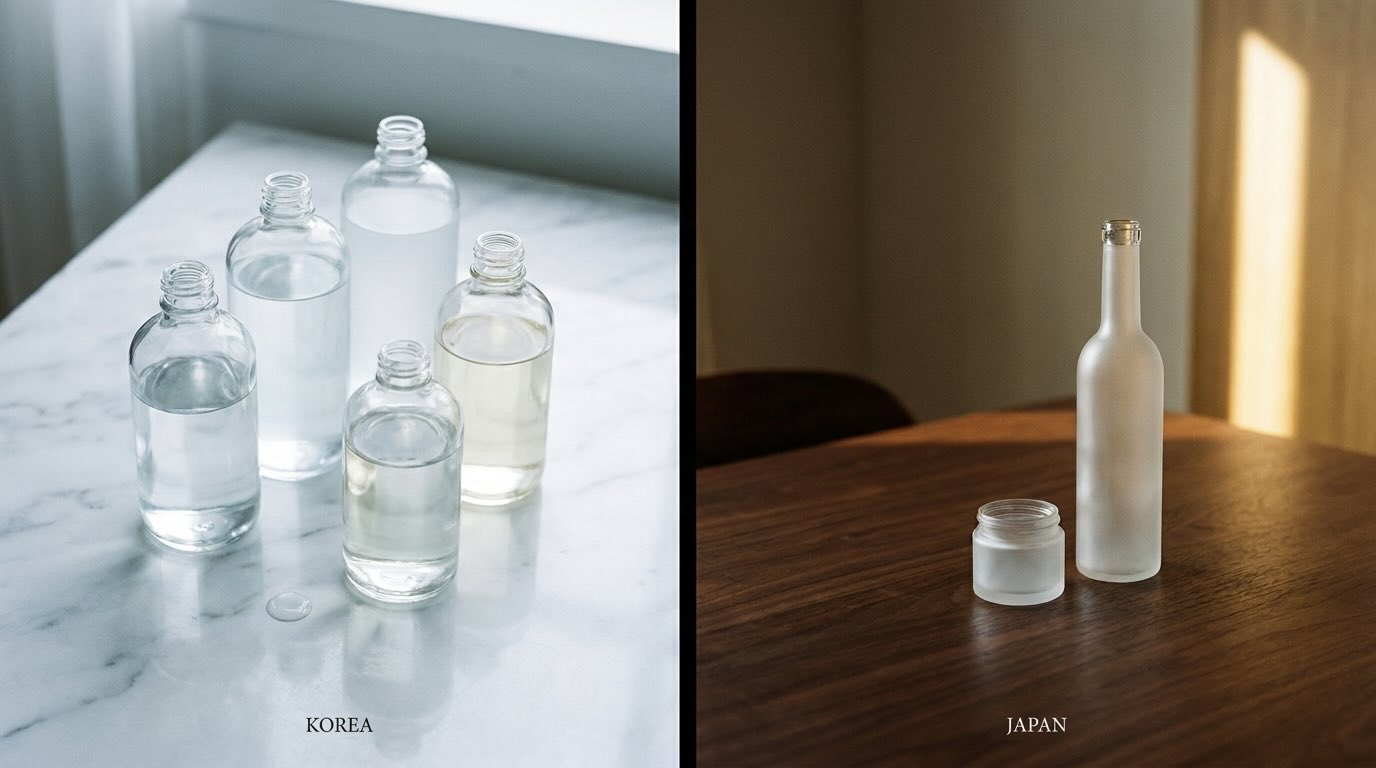
Korean vs Japanese Skincare: The Honest Comparison After 30
Here’s what I figured out: both work. They’re just asking different questions about what your skin needs after 30. Korean philosophy says, ‘anticipate problems and layer prevention.’ Japanese philosophy says, ‘choose one excellent product over ten mediocre ones.’ Neither is wrong. The real korean vs japanese skincare question, the one that actually matters for your skin, is which philosophy aligns with how your skin’s actually ageing, how much ritual you’ll actually stick to, and what your skin barrier can actually handle.
After 30, your skin is genuinely different. Your ceramide production is declining, cell turnover is slowing, and you’re not preventing ageing anymore. You’re supporting skin that’s already ageing. That distinction changes everything about the korean vs japanese skincare decision. Let me break down where K-beauty and J-beauty actually differ, where they overlap perfectly, and which products are worth your money.
The Korean vs Japanese Skincare Philosophy Split
Korean skincare philosophy is built on prevention and layering. The 10-step routine isn’t mystical. It’s strategic. The idea: if I target hydration, then actives, then barrier reinforcement, then sun protection, I’m addressing skin ageing from multiple angles before damage compounds. Korean brands assume you want to be thorough. They optimise for that mentality.
Japanese skincare thinks differently. Quality over quantity. One exceptional product beats ten mediocre ones. Japanese brands obsess over perfecting a single cream or sunscreen rather than building systems. There’s also something deeply cultural here: the Japanese approach to skin care (notice: ‘care,’ not ‘treatment’) emphasises maintenance and protection over correction. It’s less about fixing problems and more about preventing them from getting worse.
At 30+, this difference becomes real. I’m not in prevention mode anymore. I’m in the maintenance-and-support phase. A Korean approach would build me a targeted treatment stack: serums for specific concerns, layered essences for hydration, active ingredients I’m paying attention to. A Japanese approach would give me three products I trust completely, optimise them, and trust consistency over complexity.
Formulation Approaches: Where Korean vs Japanese Skincare Actually Differs
K-Beauty Formulations
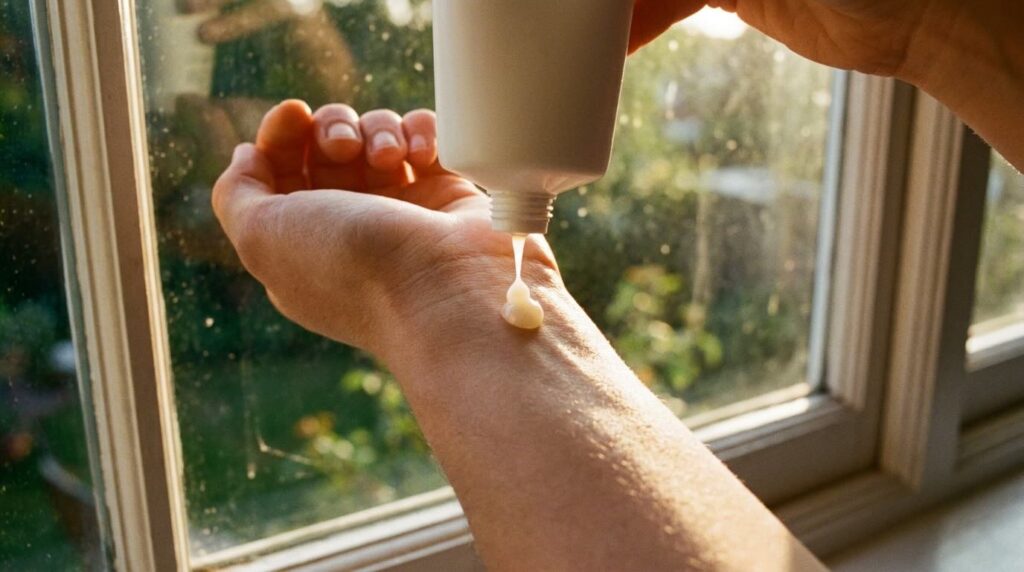
Korean products tend to be lightweight and layerable. The goal is to apply multiple serums, essences, and toners without leaving your face feeling sticky or overwhelmed. This is why Korean brands use hydrating polymers, humectants, and fermented ingredients. Fermentation appears constantly in K-beauty. Ginseng, rice, sake. Not just for marketing, but because fermented ingredients have lower molecular weights and penetrate more effectively. Research published in the Journal of Clinical Biochemistry and Nutrition (2015) found that fermentation can meaningfully increase the bioavailability of plant compounds, which means your skin actually absorbs more active content.
Korean brands also favour active ingredients at higher concentrations. A vitamin C serum from a Korean brand might contain 15-20% ascorbic acid, whereas Japanese brands tend toward 10-12% paired with stabilising ingredients. Niacinamide concentrations run higher in K-beauty formulations as well, usually 5-10% versus 3-5% in J-beauty products. The texture philosophy is essential here. Korean products assume you’re layering. An essence will feel like lightly fragranced water. A toner is hydrating, not astringent (the Western definition is almost irrelevant). This layering approach means lower viscosity across the board.
J-Beauty Formulations
Japanese products prioritise stability and efficacy. Where Korean brands might use a complex humectant blend with fermented ingredients, Japanese formulations tend toward hyaluronic acid, glycerin, and squalane. Ingredients with decades of research backing. There’s less experimentation, more certainty. You won’t find as many trending ingredients in Japanese products because Japanese brands only incorporate something once there’s substantial clinical validation.
Oils are treated differently too. While Korean brands occasionally use oil in serums (understanding that oil solubilises certain actives), Japanese brands treat oils as their own category. A cleansing step or a barrier reinforcement, not a serum base. This reflects the Japanese aesthetic of clarity and purposeful separation: cleanse with oil, hydrate with water-based products, seal with occlusive. Texture in J-beauty reflects the expectation of a streamlined routine. A moisturiser should feel luxurious in one application. A serum should deliver visible results without layering. This means richer textures overall, more emollients, and higher concentrations of barrier-supporting ingredients like ceramides and cholesterol.
Best Japanese Sunscreen: Why Japan Leads in SPF
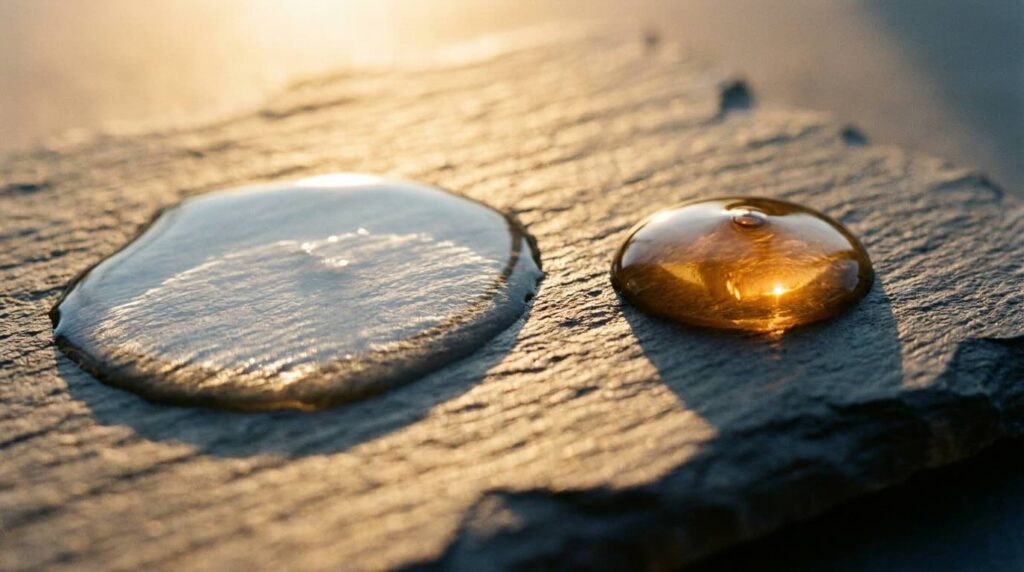
This is the one area where the korean vs japanese skincare question has a clear winner. I don’t say that lightly. Japan treats sunscreen like a non-negotiable daily medicine, and they’ve spent decades perfecting the texture because they knew people wouldn’t wear something that feels heavy or sticky. The result: Japanese sunscreen formulations are exponentially more elegant than anything Korea makes, and light-years ahead of Western SPF.
Biore’s UV Aqua Rich ($15.87) is the sunscreen that taught the world mineral SPF could feel like water. Invisible application. Fluid. Hybrid mineral filters that genuinely don’t white cast. Korean sunscreens are getting better but still feel thicker, tackier. They haven’t cracked the texture puzzle the way Japan has. And here’s what actually matters: research on sunscreen compliance shows that cosmetic elegance directly affects whether people apply enough, and whether they reapply. You’ll reapply a sunscreen you love. You’ll skip reapplication on one that feels uncomfortable.
At 30+, this is the most consequential product choice you’ll make. Sun damage is cumulative. By now, you’re not preventing ageing. You’re preventing visible damage in your 40s. A sunscreen you’ll actually wear daily beats the most expensive corrective serum.
Best Korean and Japanese Skincare Products Compared
Hydrating Essences and First Layers
In the korean vs japanese skincare hydration debate, Korea wins without question.
Budget
COSRX Snail Mucin 96% Essence
Gold standard in hydrating essences. Lightweight, absorbs immediately. Natural hydration from snail secretion filtrate. Japanese brands have nothing directly equivalent.
Treatments and Active Serums
Korean brands push innovation here.
Budget
Beauty of Joseon Glow Deep Serum
Rice bran with hyaluronic acid and niacinamide (4%). Addresses texture, hydration, and skin brightness. Works for 30+ skin managing multiple concerns.
Budget
Anua Heartleaf 77% Soothing Toner
High concentration of botanical extract without irritation. For sensitive skin in transition, genuinely calming without stalling results.
Japan has the SK-II Facial Treatment Essence ($99), which is genuinely different from anything Korean offers. It’s not a hydrating layer. It’s a fermented yeast extract (Pitera) that’s been in development since the 1980s. It works on cell turnover and smoothness. But here’s the honest part: at $99, you’re paying for heritage and the Pitera system, not a significantly better result than a Korean treatment at one-third the cost. It’s worth it if you’ve used it before and seen results. If you’re new to it, try Korean alternatives first.
Sleeping and Occlusive Moisturisers
Mid-range
Laneige Water Sleeping Mask
Genuinely Korean innovation. Hybrid between serum and sleep mask. Delivers hydration without occlusion. Lightweight enough for pillowcases. Japanese brands don’t make this.
Toners and Hydrating Layers
Budget
Round Lab 1025 Dokdo Toner
Best fermented toner on the market. 60% seaweed extract, hyaluronic acid, and panthenol. Thickness is substantial but absorbs immediately.
Budget
Kiku-Masamune High Moist Sake Lotion
Japanese philosophy: fewer ingredients, excellent execution. Sake, fermented rice bran, and glycerin. One product delivers comprehensive hydration.
Cleansing Oils
Budget
DHC Deep Cleansing Oil
100% pure olive oil. No mineral oil, no silicone. Dissolves sebum-based makeup without stripping. Japanese standard for a reason.
Vitamin C and Brightening
Budget
Klairs Freshly Juiced Vitamin C Drop
10% ascorbic acid with stabilising system that actually works. Most vitamin C oxidises within weeks; Klairs maintains stability for months.
Premium Moisturisers
Luxury
Tatcha The Water Cream
Japanese luxury that earns its price. Okinawa algae extract with hyaluronic acid. Gel-cream texture hydrating without occlusion.
Luxury
SK-II Facial Treatment Essence
Original fermented skincare step. 40+ years of research in Pitera. Genuinely improves cell turnover and skin clarity.
Budget
HADA LABO Gokujyun Premium Hyaluronic Milky Lotion
Japanese value. Three different types of hyaluronic acid in a lightweight base. Remarkable value. Underrated choice.
Sunscreen
Budget
Biore UV Aqua Rich Watery Essence SPF50+
The product that convinced the skincare world mineral sunscreen could feel elegant. Hybrid filters that apply like water. No white cast. Japanese dominance uncontested.
Which Korean vs Japanese Skincare Approach for Your 30+ Skin?
Choose Korean if:
- You’re managing multiple skin concerns (dryness, sensitivity, early lines, uneven texture). Korean products excel at multitasking.
- You like layering and the ritual of a thorough routine. Korean brands assume this and optimise accordingly.
- You’re interested in active ingredients and visible results. Korean innovation is faster and more aggressive.
- You’re on a moderate budget but want concentrated actives. Korean brands deliver efficacy at every price point.
Choose Japanese if:
- You prefer simplicity and single-step elegance. Japanese brands do minimal routines brilliantly.
- You have a compromised barrier and need reassurance. Japanese focus on barrier health feels less experimental.
- You prioritise sun protection and cosmetic elegance. Japan leads here uncontested.
- You want to commit to one system. SK-II or HADA LABO provide a complete philosophical approach.
The Hybrid Approach
Honestly? At 30+, you don’t need to choose. Use Japanese cleansing oil, Korean hydrating layers, Japanese sunscreen, Korean active treatments. Both regions have solved real problems. Both have products worth your money. The korean vs japanese skincare ‘versus’ is marketing. The ‘and’ is reality. The substantive decision is whether your skin benefits from multiple thin layers addressing specific concerns (Korean philosophy) or single versatile products with deep formulation (Japanese philosophy). Your answer depends on your barrier health, your concerns, and your patience for routine. Neither is universally better. Both deliver results when properly executed.
The Korean vs Japanese Skincare Price Reality
A complete Korean routine at budget level: COSRX essence ($20), Beauty of Joseon serum ($17), Round Lab toner ($16.99), Laneige sleeping mask ($33), Klairs vitamin C ($18), and a moisturiser (~$20) comes to roughly $125. You can layer this across your face twice daily and feel like you’re addressing concerns comprehensively.
A complete Japanese routine at the same budget: HADA LABO lotion ($12), DHC cleansing oil ($27), Biore sunscreen ($15.87), a moisturiser (~$20), and a treatment serum (~$30) comes to roughly $105. One product per step, elegant application.
At luxury level, the korean vs japanese skincare gap widens. SK-II and Tatcha sit at $99 to $100 each, while Korean brands rarely exceed $50 for a single product. If you’re comparing Korean systems versus Japanese systems at the same price point, you’re getting more products (and thus more flexibility) with Korean brands. If you’re comparing luxury, Japanese brands sit significantly higher.
What Actually Matters at 30+
Your barrier is declining. Both regions address this but differently. Korea focuses on hydration delivery and active support. Japan focuses on stabilisation and protection. Both work. Your collagen is decreasing. Korean brands lean into ingredients like niacinamide and peptides. Japanese brands rely on simplicity and barrier health as the foundation. Both approaches work because your skin actually changes in measurable ways after 30, and both traditions respect that.
The most important thing isn’t whether you choose Korean or Japanese. When the korean vs japanese skincare decision is reduced to its essentials, one thing matters more than anything else: consistent sun protection. Every product you layer underneath sunscreen is supporting skin health underneath. Without SPF50 daily, the rest is aesthetic management of an ongoing problem. After that, choose the philosophy that feels sustainable. If you’ll commit to a five-step routine and see it as self-care, Korean brands are your answer. If you’ll commit to three excellent products, Japanese brands are your answer. Consistency beats complexity every time.
The korean vs japanese skincare question has no single answer. It has your answer. Which is whichever one you’ll actually stick to for the next decade.
Related Reading
→ Why barrier repair becomes non-negotiable after 30
→ How your skin actually changes in your 30s
Browse product comparisons by category →
Sources
Research context: these sources cover ingredients, skin biology or specific tested formulations. Results depend on the concentration, delivery method and population studied. Product selections are editorial curation; these references are not head-to-head tests of all products listed.
- Lee S, et al. (2015). A fermented barley and soybean formula enhances skin hydration. J Clin Biochem Nutr. PubMed 26388675 Specific fermented formula; not all fermented cosmetics.
- Wang SQ, et al. (2017). Improving compliance of daily sunscreen application by changing accessibility. Photodermatol Photoimmunol Photomed. PubMed 28039899
- Chen W, et al. (2020). The optimal cleansing method for the removal of sunscreen:Water, cleanser or cleansing oil?. J Cosmet Dermatol. PubMed 31157512 Sunscreen-removal study; results depend on the cleanser and sunscreen.
- Yan X, et al. (2022). Galactomyces Ferment Filtrate Potentiates an Anti-Inflammaging System in Keratinocytes. J Clin Med. PubMed 36362566 Keratinocyte research; not a clinical test of the listed products.
- Coderch L, et al. (2003). Ceramides and skin function. Am J Clin Dermatol. PubMed 12553851 Background on ceramide biology and skin function.
Glow Protocol · glowprotocol.beauty · Science-backed skincare for women 30+
Affiliate Disclosure: This post contains affiliate links, which means we may earn a small commission if you make a purchase through these links at no extra cost to you. We only recommend products we've researched and believe offer real value. Our opinions remain our own and are not influenced by any brand or compensation.