Created using AI; curated by Glow Protocol. AI tools support research, product comparisons and writing. Our recommendations are editorial selections. How we work.
Quick answer
The best starting point is a broad-spectrum, SPF 30-or-higher sunscreen with appropriate water resistance that you can apply as directed. Compare texture, tint and comfort rather than choosing by age alone. A product ranking cannot substitute for enough coverage, reapplication and other sun-protection measures.
Background guidance: AAD: choosing sunscreen.
Updated : Application advice and sunscreen specifications corrected; unsupported personal-testing claims and old fixed prices removed. Product links are unchanged.

Affiliate Disclosure: This post contains Amazon affiliate links. As an Amazon Associate, Glow Protocol earns from qualifying purchases. If you purchase through our links, we earn a small commission at no extra cost to you. We only recommend products we have researched and believe in.
The Best Sunscreen After 30
Finding the best sunscreen after 30 starts with a practical question: which formula can you apply generously and keep using? This guide compares seven options by their labelled protection, filters and everyday fit.
If your current sunscreen feels comfortable and meets your needs, you may not need a replacement. If it stings, feels too rich or does not suit an outdoor activity, identify that specific problem before buying another bottle.
There is evidence for regular sun protection. In a randomised Australian trial of 903 adults under 55, the daily-sunscreen group showed less measured skin ageing over 4.5 years than the group using sunscreen at their discretion. That supports the habit; it does not rank the products below. Hughes et al.: sunscreen trial.
Turning 30 does not create a special sunscreen category. The useful checks are broad-spectrum coverage, SPF 30 or higher, and water resistance suited to your plans. The AAD recommends all three when choosing sunscreen. AAD: choosing sunscreen.
Glow Protocol curates product information and published guidance. We have not personally worn or conducted a comparative test of these sunscreens. Descriptions of texture are manufacturer descriptions; comfort and finish depend on your skin and routine.
Chemical vs Mineral: Which Is Better for Ageing Skin?
Both mineral and chemical sunscreens can be useful choices. The full formulation matters more than treating either category as a guaranteed match for an age or skin type.
Mineral filters include zinc oxide and titanium dioxide. Chemical sunscreens use organic UV filters; hybrid formulas combine the two groups. The AAD explains that all three types form a protective layer that absorbs the sun’s rays, so the simple “chemical absorbs, mineral only reflects” distinction is misleading. AAD: sunscreen labels.
Follow the application directions for the exact product. The mineral La Roche-Posay and ISDIN formulas below both instruct application 15 minutes before sun exposure. A mineral label is not a reason to skip that step.
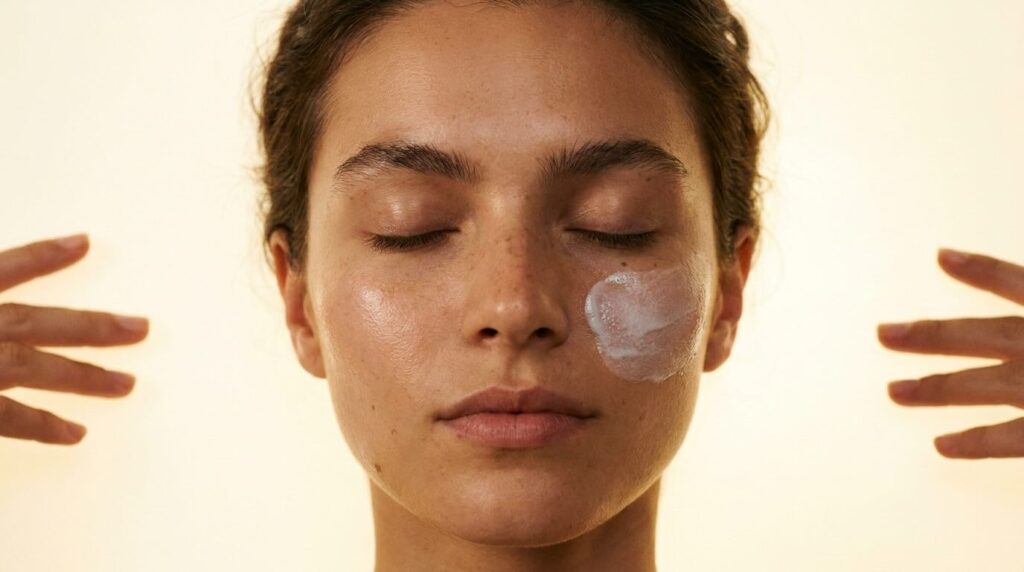
If sunscreen stings or burns, the AAD suggests a formula with only zinc oxide and titanium dioxide as its active sunscreen ingredients. That is a starting option to discuss, not a promise that every mineral formula will feel comfortable. AAD: choosing sunscreen.
SPF describes protection against sunburn; broad-spectrum labelling also addresses UVA protection. A higher SPF does not let you stay outside longer without reapplying. Check the directions as well as the number. FDA: sunscreen and sun protection.
Everyday sunscreen options to compare
The options below are a comparison shortlist. Prices, pack sizes and regional formulas change, so check the current listing and compare the cost per amount. Price alone does not tell you whether a sunscreen will suit your routine.
Beauty of Joseon Relief Sun SPF50+
Beauty of Joseon describes Relief Sun as a creamy, lightweight sunscreen with rice extract and niacinamide. Its current global page says the name changed from Rice + Probiotics to Rice + Niacinamide while the formula and size remained unchanged. This is different from the brand’s mugwort sun stick. Beauty of Joseon: Relief Sun.
Consider it if you prefer a moisturising, dewy texture. Check the exact regional version and packaging when buying; the same brand can sell different sunscreen formulas. We cannot promise a particular finish on every skin tone.
Beauty of Joseon Relief Sun SPF50+
Check current price and sizeRice and niacinamide sunscreen; the brand describes a moisturising, dewy texture. Check the exact regional version. Availability: For the original Relief Sun SPF 50+, check Beauty of Joseon’s authorised retailers for your country. The US Daily Relief SPF 40 is a different formula.
Bioré UV Aqua Rich Moisturizer SPF 50 (US)
The linked Amazon product is the US Bioré UV Aqua Rich Moisturizer SPF 50. It is not the Japanese Watery Essence SPF 50+ PA++++. Bioré describes the US formula as a revamped version inspired by the Japanese sunscreen. Do not transfer ingredients or water-resistance claims between versions. Kao: Japanese Watery Essence; Bioré: US Aqua Rich SPF 50.
The brand positions Aqua Rich around a light, hydrating feel. Check the full product name, market and label on the bottle you select, particularly if fragrance or alcohol affects your preferences. An essence name does not guarantee a matte finish.
Bioré UV Aqua Rich Moisturizer SPF 50 (US)
Check current price and sizeAqua Rich formulas differ by region. Compare the exact bottle, ingredients and use directions.
ISNTREE Hyaluronic Acid Natural Sun Cream SPF50+
ISNTREE Hyaluronic Acid Natural Sun Cream is a mineral option. Its US product label lists zinc oxide as the active sunscreen ingredient, rather than the chemical/mineral blend previously described here. Check that you are selecting Natural Sun Cream, not a similarly named sun gel. DailyMed: ISNTREE product label.
The label directs generous application 15 minutes before sun exposure and reapplication at least every two hours. Assess the finish on your own skin; we have no basis to promise that a white cast disappears within a minute.
ISNTREE Hyaluronic Acid Natural Sun Cream SPF50+
Check current price and sizeMineral Natural Sun Cream with zinc oxide. Check the exact product and its application directions.
Eucerin Tinted Age Defense SPF 50: another daily option
For a tinted daily sunscreen, Eucerin Sun Age Defense Tinted Face Lotion SPF 50 is another option to compare. The US formula offers broad-spectrum SPF 50 with organic (chemical) UV filters and includes hyaluronic acid. It is not the same product as Eucerin’s tinted mineral SPF 35.
The tint will not necessarily suit every complexion, so check the shade before committing. Its directions say to use a water-resistant sunscreen for swimming or sweating. Apply and reapply as directed, and check the current price when comparing your options.
Check the manufacturer’s formula and directions.
Affiliate link: we may earn a commission if you buy through this link.
La Roche-Posay and EltaMD: check the formula
These familiar brands offer different formulas. Water resistance is a particularly useful distinction between the two specific products below.
La Roche-Posay Anthelios Mineral SPF 50
The US untinted Anthelios Mineral Zinc Oxide Sunscreen SPF 50 lists titanium dioxide 6% and zinc oxide 5%. La Roche-Posay describes a fluid with a matte finish and states water resistance for 40 minutes. La Roche-Posay: Anthelios Mineral SPF 50.
The brand directs generous application 15 minutes before sun exposure, reapplication after 40 minutes of swimming or sweating, immediately after towel drying, and at least every two hours. Check that the bottle matches the untinted version discussed here.
Its mineral filters may make it an option to compare if other sunscreens sting, but the finished formula still needs to suit you. Neither a familiar brand name nor a higher price guarantees comfort.
La Roche-Posay Anthelios Mineral SPF 50
Check current price and sizeUS untinted mineral SPF 50 with zinc oxide and titanium dioxide. Water-resistant for 40 minutes; apply as directed.
EltaMD UV Clear SPF 46
EltaMD UV Clear SPF 46 combines zinc oxide 9% with octinoxate 7.5%, making it a hybrid formula. Its ingredient list includes niacinamide and sodium hyaluronate. DailyMed: EltaMD UV Clear label.
For swimming or sweating, choose a water-resistant sunscreen. UV Clear’s label explicitly gives this direction. The earlier claim that UV Clear is water-resistant for 80 minutes was incorrect. Its label also directs application 15 minutes before sun exposure and reapplication at least every two hours.
Consider UV Clear as a daily option if its formula suits your preferences. We cannot guarantee that it will never pill or irritate, and the SPF number does not establish how it will feel under your other products.
EltaMD UV Clear SPF 46
Check current price and sizeHybrid SPF 46 with zinc oxide and octinoxate. Use a water-resistant sunscreen for swimming or sweating.
A further mineral option: ISDIN
For a further mineral option, compare the exact Eryfotona Actinica formula and current pack size. Additional branded ingredients do not establish that a sunscreen is the best choice for everyone.
ISDIN Eryfotona Actinica SPF 50+
The US Eryfotona Actinica is SPF 50+, not SPF 100+. ISDIN lists 11% zinc oxide and 40-minute water resistance. The existing linked Amazon listing also identifies Actinica as SPF 50/50+. ISDIN: Eryfotona Actinica SPF 50+.
ISDIN describes an ultralight emulsion and markets DNA Repairsomes. Those claims do not guarantee that this sunscreen reverses your skin damage or outperforms these other options.
Shake well and follow the application and reapplication directions. Seek professional assessment for persistent or concerning skin changes instead of relying on a product comparison.
ISDIN Eryfotona Actinica SPF 50+
Check current price and sizeUS mineral SPF 50+ with 11% zinc oxide and 40-minute water resistance. Follow all application and reapplication directions.
How to apply and reapply sunscreen
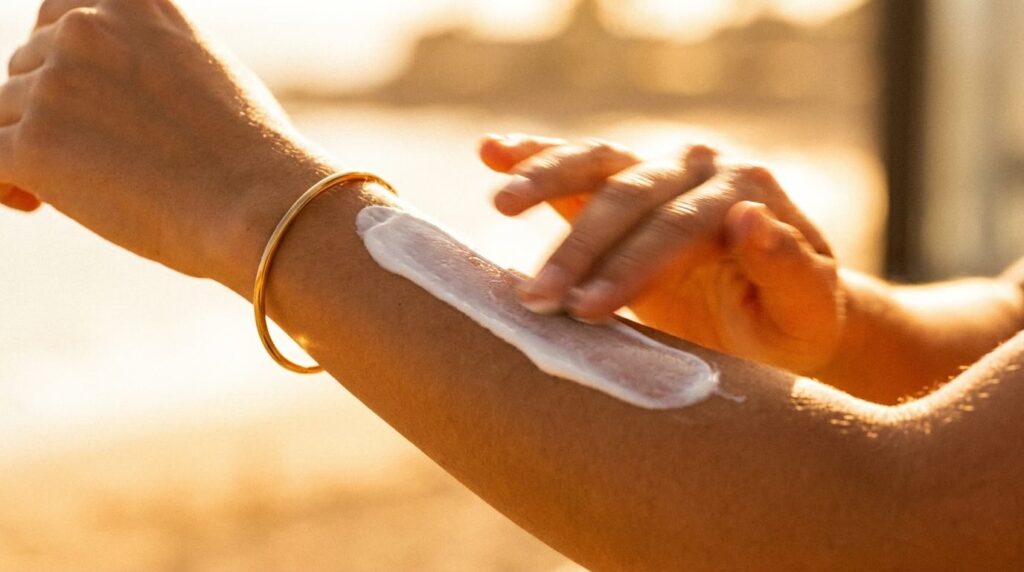
A sunscreen is tested at a specified application amount. A thin or patchy layer may not provide its labelled protection. Spread it evenly and follow the product’s directions rather than trying to make a small bottle last by applying less. FDA: sunscreen and sun protection.
Use the amount specified by the product for each area. The AAD says most adults need about one ounce to cover exposed body skin, with more where needed; remember the face, neck and ears. A small dab for the whole face and neck is not a reliable measure. AAD: applying sunscreen.
Apply before going outdoors. The AAD recommends allowing 15 minutes; the product labels discussed above also give specific directions. Do not wait until you are already in the sun to start.
In a morning routine, apply sunscreen after your skincare and before makeup, following the formula’s instructions. For example, La Roche-Posay explicitly places its mineral SPF as the last skincare step. Avoid mixing it into moisturiser to thin it out. La Roche-Posay: Anthelios Mineral SPF 50; AAD: sunscreen labels.
Reapply at least every two hours while outdoors. Follow the bottle’s swimming and sweating interval and reapply after towel drying. A single midday top-up is not enough for an entire day outside. Use shade, protective clothing, a hat and sunglasses alongside sunscreen. FDA: sunscreen and sun protection.
If reapplying over makeup is awkward, plan a method that lets you apply enough of your chosen sunscreen evenly. A quick dusting of powder should not be treated as proof that you have restored the labelled SPF.
Sunscreen and Your Anti-Ageing Routine
Keep the routine manageable: cleansing, moisturising as needed and daytime sun protection can be a useful starting point. Optional serums should have a clear purpose instead of making sunscreen harder to apply.
For related routine guidance, start with the steps you already use. For barrier repair, check out → our guide on skin barrier repair. For a full anti-ageing routine, see → how to build great skin after 30.
If you use retinol or a prescribed retinoid, follow its own instructions and the prescriber’s advice. The AAD recommends daytime sun protection with retinoid use. There is no need to add a retinoid simply because you have turned 30. AAD: retinoids and retinol.
For melasma, the AAD recommends a tinted sunscreen containing iron oxide, SPF 30 or higher, and sun-protective habits. The presence of any tint alone does not establish equivalent visible-light protection across formulas. A dermatologist can help with persistent pigmentation; sunscreen is not a guaranteed cure. AAD: melasma self-care.
For more on hyperpigmentation and skin tone evening, check → the complete vitamin C serum guide. For barrier repair products, → best ceramide moisturisers has you covered.
Choose a sunscreen you can use consistently
Choose a sunscreen with appropriate labelled protection that feels manageable to use in the required amount. Keep a comfortable product that already meets those needs.
Before buying, compare the exact formula and region, water-resistance directions, pack size and current cost. A familiar product name can cover several versions.
Make reapplication practical: keep your chosen sunscreen accessible and plan for outdoor time. For swimming or exercise, check the water-resistance label before leaving home.

The aim is a repeatable habit that fits your day. Your sunscreen shortlist should make that decision easier.
Choose for labelled protection and everyday comfort. Apply generously, reapply as directed and make shade and clothing part of the plan.
Common sunscreen questions
What is the best sunscreen after 30?
Start with broad-spectrum SPF 30 or higher and water resistance appropriate to your plans. Compare comfort, the exact formula and your ability to use enough consistently. Age alone does not identify one winning product. AAD: choosing sunscreen.
Does mineral sunscreen work immediately?
Follow the label rather than assuming a mineral formula needs no preparation time. The La Roche-Posay and ISDIN mineral sunscreens discussed here direct application 15 minutes before sun exposure. La Roche-Posay: Anthelios Mineral SPF 50.
Is EltaMD UV Clear water-resistant?
The UV Clear SPF 46 label tells users to choose a water-resistant sunscreen for swimming or sweating. Do not rely on the previous claim that this product is water-resistant for 80 minutes. DailyMed: EltaMD UV Clear label.
Is ISDIN Eryfotona Actinica SPF 100+?
The US Eryfotona Actinica discussed here is SPF 50+, with 11% zinc oxide. Check the exact regional product name and label before buying. ISDIN: Eryfotona Actinica SPF 50+.
How often should I reapply sunscreen?
Reapply at least every two hours while outdoors, and follow the product-specific instructions after swimming, sweating and towel drying. Higher SPF does not remove the need to reapply. FDA: sunscreen and sun protection.
Related Reading
→ The complete guide to skin barrier repair after 30
→ How to choose and store a vitamin C serum
→ The best ceramide moisturiser at every budget
Sources
Guidance and product details checked on 10 September 2026. AAD and FDA resources support application advice; product pages and drug labels support the specifications above. Manufacturer descriptions are attributed, and none of these organisations reviewed or endorsed this article.
- AAD: choosing sunscreen
- AAD: applying sunscreen
- AAD: sunscreen labels
- FDA: sunscreen and sun protection
- AAD: retinoids and retinol
- AAD: melasma self-care
- Beauty of Joseon: Relief Sun
- Kao: Japanese Watery Essence
- Bioré: US Aqua Rich SPF 50
- DailyMed: ISNTREE product label
- La Roche-Posay: Anthelios Mineral SPF 50
- DailyMed: EltaMD UV Clear label
- ISDIN: Eryfotona Actinica SPF 50+
- Hughes MC, et al. (2013). Sunscreen and prevention of skin aging: a randomized trial. Ann Intern Med. PubMed 23732711 Sunscreen trial; not proof of a particular listed SPF product.
- Flament F, et al. (2013). Effect of the sun on visible clinical signs of aging in Caucasian skin. Clin Cosmet Investig Dermatol. PubMed 24101874
- Battie C, et al. (2014). New insights in photoaging, UVA induced damage and skin types. Exp Dermatol. PubMed 25234829
These papers provide research context, not head-to-head evidence for these seven products. PubMed provides citations and abstracts; access to each full paper varies.
Glow Protocol · glowprotocol.beauty · Curated skincare guidance for women 30+
Affiliate Disclosure: This post contains affiliate links, which means we may earn a small commission if you make a purchase through these links at no extra cost to you. We only recommend products we have researched and believe offer real value. Our opinions remain our own and are not influenced by any brand or compensation.
Affiliate Disclosure: This post contains affiliate links, which means we may earn a small commission if you make a purchase through these links at no extra cost to you. We only recommend products we've researched and believe offer real value. Our opinions remain our own and are not influenced by any brand or compensation.