Created using AI; curated by Glow Protocol. AI tools support research, product comparisons and writing. Our recommendations are editorial selections. How we work.
Quick answer
Start by reducing avoidable irritation and using a gentle cleanser and moisturiser your skin tolerates. More actives are not automatically better. Persistent burning, rash or dryness can have causes beyond a damaged barrier, so an assessment is more useful than assuming a fixed recovery timeline.
Background guidance: AAD: dry-skin care · AAD: product reactions and testing.
Updated : Opening answer clarified and its supporting references checked; jump navigation added. Check current price, size and seller on the retailer listing.

Affiliate Disclosure: This post contains Amazon affiliate links. If you purchase through our links, we earn a small commission at no extra cost to you. We only recommend products we have researched and believe in.
If Your Skin Suddenly Changed After 30, Read This First
Okay so here is the thing. Your moisturizer stings now. It never used to. Your skin feels tight like an hour after washing, and then somehow oily by midday? Products you have literally used for years just… stopped working. And that serum you bought last month, the one your friend swore by, left your face red for three days straight.
This is honestly one of the most common things that happens to women after 30, and also one of the most misunderstood. Most people (me included, for years) treat it like a product problem. Like if I just find the right serum, the right cream, the right whatever. But it is not a product problem. It is a structural one. And that changes everything about how you fix it.
So I wrote this. The complete guide to skin barrier repair after 30. What the barrier actually is (because nobody explains this properly), why it gets more fragile as we age, how to tell when yours is damaged, what actually repairs it, and the specific products I would use at every budget. From under $60 to full luxury.
If your skin is dry and oily at the same time, reactive to things it used to tolerate, and just never quite calm… your barrier is probably the issue. Not your routine. Not your skin type. The foundation itself.
What the Skin Barrier Actually Is
So “skin barrier” sounds like something a brand made up to sell you a cream, right? It is not. It is an actual physical structure. The outermost layer of your skin, called the stratum corneum, and it basically has two jobs: keep moisture in, keep everything else out. That is it. When those two things work, your skin works.
Picture a brick wall. Your skin cells are the bricks. The stuff holding them together (about 50% ceramides, 25% cholesterol, 15% fatty acids) is the mortar. When that mortar starts breaking down? The wall gets holes. Water escapes out, irritants get in, and suddenly nothing you put on your face behaves the way it should.
When this barrier is doing its job, you barely think about your skin. It holds moisture, it tolerates products, it bounces back from a bad night or a stressful week. But when it is compromised, you get this reactive, unpredictable skin that no amount of new products seems to fix. And that is the trap. Because your instinct is to buy more things, and the buying more things is often what is making it worse. Getting this was the first real step in understanding skin barrier repair for me.

The skin barrier is not a metaphor for sensitivity. When it is damaged, everything changes. Not because your skin type changed, but because the structure holding it all together stopped doing its job.
Why the Barrier Gets More Vulnerable After 30
This does not happen to everyone at the same time, so do not panic if you are 32 and your skin is still fine. But the biology is pretty consistent. There are several things that shift in your 30s and 40s that make the barrier less resilient than it used to be. And knowing what they are actually helps, because you stop blaming yourself and start understanding what is happening.
Ceramide production slows down
Remember the mortar in the brick wall? Ceramides are the main ingredient in that mortar. And they decline with age. Like, measurably. Research shows that ceramide levels in women over 40 are roughly 30% lower than in their 20s. Less ceramide, less mortar, thinner wall. It is not dramatic overnight, but over time it adds up.
Cell turnover decreases
In your 20s your skin cells renew roughly every 28 days. By your 40s that cycle slows to more like 45 to 60 days. Which means the barrier repairs itself more slowly after any kind of damage. And it is more vulnerable to things stacking up before it gets the chance to recover. So where your 25-year-old skin could handle a bad product and bounce back in a few days, your 38-year-old skin might take weeks. Not because something is wrong with you. Just biology.
Estrogen levels start to shift
This one hit me personally. Estrogen directly supports ceramide synthesis and collagen production. As it fluctuates through your 30s and into perimenopause, your barrier loses some of that built-in hormonal support.
And this is why your skin can feel totally different at different points in your cycle. Like one week a product works beautifully and the next week the same exact product causes irritation. I thought I was going crazy until I understood this.
Climate and environment accumulate
Years of sun, pollution, hard water, stress, changing climates. It all compounds. Younger skin just bounces back from this stuff. It is resilient in a way you do not appreciate until it stops being that way.
After 30 the same stressors take longer to recover from. And if multiple things hit at once, like moving to a new country, going through a difficult period, changing your water source, the barrier can just get overwhelmed. I have lived in four different climates across three continents, and every single move triggered some kind of skin crisis. It took me years to connect those dots.
If your skin suddenly changed after 30, it did not change randomly. Something shifted. Internally, externally, or both. Figuring out what shifted is more useful than buying more products.
7 Signs Your Skin Barrier Is Damaged
You do not need all seven. Honestly, if two or three of these sound familiar, that is enough to take it seriously.
1. Your moisturizer stings or burns on application
When your barrier is intact, products sit on the surface and get absorbed gradually. When it is damaged, even gentle stuff penetrates way too fast and hits nerve endings. That sting you feel? That is not the product being “active.” That is your barrier telling you it has holes in it.
2. Your skin is dry and oily at the same time
3. Products that worked before have stopped working
If you have not changed your routine but your skin has changed its response to it, that is almost always the barrier. The products did not get worse. Your skin’s ability to handle them did.
4. Skin feels tight within an hour of washing
That tightness that comes back really fast after washing? That is transepidermal water loss (people in skincare call it TEWL). Basically moisture is escaping through your barrier faster than it should. Your skin is literally leaking water.
5. Redness and sensitivity with no obvious cause
When your barrier has gaps, environmental stuff that normally gets filtered out (pollution, temperature changes, even wind) reaches your skin’s immune cells directly. And they react. So you get redness and irritation seemingly out of nowhere. It is not nowhere. It is your barrier not doing its filtering job.
6. Breakouts alongside dryness
This one really threw me. Pimples AND flaky skin? At the same time? Barrier damage creates this weird environment where bacteria thrive and pores get congested even in skin that was never acne-prone before. So you are dry and breaking out and nothing makes sense.
7. Everything takes longer to recover
A small irritation that would have faded in a day when you were 25 now lingers for a week. Maybe two. Your skin just heals slower when the barrier is not working right. If this sounds like your skin, skin barrier repair should honestly be your first priority before you add anything else to your routine.
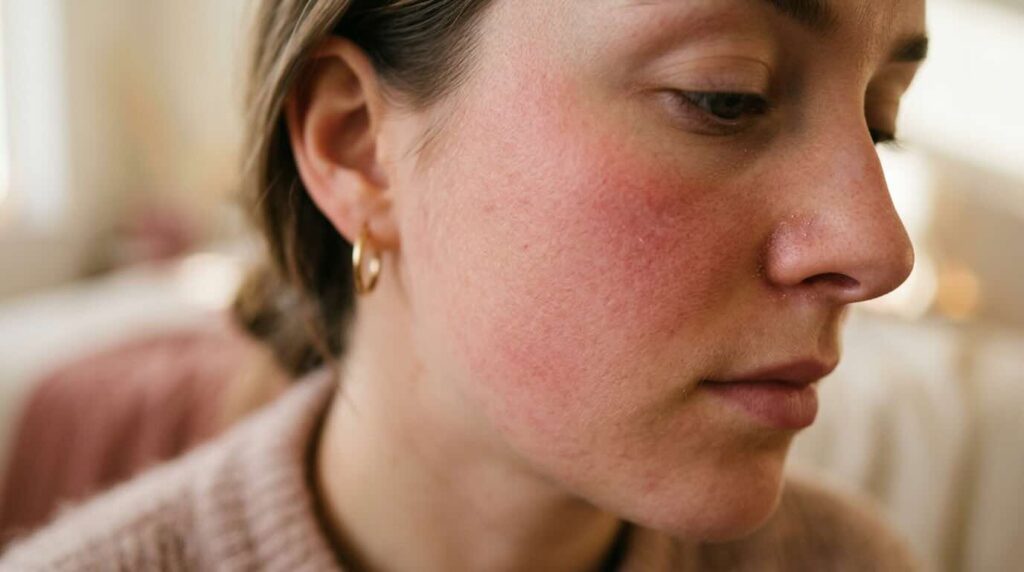
What Damages the Barrier, and Why It Is Counterintuitive
Here is the part that nobody tells you. Most barrier damage in women over 30 is not caused by neglect. It is not because you are not doing enough. It is because you are doing too much. Individually reasonable products that are collectively wrecking the lipid matrix. I know because I did exactly this for years.
Over-exfoliation
AHAs and BHAs are great. But used too often they literally erode the lipid matrix. And a lot of women who develop reactive skin in their 30s have been exfoliating like 2 to 4 times a week without realizing the cumulative damage. Once a week is usually enough. Sometimes less. I was doing it almost daily at one point. No wonder my face was angry.
Too many actives at once
Retinol, vitamin C, acids, niacinamide, peptides. Every single one of these is backed by research. They work. But layer them all together without careful sequencing and you get pH conflicts, they compete for absorption, and they overwhelm a barrier that cannot repair itself fast enough between applications. I had like seven actives in my routine at one point. Seven. My barrier never stood a chance.
Harsh or stripping cleansers
Fragrance, synthetic and natural
This was a hard one for me because I love a beautiful smelling product. But fragrance (both synthetic and natural, including essential oils) is one of the most common contact allergens in skincare. And the thing is, a lot of women only discover they have a fragrance sensitivity after their barrier is already damaged. The barrier was protecting them from it before. Once it breaks down, suddenly that lavender oil in your night cream is a problem.
The Skin Barrier Repair Protocol, Step by Step
Okay so here is the actual protocol. And I want to be upfront: the goal of skin barrier repair is not to find some magic treatment. It is to create conditions where your barrier can repair itself. Your skin already knows how to do this. You just have to stop getting in its way. Start simpler than you think you need to.
Step 1: Stop everything aggressive
All of it. Acids, retinol, vitamin C, exfoliants. Gone. Anything with fragrance or anything that has made your skin sting even once. Remove it. If you are not sure whether a product is the problem, remove it anyway. You can bring things back one at a time later. But right now, your barrier needs silence.
Step 2: Gentle cleansing only
Morning: just rinse with cool water. Seriously. Or use the most gentle fragrance-free cleanser you own. At night, a low-pH cleanser (pH 4.5 to 6.5) is plenty. And if your skin feels tight or squeaky after washing? Your cleanser is too harsh. Get rid of it.
Step 3: Barrier-focused moisturizer, immediately after washing
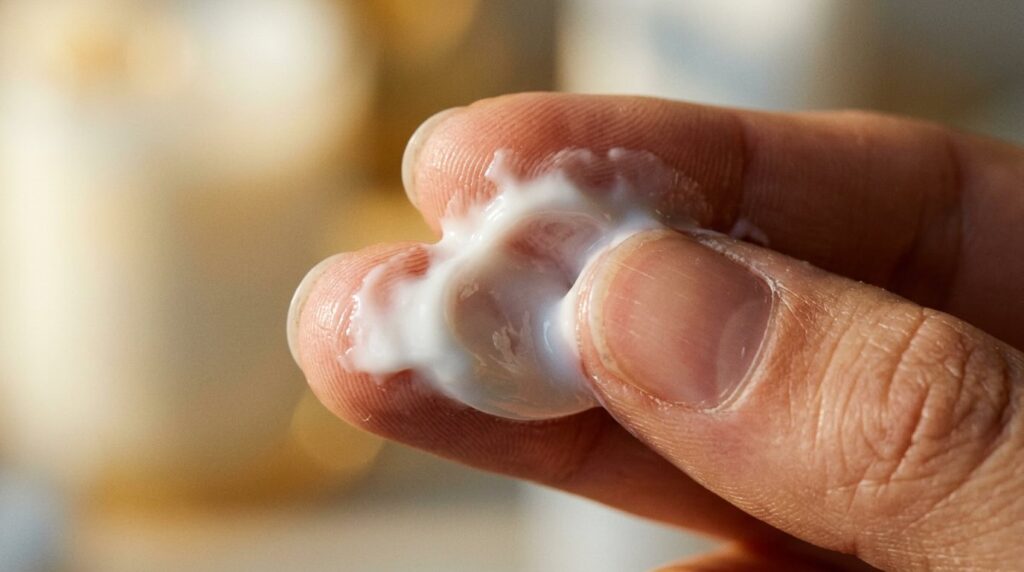
You want ceramides, cholesterol, and fatty acids together. This combination actually mimics your skin’s own lipid matrix and it has the strongest evidence base for skin barrier repair out of anything you can buy. Apply it while your skin is still a little damp. That locks in way more moisture than applying to dry skin.
One cream option to compare is Aestura Atobarrier365 Cream (80 ml). Its current ingredient list includes ceramide NP, cholesterol, squalane and niacinamide. Consider it as your moisturiser choice, rather than adding it on top of several other creams. It is not a reason to replace a product that already feels comfortable, and the brand’s hydration claims do not guarantee a particular recovery time for your skin.
Check the manufacturer’s formula and directions.
Affiliate link: we may earn a commission if you buy through this link.
Step 4: SPF every single morning
I cannot stress this enough. UV exposure is the single biggest external driver of barrier degradation. And a compromised barrier is even more vulnerable to UV damage than a healthy one. SPF 30 minimum. Every day. Cloudy days. Indoor days near windows. Winter. I know. But this is the one non-negotiable.
Step 5: Give it real time, at least 4 to 8 weeks
Your skin barrier renews on roughly a 28-day cycle when it is healthy. When it is damaged, especially in older skin, it can take 6 to 8 weeks to see real improvement.
Please do not evaluate at week 2. That is when most people give up. They think nothing is happening and they add something new or switch products. Do not. Week 2 is right before things start getting better. I have seen this pattern so many times now, including in myself.
Barrier repair is not a 72-hour thing. The women who see the most improvement are the ones who resist adding something new at week 3 because it feels like nothing is working. Something is working. You just cannot see it yet.
The Ingredients That Support Skin Barrier Repair
These are not the sexy ingredients. Nobody is making TikTok videos about cholesterol in moisturizer. But these are the ones that actually work when your barrier is compromised. Boring but effective. My favorite category.
Ceramides
The most important one for skin barrier repair. Clinical studies show that topical ceramides actually replenish the lipid matrix and significantly reduce water loss through the skin. Look for ceramide NP, AP, and EOP on the label, and ideally you want them alongside cholesterol and fatty acids. That trio together is the gold standard.
Niacinamide (Vitamin B3)
At 2 to 5% concentration, niacinamide actually stimulates your skin to produce more ceramides on its own. It also reduces water loss and calms redness. And here is the nice thing: it is one of the few “active” ingredients that is gentle enough to use during active barrier repair without making things worse.
Panthenol (Provitamin B5)
An underrated ingredient honestly. It is a humectant with solid evidence behind it for supporting barrier repair and speeding up healing. Gentle enough for even the most reactive, angry skin. I wish more products featured this prominently.
Squalane
Your skin actually produces squalene naturally (with an ‘e’). Squalane (with an ‘a’) is the stabilized version. It seals in moisture without clogging pores, does not irritate anything, and works on literally every skin type. If your skin is reactive and you need an oil that will not cause problems, this is it.
Centella Asiatica (Cica)
There is a reason K-beauty built an entire product category around this ingredient. Anti-inflammatory, wound-healing, well-supported in actual clinical research. It calms irritation, supports collagen, and helps the barrier repair itself. If you see “cica” on a product, this is what they are talking about.
Hyaluronic Acid, with one caveat
Incredible humectant. But (and this is important) without a proper occlusive layer on top, low-molecular-weight hyaluronic acid can actually pull moisture OUT of your skin instead of into it. Especially in dry climates. So always apply it to damp skin and seal it immediately with a ceramide moisturizer. Do not let it sit there by itself.
Complete Skin Barrier Repair Routines: Luxury, Mid-Range, and Budget
Here is something I wish someone had told me earlier: the most expensive routine is not always the best one for skin barrier repair. I have seen a $17 ceramide cream outperform a $200 product that was mostly fragrance and pretty packaging. What actually matters is the formulation. Are the right ingredients in there, at concentrations that work?
The routines below are curated product options, not accounts of our own testing. Choose the steps you need and compare the full basket before buying.
■ Budget Skin Barrier Repair Routine: Under $60 total
Best for: anyone just starting barrier repair who wants proven results without the price tag. These products are backed by the same science as options that cost 10x more. Seriously.
AM Routine
CeraVe Hydrating Cleanser
Low-pH, fragrance-free, already has ceramides and hyaluronic acid in it. Does not strip. This is the gold standard for barrier-safe cleansing and it costs twelve dollars. Hard to beat that.
View on Amazon →
COSRX Snail Mucin 96% Power Essence
Yes, snail mucin. I know it sounds weird. But snail secretion filtrate is genuinely one of the best-researched ingredients for barrier repair and hydration. Use it as a serum layer before your moisturizer.
View on Amazon →
CeraVe Moisturizing Cream A moisturising cream option with ceramides, cholesterol and hyaluronic acid. Compare its cream format with a lotion if you prefer a lighter-feeling application. The selection is based on product information, not a Glow Protocol wear test. View on Amazon →
ISNTREE Hyaluronic Acid Watery Sun Gel SPF 50 A sunscreen option to assess by its exact regional label, protection claims and directions. Check the seller and full formula before buying. We have not verified a universal white-cast or sensitive-skin result. View on Amazon →
PM Routine
CeraVe Hydrating Cleanser
Same one as morning. Low-pH, will not mess with your barrier overnight.
View on Amazon →
HADA LABO Gokujyun Premium Lotion
Multiple types of hyaluronic acid in this thin, watery texture. Apply to damp skin before your moisturizer. It pulls in so much hydration. A cult favorite in Japanese skincare for a reason.
View on Amazon →
CeraVe Moisturizing Cream
Be generous with it at night. The MVE system releases ceramides continuously while you sleep, and nighttime is when your barrier does most of its repair work. Let it do its thing.
View on Amazon →
■ Mid-Range Routine: $100 to $200 total
Best for: women who want clinically tested formulations with better textures and more targeted skin barrier repair. These feel nicer to use, and sometimes that matters for consistency.
AM Routine
La Roche-Posay Toleriane Hydrating Gentle Cleanser
Fragrance-free, non-foaming, pH-balanced. Clinically tested on reactive and rosacea-prone skin. Feels a bit more elegant than CeraVe if that matters to you (and honestly, it can).
View on Amazon →
Paula’s Choice Calm Niacinamide Serum
5% niacinamide with panthenol, ceramides, and oat extract. Built specifically for reactive, compromised skin. One of the most thoughtfully formulated serums I have come across at this price. It just works quietly.
View on Amazon →
Dr. Jart+ Cicapair Tiger Grass Cream
Heavy on centella asiatica. Visibly calms redness while repairing the barrier underneath. Works really well on reactive or sensitized skin. Also doubles as a redness corrector which is a nice bonus.
View on Amazon →
EltaMD UV Clear SPF 46
Mineral-chemical hybrid with niacinamide built in. Lightweight, barely any white cast, fragrance-free. Probably the best mid-range SPF for reactive or acne-prone skin. A lot of dermatologists recommend this one and for once I actually agree with them.
View on Amazon →
PM Routine
La Roche-Posay Toleriane Hydrating Gentle Cleanser
Gentle enough to use twice a day without disrupting anything. Your barrier will thank you for the consistency.
View on Amazon →
Biossance 100% Squalane Oil
Pure squalane. Apply it before your moisturizer and it adds a lipid layer that mimics your skin’s own sebum. Non-comedogenic, works on literally every skin type. Simple and effective.
View on Amazon →
First Aid Beauty Ultra Repair Cream A cream option to compare by the current ingredient list, size and label directions. Do not assume that a product marketed for dry skin will suit every flare or diagnosed condition. View on Amazon →
Laneige Water Sleeping Mask
Use this 2 to 3 nights a week on top of your moisturizer. It is an occlusive sleeping mask that locks everything underneath in overnight. You will notice the difference by morning. Not subtle.
View on Amazon →
■ Luxury Routine: $300+ total
Best for: women who want the highest-end formulations with real clinical backing, proprietary complexes, and measurable results. These are the products where luxury actually means something in the formula, not just the jar.
AM Routine
Tatcha The Rice Wash
Amino acid-based cleanser with Japanese rice bran, hyaluronic acid, and botanical extracts. Fragrance-free and extremely gentle. The texture is a genuine step up from everything in the mid-range. Your face just feels… right after using it.
View on Amazon →
Drunk Elephant Protini Polypeptide Cream
Signal peptides with pygmy waterlily and amino acids. There are actual clinical studies showing measurable improvements in firmness, texture, and barrier resilience with consistent use. One of the few luxury moisturizers where the price is genuinely reflected in the formulation science.
View on Amazon →
La Roche-Posay Anthelios Mineral SPF 50
100% mineral. Zinc oxide and titanium dioxide. Fragrance-free, no alcohol. Maximum gentleness during active barrier repair. It does leave a slight white cast, that is the tradeoff. But for the most reactive skin states, this is the best SPF option I have found.
View on Amazon →
PM Routine
Tatcha The Rice Wash
Same one as morning. Gentle enough for twice a day even on the most sensitive skin.
View on Amazon →
SK-II Facial Treatment Essence
Over 90% Pitera, which is a yeast-derived ferment filtrate with over 30 years of clinical research behind it. Thirty years. That is not marketing. It supports cell turnover, hydration, and barrier resilience. Expensive, yes. But the evidence is genuinely there.
View on Amazon →
Augustinus Bader The Rich Cream
Proprietary TFC8 complex with ceramides, amino acids, and growth factors. Clinical studies show measurable improvements in barrier function, texture, and skin renewal. This is the luxury benchmark for skin barrier repair. Is it worth $265? If your budget allows it and your barrier needs serious repair, the data says yes. I would not say that about many products at this price.
View on Amazon →
What to Expect: A Realistic Skin Barrier Repair Timeline
This is the section that most guides leave out. And it is exactly why most people quit before their barrier actually repairs. So let me be really clear about what the process looks like, week by week.
Weeks 1 to 2: Things may feel the same, or slightly worse
Your barrier is just starting to build new lipids. Products might still sting a little. Skin might still feel reactive. This is normal and it does not mean the routine is failing. The goal right now is just consistency. Not results. Consistency.
Weeks 3 to 4: Reactivity starts to decrease
This is where things start shifting. Products sting less, or not at all. Hydration feels more consistent through the day instead of disappearing by noon. The oiliness might calm down as your barrier stops overcompensating. It is subtle at first but it is real.
Weeks 5 to 8: Measurable improvement
After 8 weeks: Reintroduce actives carefully
One at a time. Low concentrations. Wait at least two weeks between each new addition. Start with niacinamide (it is the gentlest), then maybe a low-strength retinol or a mild acid. And please, please do not go back to your old full routine all at once. That is how you end up right back where you started. Ask me how I know.

The women who see the most improvement are the ones who resist adding something new at week 3 because it feels like nothing is happening. Something is happening. Your skin is rebuilding its lipid matrix. That takes time. Not more products.
One Thing to Know Before You Start
Dry skin is a skin type. Some people just naturally produce less oil and have always tended toward tightness. That is not what we are talking about here. A damaged barrier is different. It happens suddenly, in skin that did not behave this way before. And it can happen to any skin type, including oily. Especially oily, actually, because oily skin tends to get over-treated.
If your skin changed, if something that was never a problem became one, that is almost always the barrier. Not your product choice. Not your skin type. The foundation underneath everything.
Not Sure Where Your Skin Stands?
If you want to know how I figured all of this out (the hard way, obviously, with a lot of wasted money and a few breakdowns in bathroom mirrors), read my story here.
Browse product comparisons by category →
Sources
Research context: these sources cover ingredients, skin biology or specific tested formulations. Results depend on the concentration, delivery method and population studied. Product selections are editorial curation; these references are not head-to-head tests of all products listed.
- Coderch L, et al. (2003). Ceramides and skin function. Am J Clin Dermatol. PubMed 12553851 Background on ceramide biology and skin function.
- Farage MA, et al. (2008). Intrinsic and extrinsic factors in skin ageing: a review. Int J Cosmet Sci. PubMed 18377617
- Papakonstantinou E, et al. (2012). Hyaluronic acid: A key molecule in skin aging. Dermatoendocrinol. PubMed 23467280 Review of hyaluronic acid biology and skin ageing.
- Bissett DL, et al. (2005). Niacinamide: A B vitamin that improves aging facial skin appearance. Dermatol Surg. PubMed 16029679 Specific 5% niacinamide formula; 50 women, 12 weeks.
Glow Protocol · glowprotocol.beauty · Science-backed skincare for women 30+
Affiliate Disclosure: This post contains affiliate links, which means we may earn a small commission if you make a purchase through these links at no extra cost to you. We only recommend products we've researched and believe offer real value. Our opinions remain our own and are not influenced by any brand or compensation.