Created using AI; curated by Glow Protocol. AI tools support research, product comparisons and writing. Our recommendations are editorial selections. How we work.
Quick answer
Azelaic acid is the more direct comparison when dark marks sit alongside acne or redness concerns; vitamin C is an antioxidant category whose evidence depends heavily on the derivative, concentration, formula and stability. Both appear in dermatology guidance for uneven pigmentation. Neither is an instant fix, and sunscreen remains central when dark spots are the concern.
Two ingredients can appear on the same dark spot list without being interchangeable. Azelaic acid has recognised uses in acne, rosacea and pigmentation. “Vitamin C” covers several topical forms whose performance depends on how the finished product is made and stored. The useful decision is which role matches your routine and which formula you can use consistently.
How we curated this: AI-assisted research using the dermatology and peer-reviewed sources linked below, curated for everyday skincare decisions. We have not conducted product testing or medical review.
This article contains affiliate links. If you buy through them, Glow Protocol may earn a commission at no extra cost to you.

Azelaic acid vs vitamin C: compare the roles
DermNet describes azelaic acid as a topical option used for mild to moderate acne, with anti-inflammatory activity and an effect on pigmentation. The American Academy of Dermatology also lists it among ingredients that can help fade dark spots, including marks left after acne.
Topical vitamin C is discussed for antioxidant and pigmentation-related effects, but the name on the front of a bottle does not identify one standard formula. A peer-reviewed review notes that L-ascorbic acid is unstable and that penetration and formulation are recurring challenges. A systematic review found encouraging evidence for uneven pigmentation, while also noting limited study size and duration. That makes the finished formula, packaging and directions part of the decision.
| Question | Azelaic acid | Vitamin C |
|---|---|---|
| Why it appears in dark spot guides | Targets pigmentation and is also used in acne and rosacea care | Topical antioxidant category with studies on pigmentation and photodamage |
| What the name does not tell you | Whether it is a cosmetic strength or a prescribed preparation | Which derivative, concentration, pH, stability or delivery system is used |
| Useful shopping question | Are post-acne marks or acne part of the same concern? | Does this exact formula disclose the form, packaging and directions clearly? |
| Common routine risk | Adding it beside several other potentially irritating steps | Buying an unstable or poorly tolerated formula based on percentage alone |
This table helps organise a purchase. It is not a treatment prescription and it does not establish that one ingredient will work faster for you.
Choose around the pattern you can actually see
If dark marks follow spots
Azelaic acid may be the more coherent ingredient to investigate when blemishes and post-inflammatory marks are part of the same pattern. DermNet and the AAD connect it with acne and the pigmentation that can follow. A cosmetic product and a prescribed preparation are not interchangeable, so read the exact strength and directions.
If your priority is an antioxidant morning step
A vitamin C formula may fit if you want an antioxidant step and can evaluate the product beyond the headline percentage. Look for the named form of vitamin C, protective packaging, storage directions and a texture you will use. Colour change, odour and the brand’s replacement guidance are more useful than assuming every amber serum works the same way.

If your skin is already irritated
Pause the ingredient contest. Burning, scaling or persistent redness is not a cue to stack more actives. Simplify the routine, follow the product’s stop-use directions and seek professional advice for persistent or severe symptoms. Irritation itself can contribute to dark marks, especially in deeper skin tones.
Our azelaic acid guide compares formats, while the vitamin C serum guide explains derivatives and storage. Use those only after choosing the ingredient role.
Can you use azelaic acid and vitamin C together?
Ingredient compatibility in the abstract does not prove that two finished products will be comfortable in the same routine. Check both labels. If neither prohibits the pairing, you still have three reasonable options: use one, separate them by time of day, or introduce them one at a time before deciding whether both earn a place.

Using one product is the clearest starting point when you are new to both. Separating them can make the routine easier to follow, but it does not guarantee less irritation or better results. Using both in one session should depend on their individual directions, your established tolerance and how the layers behave.
If one product is prescribed, ask the prescriber or pharmacist before changing the routine around it. A generic layering chart cannot account for the medicine, base formula or condition being treated.
Build a manageable dark spot routine
Start with a stable base: gentle cleansing, a moisturiser you tolerate and sunscreen. The AAD recommends sunscreen as part of preventing new dark spots and helping existing pigmentation fade. For outdoor exposure, its general guidance is broad-spectrum, water-resistant SPF 30 or higher, reapplied as directed.
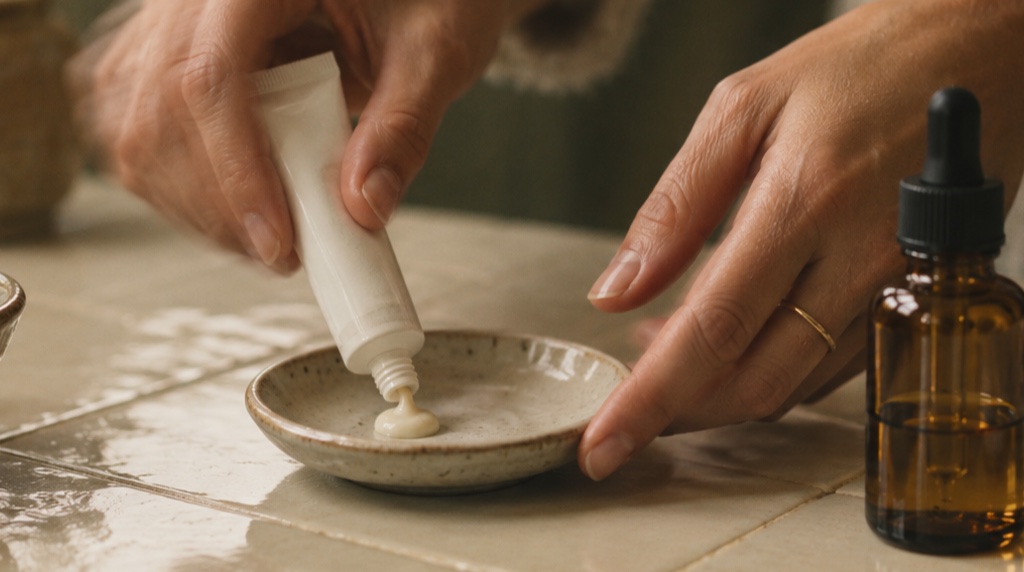
Then add one targeted product. Follow its frequency and amount, keep notes on comfort and do not change three other steps at the same time. Our new-product testing guide explains a cautious introduction without presenting a home check as medical patch testing.
Set a review point based on the product directions, not a promise of overnight change. Take photos in similar light if you want a personal record. Dark spots can have different causes. A changing, irregular, bleeding or otherwise concerning mark needs professional assessment rather than a cosmetic brightening experiment.
Common questions
Which is better for post-acne marks?
Azelaic acid has the more direct link to acne and post-inflammatory pigmentation in the sources reviewed. The choice still depends on the exact product, strength, tolerance and whether acne is active.
Which is better for sensitive skin?
Neither is universally irritation-free. Start with the exact formula’s directions and introduce one new product at a time.
Can vitamin C replace sunscreen?
No. Antioxidant skincare does not replace sunscreen, shade or protective clothing.
Do I need both for faster results?
We found no basis for promising that a two-product stack will work faster for an individual reader. More steps can increase cost and make irritation harder to trace.
Sources and how we used them
Sources checked on 19 September 2026. Dermatology sources support general ingredient and sunscreen statements. Reviews describe vitamin C evidence and limitations. None reviewed or endorsed this article.
- DermNet: azelaic acid
- AAD: fading dark spots
- AAD: acne treatment
- Topical vitamin C review
- Systematic review of topical vitamin C
Affiliate Disclosure: This post contains affiliate links, which means we may earn a small commission if you make a purchase through these links at no extra cost to you. We only recommend products we've researched and believe offer real value. Our opinions remain our own and are not influenced by any brand or compensation.