Ingredients

What your skin actually needs โ€” and why. Ceramides. Niacinamide. Retinol. Peptides. The ingredient lists on skincare products have never been longer, and the marketing claims have never been louder. This section cuts through both. Each guide here explains what an ingredient does, what the clinical evidence actually shows, and whether it belongs in your routine right now. Because reading a label and knowing what you are buying should not require a biochemistry degree.

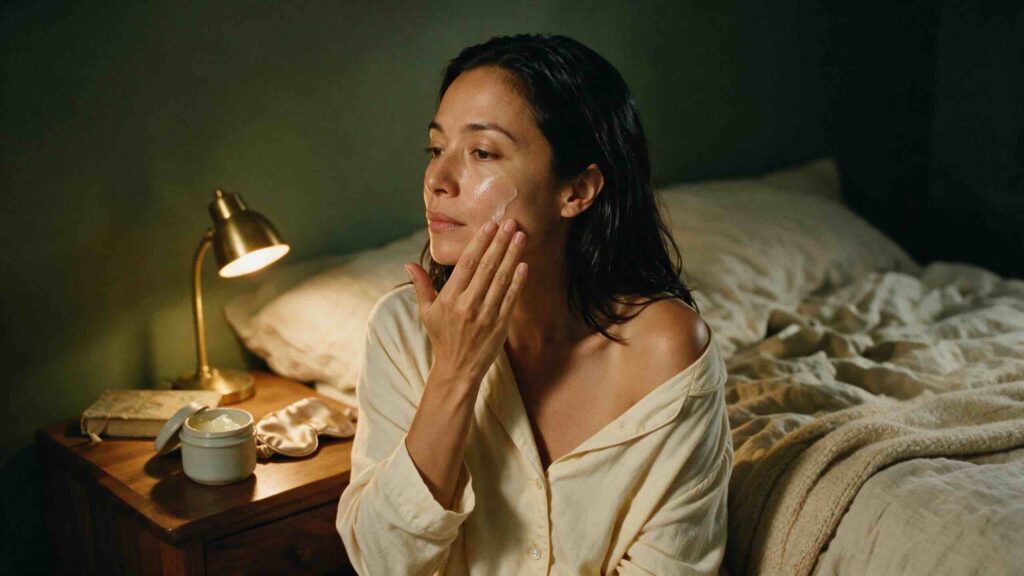
Editorial three-quarter portrait of a Japanese-Brazilian woman in her late 30s sitting on the edge of her linen-dressed bed at night in soft warm tungsten bedside lamp light applying a final occlusive layer with a small ceramic tub of petroleum jelly visible on the nightstand against a shadowed deep olive wall
Ingredients

SPF Myths Debunked for Women 30+: What Sunscreen Actually Does

Most of what women 30+ believe about sunscreen is wrong, and the cost of that misunderstanding shows up on the face by 40 as fine lines, hyperpigmentation, and loss of firmness that could have been prevented. SPF myths persist because they are convenient. Higher number equals double protection. Windows block UV. Dark skin does not need SPF. Chemical filters are dangerous. Mineral leaves a white cast. Foundation with SPF is enough. Each of these is either flatly wrong or wrong in the way that matters most for your skin.

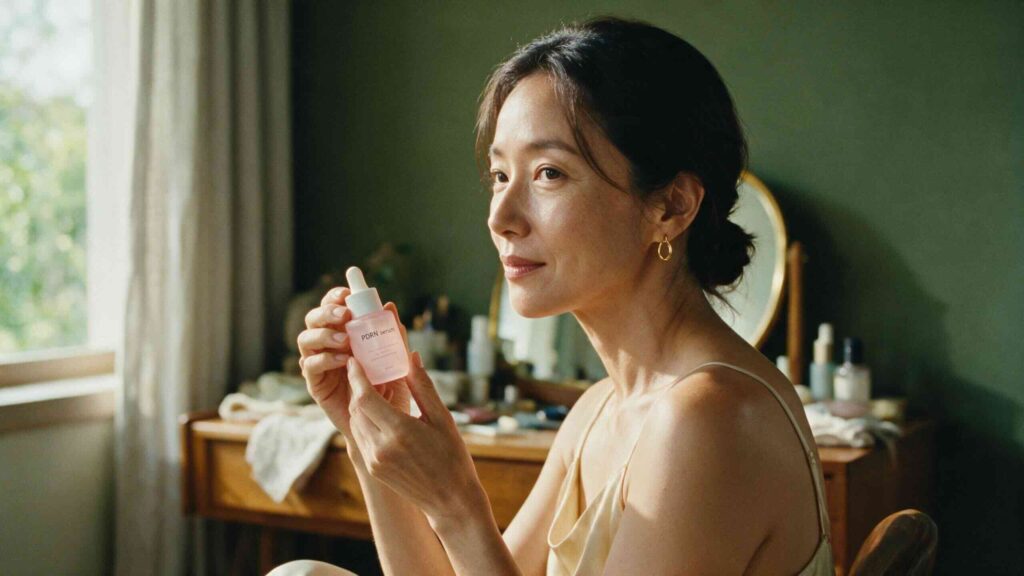
Editorial three-quarter portrait of a Korean-Chilean woman in her early 40s at her vanity holding a small pale-pink frosted dropper bottle of PDRN serum in soft warm morning window light against a deep olive wall with real skin texture preserved
Ingredients

PDRN Skincare for Women 30+: What Salmon DNA Actually Does for Your Skin

If you have been paying attention to skincare online in the last six months, whether on Reddit, TikTok, or Vogue’s beauty desk, you have probably heard the acronym PDRN. It is the ingredient trending harder than peptides, more talked about than retinol, and generating more conversation than hyaluronic acid has since the early 2010s. But unlike most trending skincare ingredients that fade after a season, PDRN is backed by legitimate research, active dermatological adoption, and consistent clinical results.

Editorial three-quarter portrait of a Chilean-Italian woman in her mid 40s seated at her morning vanity with real skin texture preserved showing the natural characteristics of perimenopausal skin and silver strands visible in her dark hair pulled loosely back in soft warm morning window light against a deep olive wall
Ingredients

The Skincare Shift Nobody Warns You About Before Menopause

Somewhere between 40 and 45, a lot of women notice their skin changes in a way that does not match anything the beauty industry prepared them for. The moisturiser that worked for a decade suddenly feels like it does nothing. Fine lines around the mouth appear overnight. Melasma that faded years ago reactivates. Skin dries out in ways that hyaluronic acid alone cannot fix. This is not you doing something wrong. This is perimenopause, the four-to-ten-year hormonal transition that ends at menopause. Estrogen levels start to decline, and estrogen is one of the primary drivers of skin health.

Aesthetic overhead still-life of an open scientific journal article on a warm cream marble countertop with round reading glasses, a brass magnifying glass, and a small CeraVe-sized white moisturiser bottle in soft morning window light
Ingredients

Does CeraVe Cause Cancer? The Honest Evidence-Based Answer

If you have been on TikTok or Instagram in the last 18 months, you have probably seen the videos. A dermfluencer in their bathroom, holding up a tub of CeraVe Moisturizing Cream, voice urgent. “Stop using this. It contains [ingredient]. It is linked to cancer.” Cut to a scrolling INCI list with three or four ingredient names highlighted in red. Caption: “I cannot believe this is still on shelves.”

Best anti-aging ingredients after 40 guide
Ingredients

Best Anti-Aging Ingredients After 40: What Actually Works

I remember the moment I turned 30. Not the actual birthday. The moment came about three weeks later, at a coffee shop bathroom mirror in the unforgiving afternoon light. That is when I really saw the changes. The fine lines around my eyes had deepened overnight, or so it felt. My skin looked thinner. Duller. Like someone had slowly turned down the brightness on my face and I had just noticed.

Scroll to Top