Created using AI; curated by Glow Protocol. AI tools support research, product comparisons and writing. Our recommendations are editorial selections. How we work.
Quick answer
You do not automatically need a niacinamide serum if your moisturiser already contains niacinamide. Start with the product’s job in your routine. A moisturiser can combine niacinamide with ingredients that help maintain comfortable hydration. A separate serum gives you another formula to introduce, another cost and sometimes a declared concentration. Those differences can be useful, but buying both is optional.
As an Amazon Associate I earn from qualifying purchases. Glow Protocol may earn a commission at no extra cost to you. Purchase links below identify the retailer.
Two formats to compare first
For a moisturiser-first routine
CeraVe PM Facial Moisturizing Lotion
The current US ingredient list combines niacinamide with glycerin, three ceramides, dimethicone and sodium hyaluronate. CeraVe describes it as a fragrance-free, lightweight night lotion. Its niacinamide percentage is not disclosed on the checked product page.
Trade-off: this is a facial lotion rather than a rich cream. It contains no SPF. Match the PM version, not Daily Lotion or an AM sunscreen.
For an optional separate serum
The Ordinary Niacinamide 10% + Zinc 1%
A water-based serum with a declared 10% niacinamide concentration and zinc PCA. It adds a distinct step rather than replacing the moisturiser category.
Trade-off: a higher printed percentage does not prove this is a better choice than a comfortable moisturiser. The brand advises using this serum separately from vitamin C products.
Check the exact product, selected size, seller, delivery to your country and total cost. These are existing Amazon.com purchase routes. Regional formulas and retailer stock can differ.
A bathroom shelf can acquire several bottles containing the same ingredient without anyone deliberately planning it. Niacinamide appears on serum labels, but it also turns up in facial lotions and creams. Before adding another bottle, turn around the moisturiser you already use. That ingredient list is a more useful starting point than a new shopping basket.
How we curated this: AI-assisted research using manufacturer information, a clinical study and dermatology guidance, checked on 4 October 2026. We have not tested these products or conducted medical review. The comparison addresses routine choices, not a head-to-head efficacy trial.
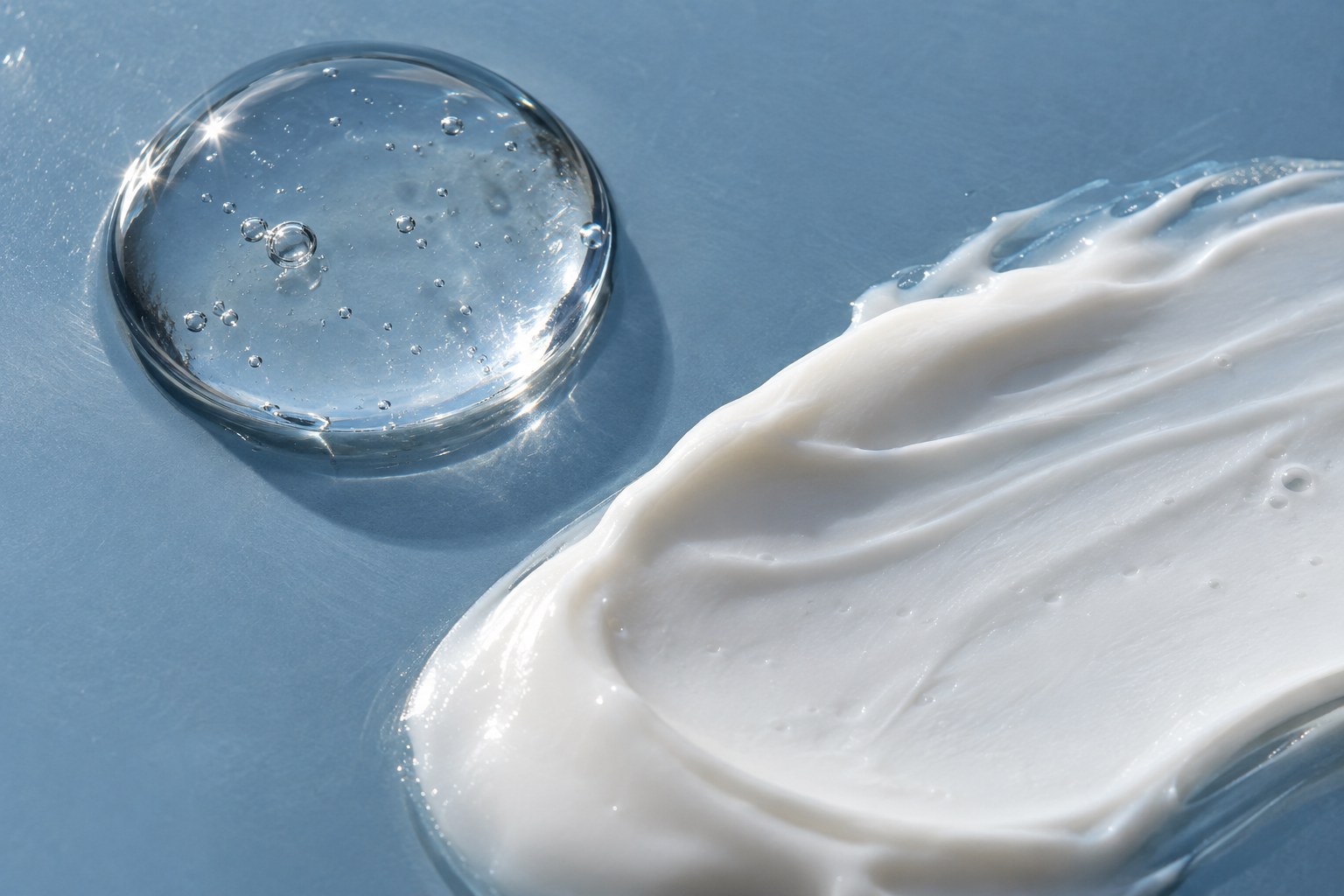
Niacinamide serum vs moisturiser: what changes?
The useful comparison is between finished products. “Serum” describes a format, not a guarantee of potency, while “moisturiser” describes a job that many different formulas can perform. Our editorial preference is to solve the everyday comfort problem first, then decide whether a separate treatment-style step earns its place.
| Question | Separate niacinamide serum | Niacinamide-containing moisturiser |
|---|---|---|
| What are you buying? | An additional formula and application step | A moisturising step that also includes niacinamide |
| Is the percentage known? | Sometimes, as with the 10% serum above | Not necessarily; check the specific brand page |
| What is the practical benefit? | You can change the serum without replacing a moisturiser you like | Fewer products to buy, introduce and keep track of |
| What remains uncertain? | Whether the extra step improves your particular routine | Whether you prefer the whole formula and texture |
If your existing moisturiser suits you, there is no need to replace it just to put niacinamide on the label. Equally, liking a serum does not mean you must find a matching moisturiser from the same range. Build around useful products, rather than completing a branded set.
Does a higher niacinamide percentage mean better results?
Not on the evidence used for this comparison. A randomised, double-blind split-face study tested a 5% niacinamide formula against its vehicle in 50 white women with facial photoageing over 12 weeks. It reported improvements in several appearance measures. The authors were affiliated with Procter & Gamble. That is useful evidence for the tested formulation and population, but it did not compare 5% with 10%, study everyone’s skin, or test the two retail products here.
Our buying conclusion is narrower than the marketing often suggests: the study gives no basis to insist that everybody needs a 10% serum. Nor can it tell us how much benefit you would gain by placing one over a moisturiser that already contains the ingredient.
A missing percentage is also not a calculation exercise. Do not assign a number to a moisturiser from its ingredient-list position. We have no verified concentration for the lotion above, so there is no honest “combined strength” to give you.
Choose the next step around the routine you have
You want fewer products
Consider a niacinamide-containing moisturiser when replacing a finished or unsuitable lotion. That keeps the decision focused on one product. If your current moisturiser works well, finishing it can be the most useful choice of all. The American Academy of Dermatology’s budget guidance centres a simple routine with cleansing, moisturising and sun protection. An extra serum is an optional purchase.
You already have a moisturiser you love
A separate serum allows you to try a different formula without discarding that moisturiser. Be specific about what you hope to change, rather than adding it because it is popular. Decide in advance what would make it worth keeping: an acceptable feel, straightforward layering and a visible change you can realistically assess.
Your shelf already has several niacinamide products
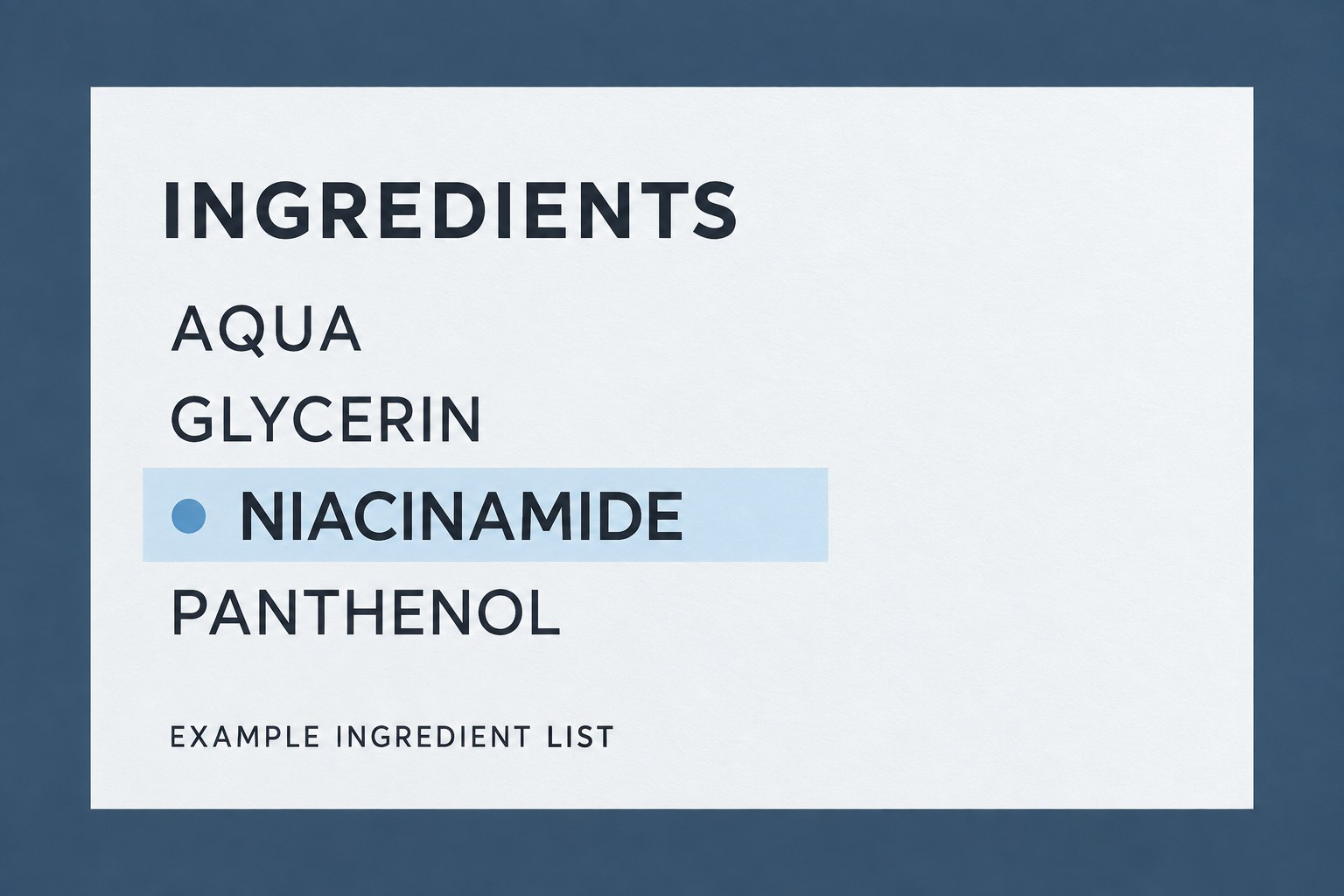
Do a label audit before shopping. Write down the products you actually use, not everything you own. A serum, lotion and sunscreen may all contain niacinamide. This does not automatically make the routine unsafe, but duplication is a reason to question the next purchase. If irritation develops, adding yet another product makes the cause harder to identify.
How to introduce one product without rebuilding everything
- Keep the basics familiar. Avoid changing the cleanser, serum and moisturiser together.
- Test the new formula first. The AAD recommends testing skincare on a small area for seven to ten days. Follow the product’s directions too. A home test does not guarantee you will never react and is different from medical patch testing.
- Follow that product’s sequence. The Ordinary directs a few drops before heavier creams and advises use only on unbroken skin. Its vitamin C pairing restriction is product-specific guidance; do not turn it into a claim that all niacinamide and vitamin C formulas are incompatible.
- Leave room for moisturising and sun protection. Neither option above provides sunscreen protection. For the wider sequence, see our morning and evening layering guide.
- Stop if a new cosmetic causes a reaction. Rinse it off. Persistent or significant symptoms deserve professional advice, rather than another active ingredient.
Taking an occasional photograph in consistent light can make your own comparison less dependent on memory, but it is not a clinical test. Avoid changing lighting, filters and several products at once, then attributing every difference to one ingredient.
Common questions
Can I use a niacinamide serum and moisturiser together?
They are not automatically incompatible because they share niacinamide. Check both formulas and their directions. The practical question is whether the additional step is useful and comfortable for you.
Does turning 30 mean I need a niacinamide serum?
No age threshold in the evidence reviewed here establishes that requirement. Choose around current needs, tolerance and budget. A birthday is not a reason to duplicate a comfortable routine.
Will a niacinamide serum replace acne treatment?
This comparison does not establish that either featured product treats acne. If acne persists, scars or causes distress, seek individual advice instead of using cosmetic ingredient percentages as a treatment plan.
Should I buy the serum first or the moisturiser?
If you lack a comfortable moisturising step, start by solving that gap. If that part is already settled, a serum can remain an optional, separate decision. Our CeraVe PM vs Daily Lotion comparison helps distinguish two easily confused products.
Sources and how we used them
Checked 4 October 2026. Manufacturer pages establish the current listed formulas and directions; they do not establish a comparative winner. The study supports only its tested conditions. None of these sources reviewed or endorsed this article.
- CeraVe: PM Facial Moisturizing Lotion, US formula
- The Ordinary: Niacinamide 10% + Zinc 1%, US formula and directions
- Bissett and colleagues: 5% niacinamide split-face clinical trial
- AAD: skincare on a budget
- AAD: testing new skincare products
Buy for a gap, not for another layer
Choose a moisturiser for the complete formula and comfort you want. Consider a serum only when you have a clear reason to add it. If the bottle already on your shelf is doing its job, there may be nothing to buy this week.
Affiliate Disclosure: This post contains affiliate links, which means we may earn a small commission if you make a purchase through these links at no extra cost to you. We only recommend products we've researched and believe offer real value. Our opinions remain our own and are not influenced by any brand or compensation.