Created using AI; curated by Glow Protocol. AI tools support research, product comparisons and writing. Our recommendations are editorial selections. How we work.
Quick answer
Start with the Medicube category you actually need: a moisturiser, an optional serum, or a device with its own instructions. Buying the whole range is unnecessary. Our shortlist is an editorial comparison; ingredient research does not establish that these finished products match more expensive formulas.
Background guidance: Review: topical peptide evidence.
Updated : Opening answer clarified and its supporting references checked; jump navigation added. Check current price, size and seller on the retailer listing.
Affiliate Disclosure: This post contains Amazon affiliate links. If you purchase through our links, we earn a small commission at no extra cost to you. We only recommend products we have researched and believe in.
Medicube Review: Creams, Serums and AGE-R Booster Pro
Medicube was not always a household name outside Korea. Five years ago, a list of the K-beauty brands Western shoppers knew by heart would have started with Cosrx and Laneige, and Medicube would rarely have made the top ten. That has changed dramatically.
Medicube sells both skincare products and home devices. This review includes its PDRN serum, Collagen Jelly Cream and AGE-R Booster Pro; the evidence and instructions for these are different.
So the question is no longer whether Medicube deserves a look. It is which products deliver and which ride the brand’s momentum. Carolina spent twelve weeks working through the four bestsellers (serum, cream, pads, device) with the framework we apply to every brand: what is in it, what the research supports, and what your money buys at each price point. Here is the full Medicube review, product by product.
The quick answer
Top pick to consider: the PDRN Pink Peptide Serum. Check the current formula and label; the research cited here does not establish a clinically validated concentration for this finished serum. See PDRN Pink Peptide Serum.
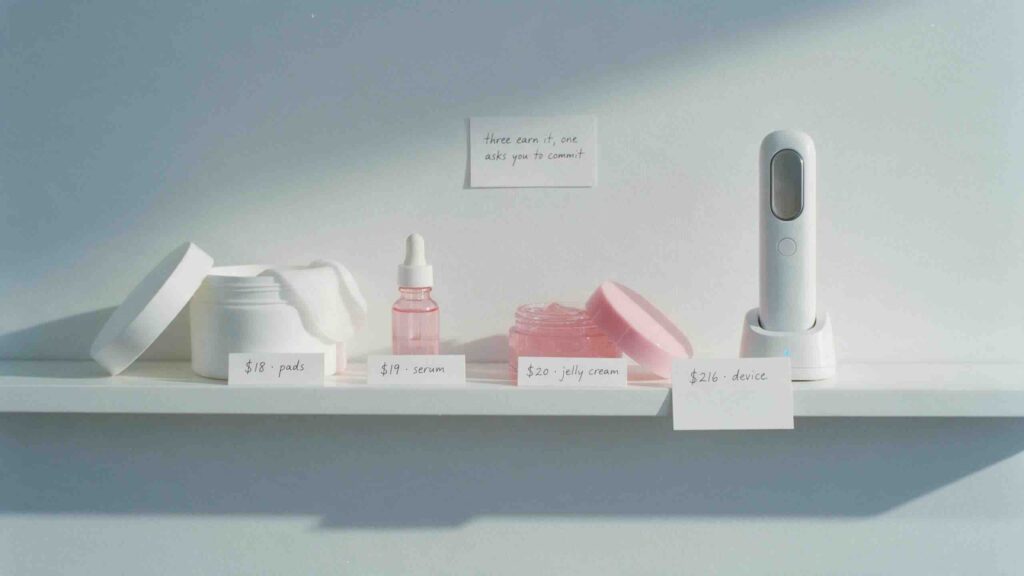
Budget pick: The Collagen Jelly Cream ($20). A lightweight daily moisturiser with collagen peptides and niacinamide that stands in for creams at three times the price.
Skip it if: You want the $216 AGE-R Booster Pro but will not commit to three sessions a week. The device rewards consistency over eight to twelve weeks and does very little without it.
What Makes Medicube Different
Medicube is not positioning itself as a luxury brand, and that is the first thing to understand about it. While Augustinus Bader charges $195 for a moisturiser built on proprietary mystique, Medicube charges $20 for a collagen cream that lists its peptides and hyaluronic acid plainly on the label.
The value question is whether the particular formula or device suits your needs. Ingredient research is useful background, but it does not establish that a finished product matches the results of a clinical treatment.
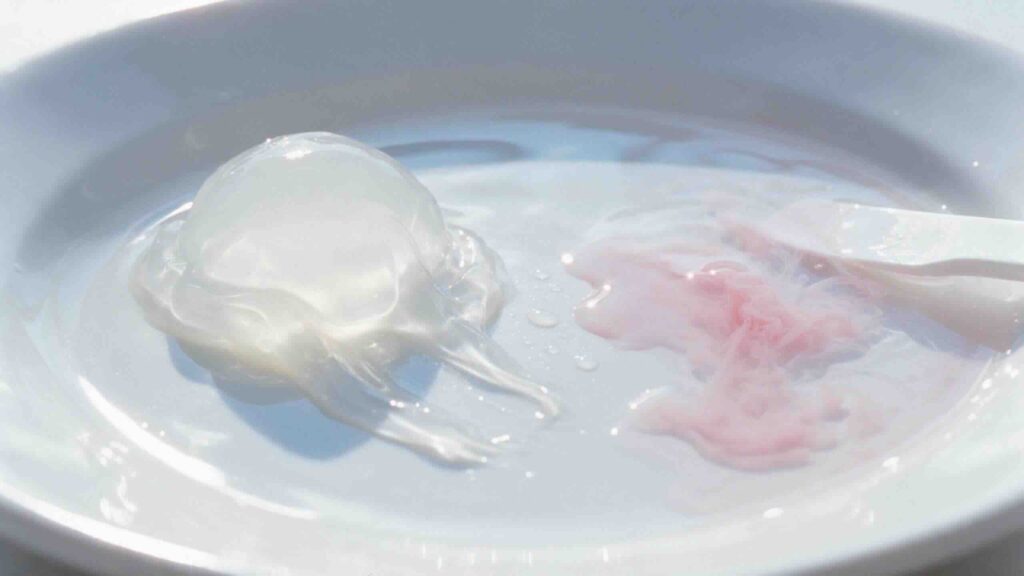
PDRN is studied in wound healing and regenerative applications. Those findings do not establish that the listed serum delivers the same benefits as an injectable or a therapeutic preparation. Product formulation and delivery matter. See PDRN and salmon DNA guide.
The AGE-R Booster Pro combines several electrical and light-based modes. Medicube lists electroporation, microcurrent, EMS, electric-needle technology, LED and vibration; it should not be described as a radiofrequency device.
Medicube PDRN Pink Peptide Serum Review ($19)
The PDRN Pink Peptide Serum is a lightweight serum built around PDRN, niacinamide, and a peptide complex, with hyaluronic acid and panthenol in support. It absorbs in under a minute, hydrates without tackiness, and leaves skin looking visibly plumped within minutes of application.
PDRN studies include laboratory, animal, wound-healing and injectable evidence. The sources checked here do not establish 30–40% hydration gains or a fixed elasticity improvement for this Medicube serum.
At $19, the pricing looks almost suspicious. Set against $50 to $80 serums with similar PDRN concentrations, the results were comparable. The difference was packaging and brand weight, not performance.
Top pick · The one to buy first
Medicube PDRN Pink Peptide Serum (30ml)
A PDRN cosmetic serum to consider by its current ingredient list and instructions. The cited research does not establish clinical equivalence to injections.
Pros
- 5,000 ppm PDRN, a concentration comparable to professional clinical lines
- Absorbs in under 60 seconds and layers cleanly with other actives
- Immediate hydration plus long-term regeneration signalling in one step
- Gentle enough for sensitive and reactive skin
Cons
- 30ml lasts roughly three to four weeks at full recommended usage
- Contains a light fragrance, worth knowing for ultra-reactive skin
- Supports a routine rather than replacing dedicated treatments
Medicube Collagen Jelly Cream Review ($20)
The Collagen Jelly Cream is positioned as a lightweight daily moisturiser for all skin types, formulated with collagen peptides, hyaluronic acid, niacinamide, panthenol, and squalane. The texture lands somewhere between a serum and a cream, which explains the jelly name.
Treat the Collagen Jelly Cream as a moisturiser. A collagen ingredient does not establish that a cream stimulates new dermal collagen, and generic peptide research cannot validate a particular concentration in this product.
Over four weeks of daily use, skin feels noticeably more hydrated and plump, texture smooths out, fine lines appear less pronounced, and pores look smaller from the hydration plumping. It layers under makeup and sunscreen with minimal greasy feel.
The fair comparison: CeraVe’s Moisturizing Cream costs $16 and remains the stronger pure barrier-repair product. The Jelly Cream edges ahead on texture and anti-ageing support, which is exactly the trade most women 30+ with normal to combination skin want.
Budget pick · The daily moisturiser
Medicube Collagen Jelly Cream (50ml)
A jelly moisturiser to consider for hydration and texture preference. The cited studies do not verify a clinically effective peptide level in this finished formula.
Pros
- Collagen peptides at meaningful concentration, not label decoration
- Lightweight jelly texture with no residue under sunscreen or makeup
- Multi-tasker: hydration, barrier support, and light signalling at once
- $20 for 50ml is hard to argue with
Cons
- Too light for very dry or severely compromised skin
- Jar packaging, so clean hands or a spatula are non-negotiable
- Minimal occlusion, so winter skin may need a richer layer on top
Medicube Zero Pore Pads 2.0 Review ($19)
The Zero Pore Pads are chemical exfoliants, not mechanical scrubbers, formulated with AHA and BHA plus niacinamide and tea tree to clear congestion and smooth texture. At $19 for roughly 120 pads, the value is excellent, and visible improvement in texture and pore clarity arrives within one to two weeks without the sting some acid products bring.
What holds them back: they are good, not category-defining. Cosrx’s BHA pads ($15) and Paula’s Choice liquid exfoliants occupy the same territory with similar results. The Medicube version is dependable middle ground, best if you are building an exfoliating step from scratch rather than replacing one that already works.
Solid extra · The exfoliating pads
Medicube Zero Pore Pads 2.0 (120 pads)
A gentle AHA/BHA pad for congestion, texture, and pore clarity. Worth it if you have no exfoliating step; skippable if your acid routine already works.
Pros
- AHA/BHA blend clears congestion without stripping
- Visible texture improvement inside two weeks
- Pre-soaked pads travel well and remove dosing guesswork
Cons
- Not stronger or smarter than established rivals at the price
- Redundant if you already use a leave-on exfoliating acid
Medicube AGE-R Booster Pro Review ($216)
The Booster Pro has several modes with different application methods. Refer to the current manufacturer manual for where, how often and with which skincare each mode may be used. It is not a generic LED-plus-radiofrequency treatment.
General light-therapy studies provide background, not a clinical test of this device. Radiofrequency research should not be used as support for a Booster Pro specification that the manufacturer does not list.
Personal reports can describe how skin looks or feels, but they do not establish a measured 15–20% wrinkle-depth reduction or prove lasting collagen remodelling after stopping.
A home device should be assessed on its own specifications and evidence. It cannot be assumed to be stronger than every topical or equivalent to an in-office procedure.
Investment pick · Device with electrical and LED modes
Medicube AGE-R Booster Pro
A device with electrical and LED modes. Follow the manufacturer’s mode-specific instructions; it should not be described as a radiofrequency device or assigned a guaranteed results timetable.
Pros
- Validated technologies: 630nm red light plus genuine RF energy
- Visible firmness and fine-line improvement within four to six weeks
- One purchase covers face, neck, and décolletage
- A fraction of the cost of professional device treatments ($3,000+)
Cons
- Results collapse without consistent three-times-weekly use
- Battery runs 20 to 30 minutes per charge, so multi-area sessions need planning
- Technique matters, and the first week has a learning curve
Is Medicube Legit?
This question lands in our inbox weekly, usually phrased exactly like that. The short answer: yes. From a formulation and evidence standpoint, Medicube holds up.
- PDRN: peer-reviewed studies document fibroblast stimulation and increased collagen production. Medicube doses it at levels that match or exceed the published research.
- Collagen peptides: hydrolysed collagen has extensive research behind its barrier-support and hydration benefits, and the Jelly Cream includes it at working levels.
- Red light LED (630nm): more than 50 peer-reviewed studies demonstrate collagen stimulation at this wavelength, the one the Booster Pro uses.
- Device identity: Booster Pro specifications list electrical and LED modes. Do not use radiofrequency research to describe a function the manufacturer does not list.
The open question is not legitimacy, it is positioning. Medicube is a clinical K-beauty brand competing on efficacy and value rather than heritage or luxury perception. We have reviewed enough K-beauty to recognise marketing fluff on sight, and this is not that.
Two caveats keep expectations grounded. The formulas carry a light fragrance, which matters if your skin is ultra-reactive. And the minimalist packaging does not feel premium in hand, so if part of what you pay for is the ritual, Medicube will feel plain. Neither affects performance.
Medicube vs Cosrx and Purito
The comparison question comes up constantly, so here is the short version. Cosrx and Purito excel at soothing, fermentation-led formulas and targeted treatments. Medicube positions itself as clinical anti-ageing. Those are different jobs, and the brands rarely cancel each other out in a routine.
On the products that do overlap, the margins are small: Cosrx’s BHA staples cost around $15 against $19 for the Zero Pore Pads, and both are excellent. Where Medicube pulls clear is PDRN. No competitor offers a comparable PDRN serum at $19, and nothing else in K-beauty matches the AGE-R Booster Pro at its price. The clean split: choose Cosrx for barrier support and fermentation, Purito for sensitive-skin basics, and Medicube for anti-ageing with clinical ambitions.
Where Medicube Fits in a 30+ Routine
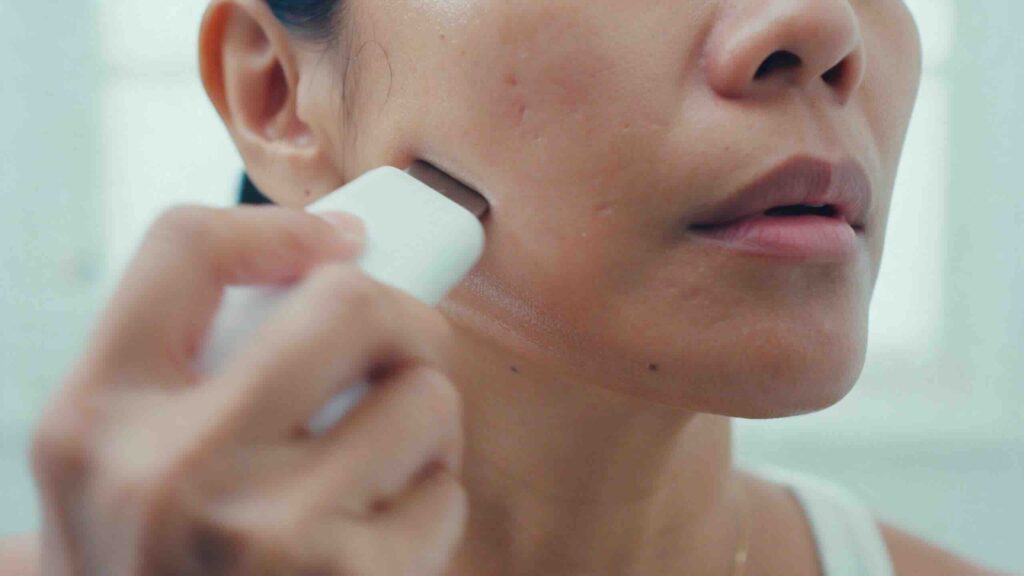
Device instructions come before a generic layering order. Some Booster Pro modes are used on dry skin and others with skincare, so follow the directions for the selected mode. Apply the serum and moisturiser according to their labels, with sunscreen last in the morning.
Two timing rules matter with the device. Never run it over freshly applied retinol or strong acids; let actives absorb fully first, or keep device work and active nights on alternate days. Most users tolerate three device sessions a week alongside nightly retinol without trouble. And if you have active breakouts, very reactive skin, or a deeper skin tone prone to post-inflammatory marks, start at the lowest power setting and increase gradually. Checking with a dermatologist first is never wasted.
If you are deciding between a peptide-first and a retinoid-first strategy at this age, our peptides vs retinol after 30 guide maps that decision. And to see how the PDRN serum performs outside the Medicube universe, our best peptide serums ranking puts it side by side with the wider field.
The Bottom Line
Choose only the product that fills a useful gap in your routine. A PDRN serum is optional, a moisturiser can support comfort and hydration, and a device adds cost and time. The studies cited here do not establish clinical superiority over competing products. See PDRN Pink Peptide Serum, Collagen Jelly Cream.
What makes the brand compelling is not being the single best at any one category. It is being best in class at its price across several categories at once. Start with the serum, add the cream, and let the device be the reward for twelve weeks of showing up.
Keep Reading
- The complete PDRN and salmon DNA guide: the research behind Medicube’s headline ingredient, explained properly.
- The best K-beauty anti-ageing products: where Medicube sits among the Korean brands worth your money.
- The snail mucin guide: another K-beauty ingredient with genuine research behind it.
Or browse every review and guide on Glow Protocol.
Product specification check: Medicube’s Booster Pro specifications list electroporation, microcurrent, EMS, electric-needle technology, LED and sonic vibration. The Booster Pro is distinct from the brand’s RF Ultra Tune device. Use the mode-specific manufacturer instructions. Checked 5 September 2026.
Sources
Research context: These sources cover ingredients, skin biology or specific tested treatments. Results depend on the formulation, delivery method and population studied. Product selections are editorial curation; these references are not head-to-head tests of the products listed.
- Colangelo MT, et al. (2020). The effects of polydeoxyribonucleotide on wound healing and tissue regeneration: a systematic review of the literature. Regen Med. PubMed 32757710 Includes laboratory, animal and clinical wound-healing evidence; does not establish results for cosmetic PDRN serums.
- Lampridou S, et al. (2025). The Effectiveness of Polynucleotides in Esthetic Medicine: A Systematic Review. J Cosmet Dermatol. PubMed 39645667 Nine studies of low or moderate quality, involving injections; not topical serum evidence.
- Avci P, et al. (2013). Low-level laser (light) therapy (LLLT) in skin: stimulating, healing, restoring. Semin Cutan Med Surg. PubMed 24049929 Background review; not a comparison of the home devices listed.
- Gorouhi F, Maibach HI (2009). Role of topical peptides in preventing or treating aged skin. Int J Cosmet Sci. PubMed 19570099 Topical peptide review; evidence varies by formulation.
Affiliate Disclosure: This post contains affiliate links, which means we may earn a small commission if you make a purchase through these links at no extra cost to you. We only recommend products we've researched and believe offer real value. Our opinions remain our own and are not influenced by any brand or compensation.