Created using AI; curated by Glow Protocol. AI tools support research, product comparisons and writing. Our recommendations are editorial selections. How we work.
Quick answer
Peptide products are optional, and evidence depends on the particular peptide and formulation. Some studies are promising, but this does not establish a universal collagen effect, guaranteed tolerance or a clear winner among all peptide types. Check compatibility, especially for copper-peptide products, before adding another serum.
Background guidance: Review: topical peptide evidence · The Ordinary: copper-peptide directions.
Updated : Opening answer clarified and its supporting references checked; jump navigation added. Check current price, size and seller on the retailer listing.
Affiliate Disclosure: This post contains Amazon affiliate links. If you purchase through our links, we earn a small commission at no extra cost to you. We only recommend products we have researched and believe in.
Peptides for Anti-Aging: What the Science Actually Says
I first heard about peptides in a few year ago, when a dermatologist mentioned them casually during a routine visit. At the time, I was already deep into retinol, vitamin C, and sunscreen. The holy trinity everyone talks about. But peptides? They felt like a trend I could skip.
Three years later, after actually understanding what peptides are and how they work, I realised I had been missing something important. Not revolutionary. Not a magic bullet. But genuinely useful for maintaining skin elasticity and firmness as we age.
Here is the simple version. Peptides are short chains of amino acids. Amino acids are the building blocks of protein. When protein breaks down, you get peptides. When peptides break down further, you get individual amino acids. Think of it like this. Amino acids are individual LEGO bricks, peptides are small chains of connected bricks, and proteins are massive structures built from thousands of bricks.
In skincare, peptides matter because your skin is literally made of protein. Collagen, elastin, keratin. These are all proteins that give your skin structure, firmness, and bounce. Over time, especially after thirty, you naturally lose collagen. The skin becomes thinner, fine lines deepen, and everything feels a bit less plump.
This is where peptides come in. The theory is elegant. Apply peptides topically, and your skin recognises them as a signal that collagen is needed. Your skin cells spring into action, increasing collagen and elastin production. The result is firmer, more resilient skin over time. But does it actually work? And more importantly, which peptides actually matter? Let us dig into the science.
How Peptides Work in Your Skin
The mechanism is genuinely clever. Your skin cells have receptors. Think of them as tiny locks waiting for the right key. When peptides land on these receptors, they send a message. Your collagen is broken down. Rebuild it now.
This triggering of collagen synthesis is called the wound healing response. Your skin does not literally think it is wounded, but peptides can mimic the chemical signals your skin produces when it needs to repair itself. In response, fibroblasts (the cells responsible for making collagen and elastin) ramp up production.
Research backs this up. A 2019 study published in the International Journal of Cosmetic Science found that certain peptide complexes increased type I and III collagen production in human fibroblasts. These are the building blocks of youthful-looking skin.
But here is the honest part. Topical peptides have a size problem. Your skin barrier is designed to keep things out. Most peptides are too large to penetrate deeply into the dermis where collagen lives. So how do they work if they cannot get very deep?
Two theories. First, smaller peptides (dipeptides and tripeptides) can penetrate more effectively and trigger those receptor signals. Second, even if peptides stay mostly in the epidermis (your skin’s outer layer), they can still influence the cells immediately beneath them, creating a cascade effect that eventually benefits deeper skin layers.
Real talk. Peptides work, but they are not instant. You will not see transformation in two weeks. You will notice gradual improvements in firmness, fine lines becoming slightly softer, and overall skin resilience improving, usually over eight to twelve weeks of consistent use. That is not nothing. But it is also not the erase ten years from your face promise some brands make.
Types of Peptides That Matter for Anti-Aging
Not all peptides are created equal. Different peptide types have different effects on your skin, and understanding these differences helps you choose the right products.
Signal Peptides are your workhorses. These peptides send messages to fibroblasts saying make more collagen. Palmitoyl pentapeptide-4 (Matrixyl) is a famous signal peptide that appears in many anti-aging products. It is well-researched and consistently shows improvements in skin firmness and fine lines.
Carrier Peptides deliver trace minerals (like copper or magnesium) to your skin. These minerals are essential for many skin functions, including collagen stabilisation and antioxidant defence. Copper peptides are particularly notable. They have been shown to increase collagen and glycosaminoglycan production while also reducing inflammation.
Enzyme Inhibitor Peptides slow down the breakdown of collagen and elastin. As we age, enzymes called matrix metalloproteinases (MMPs) become overactive, degrading the structural proteins in your skin. Enzyme inhibitor peptides can suppress this process, essentially protecting the collagen you already have. Matrixyl 3000 works this way.
Neurotransmitter-Modulating Peptides relax facial muscles, creating a subtle Botox-like effect. Acetyl hexapeptide-8 (Argireline) is the most famous example. It does not permanently paralyse muscles like Botox does, but it can reduce the appearance of expression lines, particularly on the forehead.
When shopping for peptide products, look at the ingredient list. Products listing peptides as first or second ingredients tend to have higher concentrations and are more likely to deliver visible results. If peptides appear near the end of the ingredient list, the concentration is probably too low to matter much.
Copper Peptides: The Standout
Copper peptides are one optional peptide category. An ingredient mechanism does not establish that every finished serum will give a visible result.
Copper peptides (specifically GHK-Cu, or copper tripeptide-1) are fascinating. Copper is naturally present in your body and plays crucial roles in collagen cross-linking, wound healing, and antioxidant defence. When you combine copper with peptides, you get a compound that your skin recognises as particularly useful.
The research is solid. A 2008 study published in the Journal of Cosmetic Dermatology found that copper peptide products significantly improved skin firmness, elasticity, and the appearance of fine wrinkles after just four weeks of use. Participants saw improvements in skin thickness and collagen content. More recent studies continue to confirm these benefits.
What makes copper peptides special is their multi-tasking nature. They increase collagen and elastin production (the signal peptide function). They also boost skin’s antioxidant systems, reducing inflammation and oxidative stress (which actually accelerates aging). They improve skin barrier function. And they promote better wound healing and skin resilience.
The downside? Copper peptides can be irritating for some people, especially those with sensitive skin or active inflammation. If you have rosacea or eczema, start very slowly and use sparingly. Also, some copper peptide formulations can oxidise or degrade quickly, so product quality and packaging matter. Look for products in opaque, airtight containers to protect the copper peptide complex.
Peptides vs Retinol: Different Jobs, Both Important
This is the question I get asked most often. Should you use peptides or retinol? The answer is both. They work differently and actually complement each other beautifully.
Retinol (vitamin A) works by increasing skin cell turnover and activating genes involved in collagen production. It is potent, it works relatively quickly, and the evidence is overwhelming. But retinol can also be irritating, especially when you are first starting. It makes your skin photosensitive, requiring strict SPF discipline. And it is not ideal for pregnant women or anyone with certain skin conditions.
Peptides are gentler. They do not typically cause irritation or photosensitivity. You can use them morning and night. They are safer during pregnancy (though always check with your doctor). But they are slower. You need consistent use over weeks to see results, and those results tend to be more subtle than what retinol delivers.
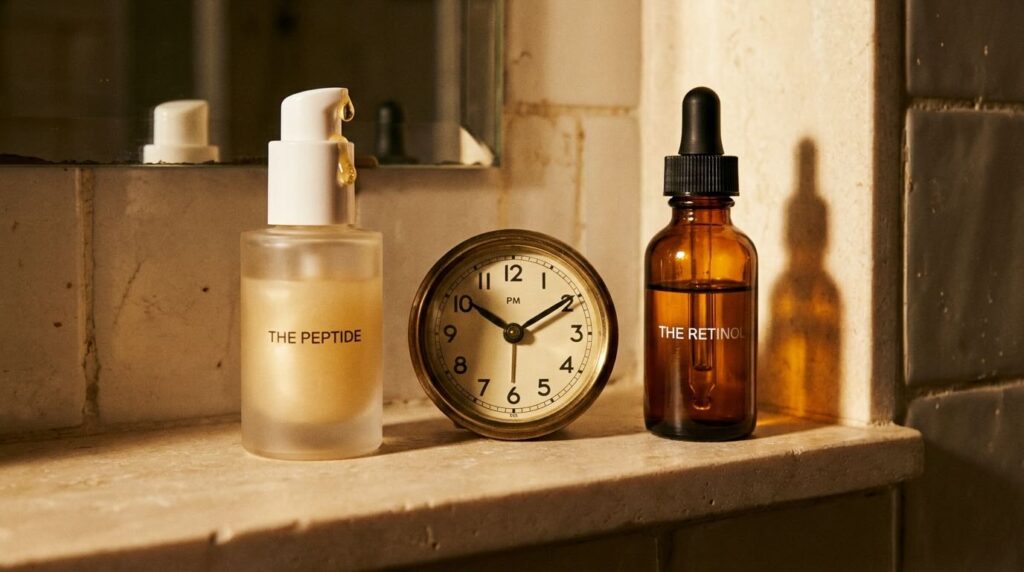
If you are new to anti-aging actives, start with peptides. They are low-risk, effective, and will prepare your skin beautifully for introducing retinol later. If you are already using retinol, adding peptides to your routine (especially in the morning or on off-nights) will accelerate your results without adding irritation. For a deeper dive on retinol options including the gentler alternative, see our retinol vs bakuchiol guide.
How to Add Peptides to Your Routine
Peptides are wonderfully flexible. They work in the morning, at night, or both. They are compatible with almost every other skincare ingredient. But there is a smart way to layer them for maximum effectiveness.
Step-by-step peptide layering.
- Cleanse. Use your regular cleanser to remove makeup, sunscreen, and daily grime.
- Apply toner or essence (optional). If your skin is dry, a hydrating toner helps peptides penetrate better.
- Apply peptide serum or treatment. This is when peptides shine. Pat (do not rub) the product gently onto clean, slightly damp skin. Let it absorb for a minute or two.
- Apply other actives (optional). Vitamin C serums and niacinamide work beautifully with peptides. Apply these before peptides if your routine includes them.
- Moisturise. A good moisturiser seals everything in and provides additional hydration. Peptides work best when your skin barrier is healthy and hydrated.
- SPF (morning only). Sunscreen is non-negotiable. It protects collagen from UV damage. The whole point of peptides is to build collagen, so protecting it matters.
Special considerations. If you are using retinol, I recommend peptides on your off-nights or in the morning. Retinol can be irritating, and peptides’ soothing effects help your skin recover. Peptides and retinol together are safe, but they both send collagen-building signals. It is somewhat redundant. Alternating them gets you better results.
Copper peptides specifically should be used carefully if you have active inflammation or sensitive skin. Start with 2 to 3 times per week, then increase frequency as your skin adjusts. Some people notice mild redness initially. This usually settles within a few days.
Peptides play beautifully with hyaluronic acid, glycerin, and other hydrators. In fact, peptides work better when your skin is well-hydrated. A dehydrated barrier will reduce peptide penetration and effectiveness. If your barrier is compromised, start there first. Our skin barrier repair guide walks through how to rebuild before adding actives.
How long before you see results? Typically four to eight weeks of consistent use. You might notice your skin feels plumper and smoother within two weeks, but visible improvements in fine lines and firmness take longer. Patience is genuinely important here.
The Best Peptide Products at Every Budget
These are curated product options, not tested favourites. The colour accents distinguish buying tiers, not clinical performance. Compare the formula and the job each product would do in your existing routine.
The Affordable Multi-Peptide Starter
The Ordinary Buffet + Copper Peptides 1%
A blend of multiple peptides and amino acids with 1 percent copper peptides. The price is unbeatable, the ingredient list is transparent, and the results are real. Fine lines soften, skin feels plumper, and the formula is lightweight enough for sensitive skin. The blue tint comes from the copper. That is the active ingredient, not a defect.
View on Amazon →
The Peptide + PDRN Innovator
Medicube PDRN Pink Peptide Serum A serum option marketed around PDRN and peptides. Consider the finished formula, current directions and price. The evidence for a cosmetic serum should not be inferred from injectable treatments or presented as our own three-week result. View on Amazon →
The Concentrated Peptide Booster
Paula’s Choice Peptide Booster
A peptide serum designed to layer under your moisturiser, packed with signal peptides, carrier peptides, and a comprehensive antioxidant blend. Stable formulation, high peptide concentration, and it layers beautifully with other products. Firmer skin, softer fine lines, improved elasticity. A meaningful step up in efficacy from budget options.
View on Amazon →
The All-in-One Peptide Moisturiser
Paula’s Choice Pro-Collagen Peptide Plumping Moisturiser
A moisturiser formulated with pro-collagen peptides so you get hydration and peptide benefits in one step. Genuinely hydrating without feeling heavy, absorbs in minutes, and leaves skin feeling soft and plump. The peptide concentration is meaningful, not just a token amount. My main daytime moisturiser.
View on Amazon →
The Luxury Polypeptide Cream
Drunk Elephant Protini Polypeptide Cream
The luxury option, and it deserves the price. Drunk Elephant formulates with bioactive fermented ingredients alongside their polypeptide complex. The texture is exquisite, creamy but never greasy, absorbs perfectly. Visible plumping within minutes, and skin wakes up firmer and more resilient. A little goes a long way.
View on Amazon →
The Honest Bottom Line
After years of experimenting with peptides, here is my honest assessment. They work. Not miraculously. Not as powerfully as Botox or laser treatments. But genuinely, measurably, consistently.
Peptides increase collagen and elastin production. They improve skin firmness and resilience. They soften fine lines and help your skin recover faster from active treatments. They are gentle enough for daily use and compatible with other ingredients. They are affordable at multiple price points. And there is solid scientific evidence supporting their benefits.
What they are NOT. A replacement for retinol, sunscreen, or good basic skincare. They are not an overnight transformation. They are not necessary if you have great skin already. But if you are over thirty and noticing the early signs of aging (fine lines, loss of firmness, uneven texture), peptides are absolutely worth adding to your routine.
My recommendation. Start with The Ordinary Buffet + Copper Peptides if you want to test peptides affordably. Use it consistently for eight weeks, morning and night, alongside good moisturiser and SPF. You will know if peptides work for your skin. If they do, you can upgrade to richer formulations or add additional peptide products. If you do not notice improvements, at least you have only invested $28 in finding out.
The best anti-aging ingredient is not the fanciest one. It is the one you will actually use consistently. And peptides are easy to use consistently. They feel good on your skin, they are low-risk, and they deliver real, noticeable benefits over time. Your skin after thirty deserves ingredients that actually work. Peptides are one of them.

Sources
Research context: these sources cover ingredients, skin biology or specific tested formulations. Results depend on the concentration, delivery method and population studied. Product selections are editorial curation; these references are not head-to-head tests of all products listed.
- Schagen SK (2017). Topical Peptide Treatments with Effective Anti-Aging Results. Cosmetics. Read source Review of selected peptides; not every marketed serum.
- Pickart L, Margolina A (2018). Regenerative and Protective Actions of the GHK-Cu Peptide in the Light of the New Gene Data. Int J Mol Sci. PubMed 29986520 Mechanistic review; not proof of every finished copper peptide serum.
- Robinson LR, et al. (2005). Topical palmitoyl pentapeptide provides improvement in photoaged human facial skin. Int J Cosmet Sci. PubMed 18492182 Specific palmitoyl pentapeptide formulation; not every peptide serum.
- Proksch E, et al. (2014). Oral supplementation of specific collagen peptides has beneficial effects on human skin physiology: a double-blind, placebo-controlled study. Skin Pharmacol Physiol. PubMed 23949208 Oral collagen supplementation; not evidence for topical serums.
- Aust MC, et al. (2008). Percutaneous collagen induction therapy: an alternative treatment for scars, wrinkles, and skin laxity. Plast Reconstr Surg. PubMed 18349665 Microneedling study; not evidence for topical peptide cosmetics.
Additional reading: For more on the foundational ingredients of an anti-aging routine, see our guides on skin barrier repair, anti-aging ingredients after 40, retinol vs bakuchiol, the vitamin C serum guide, and proper skincare layering order.
Affiliate Disclosure: This post contains affiliate links, which means we may earn a small commission if you make a purchase through these links at no extra cost to you. We only recommend products we've researched and believe offer real value. Our opinions remain our own and are not influenced by any brand or compensation.