
Affiliate Disclosure: This post contains Amazon affiliate links. If you purchase through our links, we earn a small commission at no extra cost to you. We only recommend products we have researched and believe in.
The Pregnancy Safe Skincare Guide I Wish Someone Had Given Me
Pregnancy safe skincare was the first thing I searched for when I found out I was pregnant. What I found was confusing, contradictory, and mostly written by people who had never actually been pregnant.
So I did the research myself. I went through every ingredient in my routine, every product I relied on, and cross-referenced them against every credible source I could find. What I learned changed everything about the way I think about skincare.
This is the pregnancy safe skincare guide I wish someone had handed me on day one of my first trimester. No fluff, no unnecessary fear, no “when in doubt throw everything out.” Just the facts, clearly explained, with a real routine you can start today.
Your skin during pregnancy is not the same organ it was before. It has genuinely changed at a structural and hormonal level.
Not sure what your skin actually needs right now?
Take Our Free 2-Minute QuizWhy Pregnancy Changes Your Skin
Understanding why your skin changes is the first step to building a pregnancy safe skincare routine that actually works. Here is what is happening at a biological level.
Oestrogen surges in the first trimester, increasing oil production, blood flow, and cellular turnover. This is what gives some women the “glow.” Progesterone rises throughout pregnancy and can trigger breakouts, congestion, and milia in women who never had them before. Melanocyte-stimulating hormone (MSH) increases, making your skin far more prone to hyperpigmentation. This is why melasma, the “mask of pregnancy,” appears on the forehead and cheeks.
Your skin barrier function also changes. Some women find their barrier becomes more permeable, meaning ingredients penetrate more deeply and more quickly than before. This is precisely why ingredient safety matters more during pregnancy. After birth, everything drops. Oestrogen, progesterone, hydration, barrier integrity. The postpartum period can be the most difficult skin phase of a woman’s life.
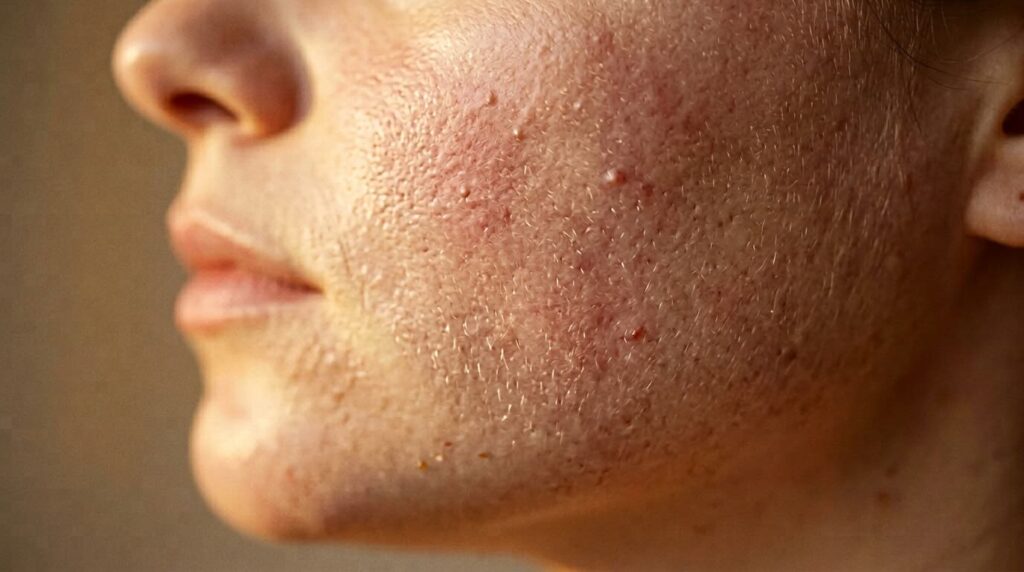
What to Avoid: 5 Ingredients That Are Not Pregnancy Safe
Some of the most popular skincare ingredients are not considered pregnancy safe skincare. Here is exactly what to set aside and why.
1. Retinoids: Avoid Completely (All Forms)
Retinol, retinoic acid, tretinoin, retinyl palmitate, adapalene, isotretinoin. Vitamin A derivatives are teratogenic at high doses, linked to birth defects in studies involving oral retinoids. Topical retinoids absorb through the skin. The amount is small but the risk is not worth taking. This includes over-the-counter retinol serums, prescription tretinoin, and all retinoid creams. Bakuchiol is the pregnancy-safe alternative.
2. Salicylic Acid: Avoid High Concentrations
Low concentrations (0.5% or less, leave-on) are generally considered low risk. High-dose salicylic acid (2%+ leave-on treatments, peels, or acne washes used all over the face daily) should be avoided. Salicylic acid is an NSAID absorbed through the skin and linked to complications at high doses. If you need exfoliation, use lactic acid or glycolic acid at low concentrations instead.
3. Hydroquinone: Avoid
Used for brightening and treating melasma, but has a high absorption rate (25 to 35 percent) through skin. Not enough safety data exists for pregnancy. Most dermatologists advise avoiding it entirely. Azelaic acid is the pregnancy-safe alternative for pigmentation and melasma.
4. Chemical Sunscreen Filters: Use Mineral Instead
Oxybenzone, octinoxate, homosalate, octisalate, avobenzone. These are absorbed into the bloodstream. Some have shown hormonal activity in studies. The FDA has flagged several for further safety review. Switch to mineral sunscreens with zinc oxide or titanium dioxide only. Mineral SPF sits on top of the skin rather than being absorbed.
5. Other Ingredients to Avoid
Formaldehyde and formaldehyde-releasing preservatives (DMDM hydantoin, imidazolidinyl urea). Dihydroxyacetone (DHA) in spray tanning, which can be inhaled. High-dose benzoyl peroxide (above 5%). Essential oils at high concentrations: tea tree, rosemary, sage, clary sage.
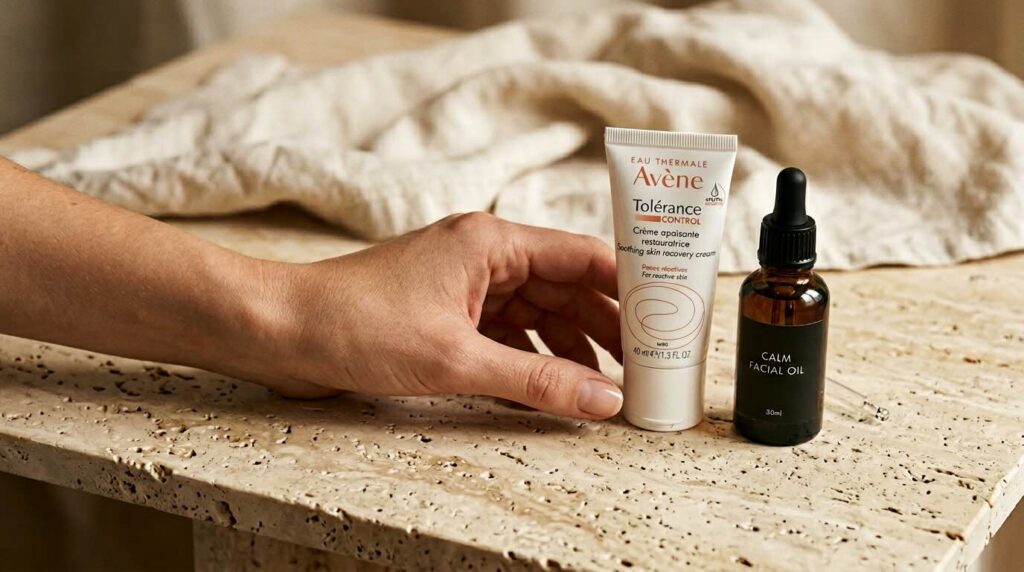
What Is Actually Pregnancy Safe Skincare: The Ingredients That Work
The good news is that many of the most effective skincare ingredients are also pregnancy safe skincare. You do not have to compromise your routine as much as you think.
Vitamin C (L-Ascorbic Acid): Safe throughout pregnancy. One of the most researched antioxidants in skincare. Brightens, protects against free radical damage, and supports collagen production. Particularly useful for preventing the early stages of melasma. Use in the morning under SPF. Read our full vitamin C serum guide.
Niacinamide (Vitamin B3): Completely safe during pregnancy. Anti-inflammatory, barrier-supporting, pore-minimising. Helps manage the oiliness and breakouts that pregnancy hormones can cause. Also works on pigmentation and uneven skin tone.
Hyaluronic Acid: Safe and highly recommended during pregnancy. Skin loses hydration rapidly as hormones shift. Apply to damp skin to maximise absorption. All molecular weights are safe.
Azelaic Acid: The pregnancy-safe treatment for melasma, redness, and breakouts. Rated Category B by the FDA for pregnancy safety. Works on pigmentation, acne, and rosacea without the risks of hydroquinone or salicylic acid. Takes 4 to 8 weeks to show visible results. Use at 10 to 20 percent concentration.
Bakuchiol: The pregnancy-safe retinol alternative. Clinically shown to deliver similar results to low-dose retinol. Plant-derived, antioxidant, anti-inflammatory, does not carry retinoid risks. Results are slower than retinol but safe for use throughout pregnancy and breastfeeding.
Ceramides, Fatty Acids, Peptides, Squalane: All safe and essential for maintaining barrier function during pregnancy. Ceramides are particularly important as barrier permeability increases.
Mineral SPF (Zinc Oxide / Titanium Dioxide): The only sunscreen type to use during pregnancy. Physical barrier that sits on top of skin rather than being absorbed. Critical during pregnancy as MSH makes your skin far more prone to sun damage and melasma.
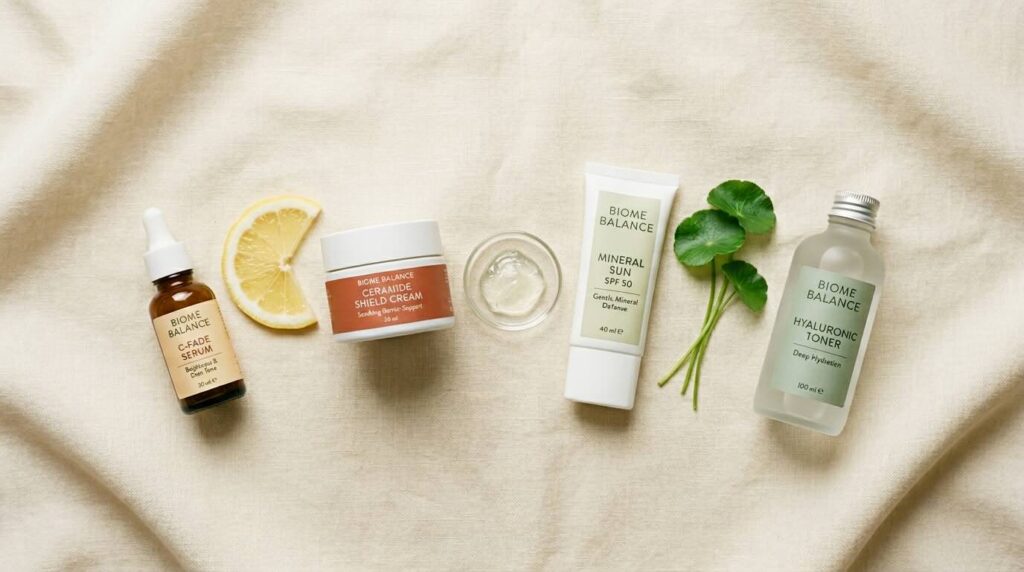
The Complete Pregnancy Safe Skincare Routine
This is the pregnancy safe skincare routine I used and recommend. Everything here is safe throughout pregnancy and breastfeeding, research-backed, and available on Amazon.
Morning Routine
Morning Essentials
1. Gentle cleanser
Something milky or gel with no fragrance. Avoid foaming cleansers with sulphates.
2. HADA LABO Gokujyun Premium Lotion · ~$14
Hyaluronic acid toner. Apply to damp skin. 5 types of hyaluronic acid in a thin, water-like texture. Safe throughout pregnancy.
Shop →
3. Vitamin C serum
Morning only. Protects against pigmentation and free radical damage from UV. Particularly useful for preventing melasma.
4. CeraVe Moisturising Cream · ~$18
Your barrier needs more support than usual during pregnancy. Ceramides NP, AP, EOP plus hyaluronic acid and niacinamide. Safe and effective.
Shop →
5. EltaMD UV Clear SPF 46 · ~$43
Mineral-chemical hybrid with zinc oxide and niacinamide. Fragrance-free, non-comedogenic. Every single morning. Non-negotiable during pregnancy.
Shop →
Evening Routine
Evening Essentials
6. Double cleanse
Oil cleanser first to remove SPF, then gentle cleanser. Do not skip the oil cleanser step.
7. HADA LABO Gokujyun Premium Lotion · ~$14
Again, on damp skin. Your most important hydration ingredient throughout pregnancy and postpartum.
Shop →
8. Azelaic acid (10-20%)
If dealing with melasma or breakouts. Use 3 to 4 nights per week. FDA Category B for pregnancy safety.
9. Bakuchiol serum
Your retinol replacement. Use every evening on clean skin. Plant-derived, safe throughout pregnancy and breastfeeding.
Shop →
10. CeraVe Moisturising Cream or Laneige Water Sleeping Mask
Lock everything in. Laneige is safe and deeply repairing, use 2 to 3 nights per week on top of your moisturiser.
Shop CeraVe → Shop Laneige →
Pregnant or postpartum? Find out what your skin needs right now.
Take the Free Barrier Quiz →Pregnancy Safe Skincare Products We Recommend
Pregnancy Safe Picks
COSRX Snail Mucin 96% Power Essence · ~$18
Snail secretion filtrate for barrier repair and hydration. Safe during pregnancy. Excellent for calming reactive skin.
Shop →
La Roche-Posay Cicaplast Baume B5 · ~$14
Panthenol, madecassoside, and zinc. Soothes irritation and supports barrier repair. Safe and gentle enough for the most sensitive pregnancy skin.
Shop →
Tatcha The Water Cream · ~$72
Lightweight, oil-free moisturiser with Japanese nutrients. Safe during pregnancy. Excellent for women who find heavier creams too much during hormonal oiliness.
Shop →
Skin1004 Madagascar Centella Ampoule · ~$18
Pure centella asiatica extract. Anti-inflammatory and wound-healing. Safe for pregnancy. Calms redness and irritation effectively.
Shop →
Always check the full ingredient list and consult your healthcare provider if you have any specific concerns. This table reflects current research but individual products may change formulations.
A Word on Melasma During Pregnancy
Melasma is the number one skin concern I hear from pregnant women. Dark patches on the forehead, upper lip, and cheeks that seem to appear overnight. Here is what actually works as part of a pregnancy safe skincare approach.
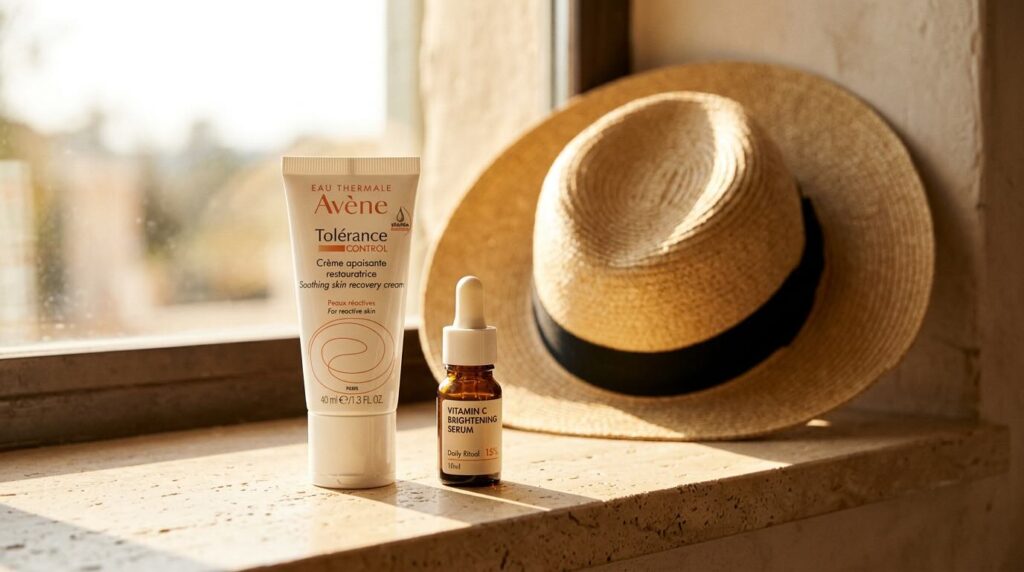
Mineral SPF every morning, reapplied every two hours when outdoors. This is the single most important intervention. Vitamin C in the morning to slow melanocyte activity. Azelaic acid at night to gently fade existing patches over time. Avoid heat: hot showers, saunas, and excessive sun exposure all worsen melasma. Wear a hat outdoors. It sounds basic but it makes a measurable difference.
What does not work during pregnancy: hydroquinone (avoid), kojic acid (avoid until more safety data), laser treatments (not recommended during pregnancy). Melasma often fades significantly after delivery as hormones normalise. Be patient and consistent with SPF and vitamin C rather than reaching for more aggressive treatments.
Postpartum Skin: The Phase Nobody Prepares You For
After delivery, oestrogen and progesterone drop sharply. For many women this triggers a second, sometimes more difficult skin challenge than pregnancy itself. Increased shedding and dullness as cell turnover slows. Barrier dysfunction as hormonal support for lipid production drops. Breakouts triggered by the sudden hormonal shift. Continued melasma or new pigmentation patches. Extreme dryness and sensitivity, sometimes for months.
The good news is that most of the pregnancy safe skincare routine above works perfectly well postpartum. The main difference: if you are not breastfeeding, you can reintroduce low-dose retinol (start with 0.025% every third night) once your barrier has stabilised. If you are breastfeeding, the same ingredient rules apply as pregnancy. When in doubt, check with your doctor or a dermatologist.
The Final Word
Your skin is going through something extraordinary. Building a pregnancy safe skincare routine does not mean giving up effective skincare. It means choosing the right ingredients for this specific moment. Vitamin C, niacinamide, hyaluronic acid, azelaic acid, bakuchiol, ceramides, and mineral SPF. These are not compromises. These are some of the most effective ingredients in skincare, period.
Give your skin the same care and attention you are giving everything else right now. It deserves it. And so do you.
Want to know exactly what your skin needs right now?
Take the 2-Minute Quiz →→ Start with our complete barrier repair guide
→ The luminous skin routine after 40
→ 7 habits every woman with great skin after 30 has in common
If you want to know how I figured all of this out through years of trial and error, including my own pregnancy skin journey, read my story here.
Sources
The following peer-reviewed studies support the scientific claims in this article. All references are freely accessible via PubMed.
- Mukherjee S et al. (2006) Retinoids in the treatment of skin aging: an overview of clinical efficacy and safety. Clin Interv Aging, 1(4):327-48.
pubmed.ncbi.nlm.nih.gov/18046911 - Pullar JM et al. (2017) The Roles of Vitamin C in Skin Health. Nutrients, 9(8):866.
pubmed.ncbi.nlm.nih.gov/28805671 - Draelos ZD (2006) The cosmeceutical realm. Clin Dermatol, 24(6):577-86.
pubmed.ncbi.nlm.nih.gov/17113978 - Dhaliwal S et al. (2019) Prospective, randomized, double-blind assessment of topical bakuchiol and retinol for facial photoageing. Br J Dermatol, 180(2):289-296.
pubmed.ncbi.nlm.nih.gov/29947134 - Coderch L et al. (2003) Ceramides and skin function. Am J Clin Dermatol, 4(2):107-29.
pubmed.ncbi.nlm.nih.gov/12553851
Get The Weekly Glow Report
Pregnancy safe skincare tips, ingredient guides, and research-backed recommendations for every stage of motherhood. Every week. No spam. Just glow.
Glow Protocol · glowprotocol.beauty · Science-backed skincare for women 30+
Affiliate Disclosure: This post contains affiliate links, which means we may earn a small commission if you make a purchase through these links at no extra cost to you. We only recommend products we've researched and believe offer real value. Our opinions remain our own and are not influenced by any brand or compensation.