
Affiliate Disclosure: This post contains Amazon affiliate links. If you purchase through our links, we earn a small commission at no extra cost to you. We only recommend products we have researched and believe in.
Nobody Sits You Down and Explains What Is About to Happen
There is no moment when someone hands you a guide to your changing skin after 30. You simply notice, gradually, that the products you have always used are not doing what they used to. Your skin is drier than you remember. A little more reactive. Less forgiving. The foundation sits differently. The glow you used to take for granted is harder to find.
This is not your skincare routine failing. It is your skin biology shifting. And those two things require completely different solutions. Understanding what is actually changing in your skin after 30, and why, is the first step to doing something useful about it.
This post covers the five changes that affect almost every woman’s skin between the early signs in your 30s and the more visible shifts by 55, and the specific ingredients that address each one. Not trends. Not what is popular on TikTok this week. What the research actually says works.
Your skin has not failed you. Its needs have changed. There is a difference.
Not sure which changes are affecting your skin right now?
Take Our Free 2-Minute QuizThe 5 Changes — and the Ingredients That Fix Them
Change #1: Cell Turnover Slows Significantly
What happens: In your 20s, your skin renews itself roughly every 28 days. By your 40s, that cycle has stretched to 40 to 60 days. Which means dead skin cells just… sit there. On the surface. For longer than they should. The result is skin that looks dull, uneven, and rough. Products absorb less efficiently because there is essentially a thicker layer of dead cells blocking the way. Pores look larger. Texture becomes less refined. And you wonder why your expensive serum is not doing anything anymore.
The fix: You need to accelerate cell turnover. Not with physical scrubs (too aggressive for skin after 30 that is also losing barrier function). With chemical exfoliation or retinoids. A retinoid in your evening routine is the single most effective way to restore normal turnover, backed by decades of clinical research. If your skin is too sensitive for retinoids initially, start with a low-strength AHA (glycolic or lactic acid) used 2 to 3 times per week and build from there.
Key ingredients: Retinol (0.025–1%), Retinal (0.05–0.1%), Tretinoin (prescription), Glycolic acid (5–10%), Lactic acid (5–10%)
Our Picks
The Ordinary Retinol 0.5% in Squalane · ~$8
Gentle entry-level retinol in a squalane base. Perfect starting point.
Shop →
Medik8 Crystal Retinal 3 · ~$46
Retinal (retinaldehyde) — faster results than retinol with less irritation.
Shop →
Paula’s Choice 8% AHA Gel · ~$36
Glycolic acid exfoliant. Great alternative if retinoids irritate your skin.
Shop →
The Inkey List Lactic Acid · ~$10
Gentle AHA for sensitive skin. Budget-friendly and effective.
Shop →

Change #2: The Skin Barrier Becomes Less Efficient
What happens: Your skin barrier is made up of ceramides, fatty acids, and cholesterol held together in a structure sometimes called bricks and mortar. After 30, ceramide production declines naturally. The barrier becomes more permeable, meaning your skin loses moisture faster (a process called transepidermal water loss). This is why skin after 30 that felt perfectly comfortable in your 20s now feels tight, dry, or reactive. Even if nothing about your routine or environment has changed.
The fix: Prioritise barrier-repairing ingredients in both your moisturiser and cleanser. Avoid anything that strips the barrier further: harsh foaming cleansers, over-exfoliation, very hot water, alcohol-based toners. Look for moisturisers with a ceramide complex (ceramide NP, EOP, and AP ideally together), fatty acids, and cholesterol. These do not just hydrate. They physically rebuild the barrier structure.
Key ingredients: Ceramide NP, Ceramide EOP, Ceramide AP, Fatty acids (linoleic acid, oleic acid), Cholesterol, Niacinamide (reduces TEWL by 24% in clinical studies)
Our Picks
CeraVe Moisturising Cream · ~$14
Ceramides NP, AP, EOP plus cholesterol. The barrier repair benchmark.
Shop →
La Roche-Posay Toleriane Double Repair · ~$19
Ceramide-3, niacinamide, prebiotic thermal water. Clinically tested.
Shop →
Dr Jart+ Cicapair Tiger Grass Cream · ~$50
Centella asiatica-heavy formula. Calms redness while repairing barrier.
Shop →
The Ordinary Natural Moisturizing Factors + HA · ~$7
Amino acids, fatty acids, hyaluronic acid. Best budget barrier support.
Shop →
Is your barrier compromised? Find out in 2 minutes.
Take the Free Barrier Quiz →
Change #3: Collagen Production Declines
What happens: Collagen is the structural protein that gives skin its firmness, plumpness, and elasticity. Production peaks in your mid-20s and then declines by approximately 1% per year, accelerated by UV exposure, smoking, and high sugar intake. By your 40s the visible result is loss of facial volume, fine lines deepening into actual wrinkles, and skin that no longer bounces back after stress or a bad night of sleep. This is one of the most frustrating changes in skin after 30. One percent per year does not sound like much until you realise that by 45 you have lost roughly 20% of your collagen. Then it sounds like a lot.
The fix: You cannot stop collagen decline, but you can meaningfully slow it and stimulate new production. Retinoids are the most clinically proven way to do this. Vitamin C (L-ascorbic acid) also has strong evidence for supporting collagen synthesis and should be applied every morning. Peptides send signals to fibroblasts (the cells that make collagen) to increase output. And SPF every single day without exception is the most impactful habit. UV damage destroys existing collagen and suppresses new production simultaneously.
Key ingredients: Retinol/Retinal/Tretinoin, L-ascorbic acid (10–20%), Copper peptides (GHK-Cu), Palmitoyl tripeptide-1, Niacinamide
Our Picks
SkinCeuticals C E Ferulic · ~$175
The gold standard vitamin C serum. Patented, independently tested.
Shop →
Timeless 20% Vitamin C + E Ferulic · ~$25
Nearly identical formulation to SkinCeuticals at a fraction of the price.
Shop →
The Ordinary Buffet + Copper Peptides 1% · ~$30
Multi-peptide formula with copper peptides. Exceptional value for firmness.
Shop →
Paula’s Choice Clinical 1% Retinol · ~$46
Higher strength retinol with peptides and vitamin C. For experienced users.
Shop →
Change #4: Hyperpigmentation Appears — and Fades More Slowly
What happens: After 30, your skin’s ability to regulate melanin production becomes less precise. Sun damage accumulated in your 20s starts surfacing as brown spots, uneven tone, and post-inflammatory marks that linger far longer than they used to. Hormonal changes (pregnancy, perimenopause, contraceptive pills) can trigger melasma — a form of deep pigmentation that is notoriously stubborn. And because cell turnover is slower, even small marks take much longer to fade on their own. Hyperpigmentation is one of the most visible and persistent changes in skin after 30, and it is a compounding problem.
The fix: The foundation is daily SPF. Without it, any brightening treatment you use will be undone by ongoing UV exposure. Then layer targeted actives: vitamin C in the morning for antioxidant protection and brightening, niacinamide to inhibit melanin transfer, and azelaic acid in the evening. Azelaic acid is genuinely one of the most underrated ingredients in skincare: anti-inflammatory, safe for sensitive skin, and effective on multiple types of pigmentation. I wish I had discovered it years earlier.
Key ingredients: Vitamin C (L-ascorbic acid, ascorbyl glucoside), Niacinamide (5–10%), Azelaic acid (10–20%), Alpha-arbutin, Retinoids, Tranexamic acid
Our Picks
The Ordinary Alpha-Arbutin 2% + HA · ~$9
Targets dark spots and uneven tone. Gentle and effective at this price.
Shop →
Paula’s Choice 10% Azelaic Acid Booster · ~$40
Anti-inflammatory brightener. Safe for sensitive and reactive skin.
Shop →
The Inkey List Tranexamic Acid · ~$12
Targets stubborn pigmentation and melasma. Increasingly well-researched.
Shop →
Naturium Niacinamide Serum 12% · ~$20
High-concentration niacinamide. Inhibits melanin transfer, reduces pores.
Shop →

Change #5: Skin Becomes More Reactive and Less Forgiving
What happens: Many women find that skin which handled anything in their 20s becomes noticeably more reactive after 30. Products that were fine now cause redness, stinging, or breakouts. This is not random and it is not in your head. It is a direct consequence of a compromised barrier (change #2 above) combined with declining oestrogen levels, which affect the skin’s inflammatory response. A thinner, more permeable barrier lets irritants penetrate further and faster. The result is skin after 30 that feels temperamental and harder to manage. Even though you are doing everything “right.”
The fix: The most important thing for reactive skin is rebuilding and protecting the barrier. Beyond that: simplify everything. Every additional active is a potential source of irritation. Introduce one new product at a time, waiting at least two weeks between introductions. Choose fragrance-free, alcohol-free formulations. If you are using multiple actives (vitamin C in the morning, retinoid at night), do not layer them on the same evening. Give your skin clear, uncomplicated routines with time to adapt.
Key ingredients: Ceramides, Panthenol (Vitamin B5), Beta-glucan, Centella asiatica, Madecassoside, Allantoin, Colloidal oatmeal
Our Picks
La Roche-Posay Cicaplast Baume B5 · ~$14
Panthenol, madecassoside, zinc. The rescue balm for reactive skin.
Shop →
Avène Cicalfate+ Restorative Cream · ~$18
Thermal spring water, zinc, copper. Calms irritation fast.
Shop →
The Ordinary Natural Moisturizing Factors + HA · ~$7
Simple, barrier-supporting formula. No fragrance, no irritants.
Shop →
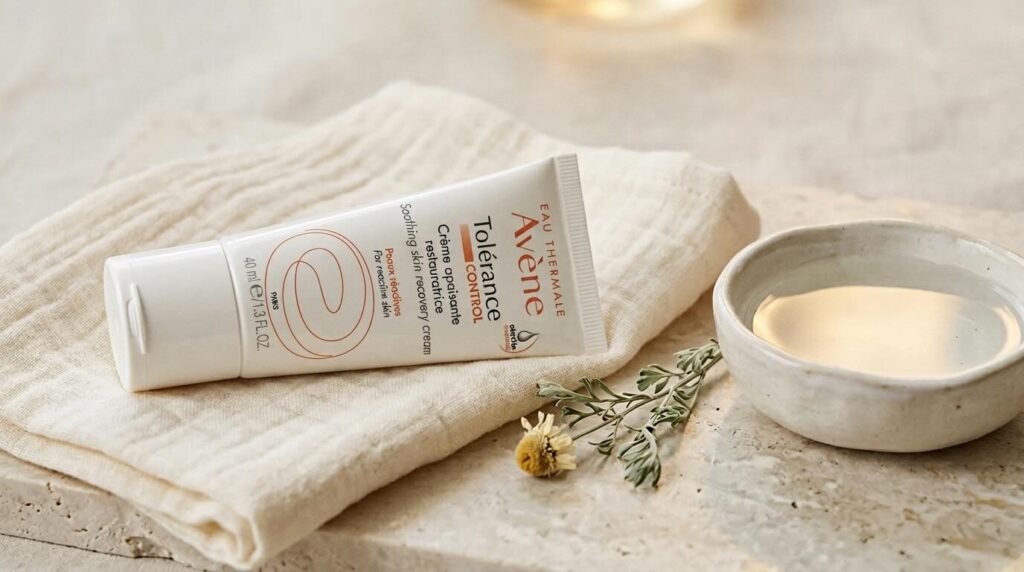
Avène Tolerance Control Cream · ~$30
Sterile cosmetic for hypersensitive skin. Minimal ingredients, maximum calm.
Shop →
The Order That Makes a Difference
These five changes are interconnected. That is what makes caring for skin after 30 more complex than it was in your 20s. A compromised barrier makes hyperpigmentation harder to treat because inflamed skin produces more melanin. Slow cell turnover makes collagen treatments less effective because the skin cannot respond to signals as quickly. This is why the order you address them matters enormously.
Start with the barrier. Everything else depends on it. A compromised barrier means your actives penetrate unevenly, your retinoid causes more irritation than it should, and your skin cannot respond effectively to any treatment you apply. Get your barrier stable with a gentle cleanser and ceramide-rich moisturiser before adding anything more active.
Then add SPF. This is non-negotiable for every other ingredient to have a chance of working. Once your barrier is stable and your SPF habit is consistent, introduce a retinoid or AHA and build from there. One thing at a time. Patience over products.
Fix the barrier first. Then everything else you do actually works.
A Note on Timing
Every ingredient in this post is backed by peer-reviewed clinical evidence. The timelines for skin after 30 are realistic: retinoids take 12 to 16 weeks to show meaningful results. Vitamin C brightening takes 8 to 12 weeks. AHAs improve texture within 4 to 6 weeks. Nothing here is quick.
But here is what I have learned. If you choose two or three targeted ingredients and use them consistently, the cumulative effect over six to twelve months is genuinely significant. And it compounds every year you continue. Your skin after 30 is not damaged. It is different. And it responds beautifully to the right ingredients when they are given enough time to work.
Want to know which changes are affecting your skin right now?
Take the 2-Minute Quiz →→ Start with our complete barrier repair guide
→ Not sure if your serums are worth the price? Read our honest breakdown.
If you want to know how I figured all of this out through years of expensive trial and error, read my story here.
Sources
The following peer-reviewed studies support the scientific claims in this article. All references are freely accessible via PubMed.
- Farage MA et al. (2008) Intrinsic and extrinsic factors in skin ageing: a review. Int J Cosmet Sci, 30(2):87-95.
pubmed.ncbi.nlm.nih.gov/18377617 - Quan T, Fisher GJ (2015) Role of Age-Associated Alterations of the Dermal Extracellular Matrix Microenvironment in Human Skin Aging. Gerontology, 61(5):427-34.
pubmed.ncbi.nlm.nih.gov/25660807 - Coderch L et al. (2003) Ceramides and skin function. Am J Clin Dermatol, 4(2):107-29.
pubmed.ncbi.nlm.nih.gov/12553851 - Mukherjee S et al. (2006) Retinoids in the treatment of skin aging: an overview of clinical efficacy and safety. Clin Interv Aging, 1(4):327-48.
pubmed.ncbi.nlm.nih.gov/18046911 - Papakonstantinou E et al. (2012) Hyaluronic acid: A key molecule in skin aging. Dermato-endocrinol, 4(3):253-8.
pubmed.ncbi.nlm.nih.gov/23467327
Get The Weekly Glow Report
Research-backed ingredient guides, honest product reviews, and real talk about skin after 30. Every week. No spam. Just glow.
Glow Protocol · glowprotocol.beauty · Science-backed skincare for women 30+
Affiliate Disclosure: This post contains affiliate links, which means we may earn a small commission if you make a purchase through these links at no extra cost to you. We only recommend products we've researched and believe offer real value. Our opinions remain our own and are not influenced by any brand or compensation.