Created using AI; curated by Glow Protocol. AI tools support research, product comparisons and writing. Our recommendations are editorial selections. How we work.
Quick answer
Lotion is usually easier for covering larger areas, while a sunscreen stick can be convenient around the eyes, on the backs of the hands and for portable reapplication. The format does not remove the need for enough product and even coverage. For a stick, the American Academy of Dermatology advises four passes back and forth on each area, followed by rubbing it in.
A sunscreen can have an excellent label and still fail as a routine if the format makes you skip areas or use too little. The useful comparison is not whether sticks or lotions are trendy. It is where each format helps you follow its directions.
How we curated this: AI-assisted research using the dermatology and regulatory sources linked below, curated for everyday skincare decisions. We have not conducted product testing or medical review.
This article contains affiliate links. If you buy through them, Glow Protocol may earn a commission at no extra cost to you.

Sunscreen stick vs lotion: compare the task
The AAD says the best sunscreen is one you will use repeatedly, provided it offers broad-spectrum protection, SPF 30 or higher and water resistance. It lists creams as useful for dry skin and the face, and sticks as useful around the eyes. That gives us a practical division of labour rather than a universal winner.
The US Food and Drug Administration recognises both lotions and sticks as sunscreen dosage forms. Its general advice is to apply enough to all exposed skin, use the product as directed and reapply at least every two hours, more often when swimming or sweating. The label’s water-resistance time matters. “Waterproof” is not a permitted promise.
| Routine question | Stick | Lotion |
|---|---|---|
| Where it can be convenient | Around the eyes, backs of hands, small exposed areas and portable touch-ups | Face, neck, arms, legs and other larger areas |
| Coverage challenge | Too few passes or gaps between swipes | Using too little or missing edges and folds |
| Useful habit | Four passes per area, then rub in evenly | Apply generously and spread to every exposed area |
| What format cannot tell you | Whether the product is broad-spectrum, water-resistant, comfortable or used in the labeled amount | |
A high SPF number does not compensate for patchy application. SPF is tested under defined conditions, while real-world protection depends on amount, coverage, wear and reapplication.
How to use a sunscreen stick more deliberately
The AAD’s current stick guidance is concrete: make four passes back and forth over each area you are protecting, then rub the product in for an even layer. One quick swipe is easier, but it is not the application described in that guidance.
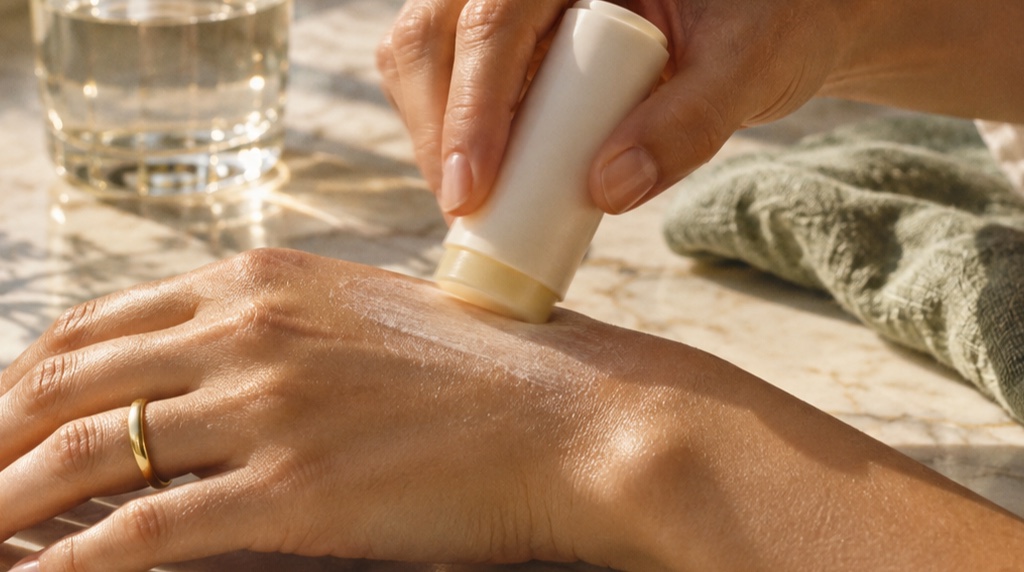
Work in small sections so you can see where the stick has travelled. Around the eyes, keep the product out of the eyes and follow its label. On the face, pay attention to the hairline, ears and edges near sunglasses. If the stick drags, pills over makeup or leaves gaps, it may be better as a small-area tool than your only format.
A stick is easy to carry, but portability is useful only if you reapply. Heat, storage directions and a dirty applicator surface can affect how practical it feels. Replace damaged or expired products and keep the cap on.
When lotion is the simpler choice
Lotion is generally more efficient for larger exposed areas because you can dispense and spread a generous amount. The FDA says an average-size adult or child needs at least one ounce to cover the body evenly. The exact amount needed for one face depends on the product and area, so use the label rather than a social-media measuring trick as your final instruction.
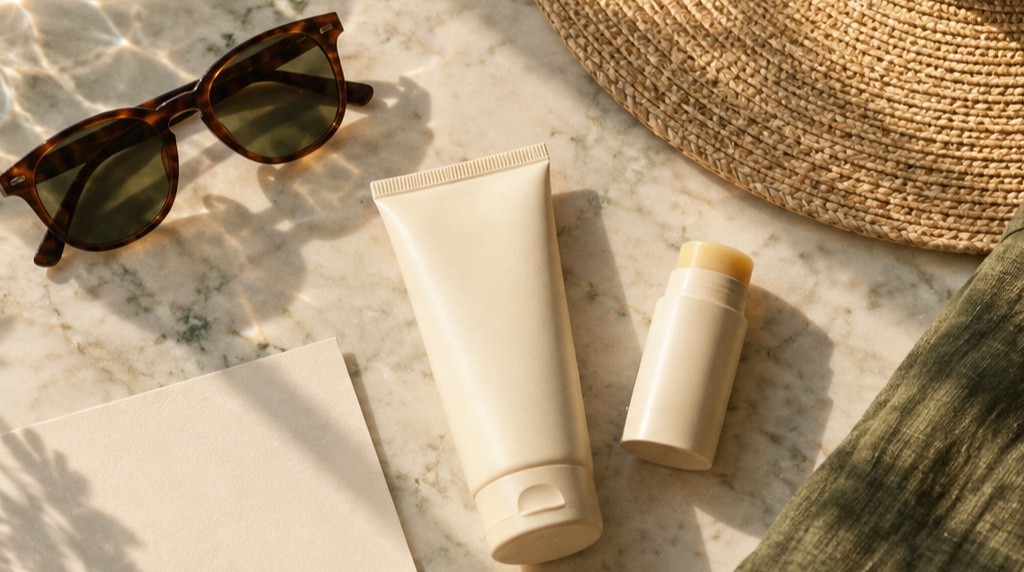
Lotion may be easier when you want to see and feel where you have applied it before it settles. The trade-off is that a runny or heavy texture can discourage a generous layer. Choose a finish you will use as directed, then test how it sits over your moisturiser before a long day outside.
If your morning layers roll into crumbs, read our guide to skincare pilling. Adjust optional layers or drying time before cutting down the sunscreen amount. For formula categories, see mineral versus chemical sunscreen.
Build a reapplication plan before you need it
The FDA and AAD advise reapplying at least every two hours outdoors, and after swimming or sweating according to the label. Shade, clothing, a wide-brimmed hat and sunglasses remain part of sun protection because no sunscreen blocks all ultraviolet radiation.
Your plan can use more than one format. Lotion may cover the face, neck and arms before leaving home, while a stick may handle smaller exposed areas later. That is a convenience strategy, not proof that the products create one tested layer together. Each product still needs to be applied according to its directions.

Keep the product where the routine happens. A stick in a bag, lotion near the door, and a reminder on long outdoor days can solve different points of friction. If you wear makeup, practise the reapplication method before relying on it. A cosmetically perfect method that delivers only a token amount is not a useful trade.
For product comparisons, start with our sunscreen guide after 30 or mineral sunscreen ranking. Verify the live product label because formulas and availability change.
Common questions
Is a sunscreen stick as effective as lotion?
A stick can carry a labeled SPF, but real use still requires adequate and even application. The AAD advises four passes over each area and rubbing it in. A single swipe should not be treated as equivalent to a generous lotion application.
Can I use a stick as my only face sunscreen?
You can follow the label of a face-appropriate stick, but check whether you can cover the full area evenly and generously. Many people may find lotion easier for a complete first application and a stick convenient for smaller areas.
Do I need to rub in stick sunscreen?
The AAD recommends rubbing it in after four passes to create an even layer.
Does sunscreen around the eyes need to be a stick?
No. The AAD identifies sticks as a convenient option around the eyes, not a requirement. Use a product whose label permits the area and avoid getting it in the eyes.
Sources and how we used them
Sources checked on 19 September 2026. Dermatology and regulatory sources support format, label and application guidance. None reviewed or endorsed this article.
- AAD: using stick and spray sunscreens
- AAD: sunscreen FAQs
- FDA: sun safety and sunscreen labels
- FDA: how to use sunscreen
Affiliate Disclosure: This post contains affiliate links, which means we may earn a small commission if you make a purchase through these links at no extra cost to you. We only recommend products we've researched and believe offer real value. Our opinions remain our own and are not influenced by any brand or compensation.