Created using AI; curated by Glow Protocol. AI tools support research, product comparisons and writing. Our recommendations are editorial selections. How we work.
Glow Protocol · Body care
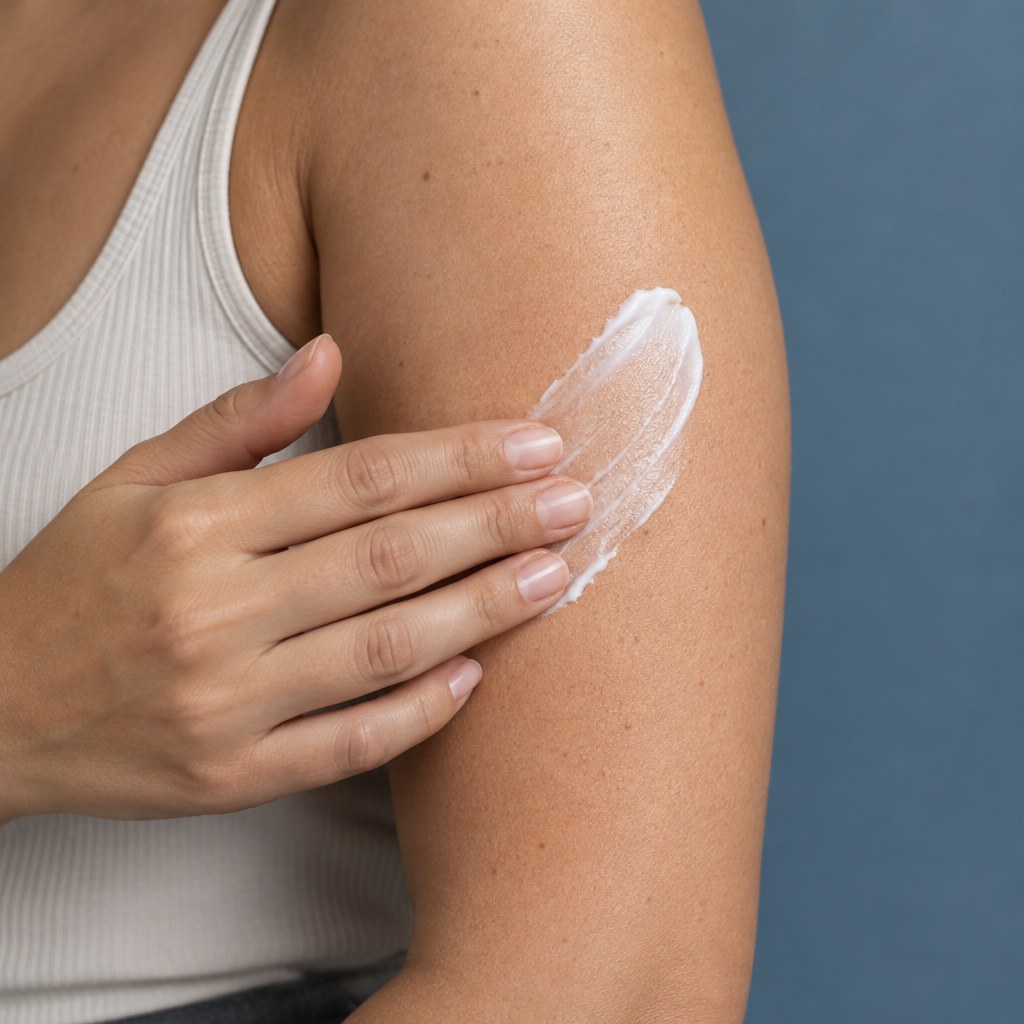
Tiny, rough bumps on your upper arms can tempt you to scrub harder or buy a stronger acid. If they are keratosis pilaris, a gentler, consistent routine is a better place to begin. The aim is comfortable skin and less noticeable roughness, with no pressure to achieve perfectly smooth arms.
The short version
Start with gentle washing and regular moisturising. If the bumps still bother you, consider one suitable smoothing product, used exactly as labelled. Skip aggressive scrubbing, watch for irritation and give a tolerated routine time. A painful, rapidly changing or unexplained rash needs assessment rather than stronger exfoliation.
First, check what the bumps might be
Keratosis pilaris, often shortened to KP, is a common condition involving small plugs of dead skin cells. The upper arms and fronts of the thighs are frequent sites. Dryness can make the bumps more noticeable. The American Academy of Dermatology’s overview explains that treatment is optional if their appearance, itch or dryness does not bother you.
Rough arms alone do not confirm KP. If the bumps are new, unusual for you, painful or accompanied by a persistent rash, ask a clinician to identify the cause. An online description cannot reliably distinguish every condition that produces bumps.
A gentle routine for rough upper arms
1. Make washing less drying
Keep showers comfortably warm and brief; five to ten minutes is a useful starting point. Use a mild, fragrance-free cleanser where needed and pat dry with a soft towel. Very hot water, long showers and vigorous rubbing can leave dry skin more irritated. These are basic AAD dry-skin care recommendations.
You do not need to scrub until your arms feel polished. The AAD specifically warns that scrubbing can worsen KP. Set abrasive mitts and grainy body scrubs aside while you establish a routine your skin tolerates. AAD KP self-care.
2. Make moisturising the dependable step
Apply a fragrance-free cream or ointment after bathing while your skin is still slightly damp. For KP, the AAD recommends moisturising within five minutes of bathing and again when skin feels dry. An ointment or a thick oil-free cream can be a useful choice. Keep it somewhere convenient so this becomes an easy daily habit. AAD moisturising advice.
A plain moisturiser is a reasonable starting point when your main problem is dryness. You do not have to introduce an exfoliant immediately, especially if your skin already feels sore or easily irritated.
3. Add one smoothing product only if you want it
For persistent KP texture, dermatologists may recommend ingredients that loosen built-up surface cells. The AAD lists options including lactic acid, urea and salicylic acid. A product may combine moisturising and exfoliating ingredients, so check what is already in your cream before adding another step. AAD treatment options.
Choose one product and follow its directions or your clinician’s advice. There is no universal acid percentage or frequency that suits every person. Do not increase the amount or apply extra layers because progress seems slow. Keep it off broken, sunburnt or actively irritated skin; ask your clinician first if you have eczema or use prescription skin treatments.
Before wider use, test a small area over seven to ten days, keeping within the product’s directions. Stop if a reaction develops. This home tolerance check is different from medical allergy patch testing and cannot guarantee a product will never irritate you. How the AAD recommends testing skincare.
4. Protect exposed arms
If your product contains an alpha hydroxy acid, such as lactic acid, read its sunburn warning. The FDA advises sunscreen, protective clothing and limited sun exposure during use and for one week afterwards. Applying an AHA at night does not remove the next day’s need for protection. FDA AHA guidance.
For exposed skin, choose broad-spectrum, water-resistant SPF 30 or higher and follow its application and reapplication directions. Clothing and shade help too. AAD sun-protection advice.
What progress can realistically look like
Judge comfort, dryness and texture separately. Less flaking or itching may matter as much to you as fewer visible bumps. Try keeping a short weekly note rather than changing products every few days. Do not continue through burning, a new rash or persistent stinging simply to finish a bottle.
KP can be stubborn, and results vary. The AAD advises contacting your dermatologist if a treatment plan has not helped after four to six weeks. Some people need a different approach, and maintenance is often needed. That time frame is a review point, not a promise of clear skin. AAD guidance on expectations.
Common questions
Should I shave or wax over the bumps?
Shaving and waxing can trigger more bumps in skin affected by KP. If hair removal seems to worsen yours, pause and discuss suitable alternatives with a dermatologist rather than repeatedly irritating the area. AAD hair-removal advice.
Do I need a stronger acid if moisturising is not enough?
Not automatically. Check that the diagnosis is right and that your current routine is tolerated. Exfoliating more often than directed can cause raw, irritated skin. Persistent bumps are a reason to review the plan with a clinician, rather than continually increase strength.
When should I seek medical help sooner?
Get prompt medical advice for a painful or rapidly spreading rash, fever, open sores, pus, warmth or swelling. Do not assume these are ordinary KP. An unexplained rash that persists also deserves assessment. AAD signs a rash needs medical attention.
Keep the goal modest: comfortable, well-moisturised skin and a routine you can maintain. More effort and more exfoliation are not always more helpful.
Research note: Prepared with AI-assisted research using the AAD and FDA sources linked above, checked 12 October 2026. No hands-on product testing or medical review was performed. This article provides general information and cannot diagnose a skin condition or replace personalised medical advice.
Affiliate Disclosure: This post contains affiliate links, which means we may earn a small commission if you make a purchase through these links at no extra cost to you. We only recommend products we've researched and believe offer real value. Our opinions remain our own and are not influenced by any brand or compensation.