Created using AI; curated by Glow Protocol. AI tools support research, product comparisons and writing. Our recommendations are editorial selections. How we work.
Quick answer
Compare vitamin C serums by the form used, packaging, directions, tolerance and replacement cost. Research is formulation-dependent; a stronger percentage or higher price is not a universal winner. Follow the manufacturer’s storage and expiry guidance rather than assuming every serum lasts the same number of weeks.
Background guidance: Review: topical vitamin C evidence · FDA: cosmetic shelf life.
Updated : Opening answer clarified and its supporting references checked; jump navigation added. Check current price, size and seller on the retailer listing.
Affiliate Disclosure: This post contains Amazon affiliate links. If you purchase through our links, we earn a small commission at no extra cost to you. We only recommend products we have researched and believe in.
Vitamin C Serums Compared: Formulas, Packaging and Budget
This page compares vitamin C products. For expiry, oxidation and storage questions about a serum you already own, start with our vitamin C storage and stability guide.
Pull a vitamin C serum out of any bathroom in any city and there is a decent chance it has already gone brown. Not orange, not amber. Brown. That is the colour of oxidised L-ascorbic acid, the most common form of vitamin C in skincare. Once your serum turns brown, it is not just less potent. It can actively generate free radicals on your skin instead of fighting them.
Almost no brand puts that fact on the label. Vitamin C is the most over-recommended and most under-explained ingredient in skincare, and the stability problem is the part the marketing skips. After 30, when antioxidant defence becomes increasingly important to protect collagen and prevent dark spots, this matters. You cannot get the benefits of vitamin C from a dead serum.
This post ranks 10 vitamin C serums from $8 to $182 and tells you which ones stay potent through the bottle, which ones oxidise faster than you can use them up, and which stable derivatives are the smarter pick if you keep your serums for more than 6 weeks. Plus the routine that makes vitamin C earn its place in your morning instead of just sitting on the shelf.
What Vitamin C Actually Does (And Why Stability Decides Whether You Get Any of It)
Vitamin C in skincare does four things genuinely well. It neutralises free radicals (the molecular damage from UV exposure that breaks down collagen and triggers dark spots). It supports collagen synthesis directly by serving as a cofactor for the enzymes that build collagen. It inhibits tyrosinase, the enzyme responsible for melanin production, which fades dark spots and brightens overall tone. And it boosts the photoprotection of your sunscreen by approximately 4x when layered underneath. None of this is marketing puffery. The research is solid.
The catch. Almost all of those benefits depend on the vitamin C in the bottle still being active vitamin C when it touches your skin. And here is where most of the industry quietly fails.
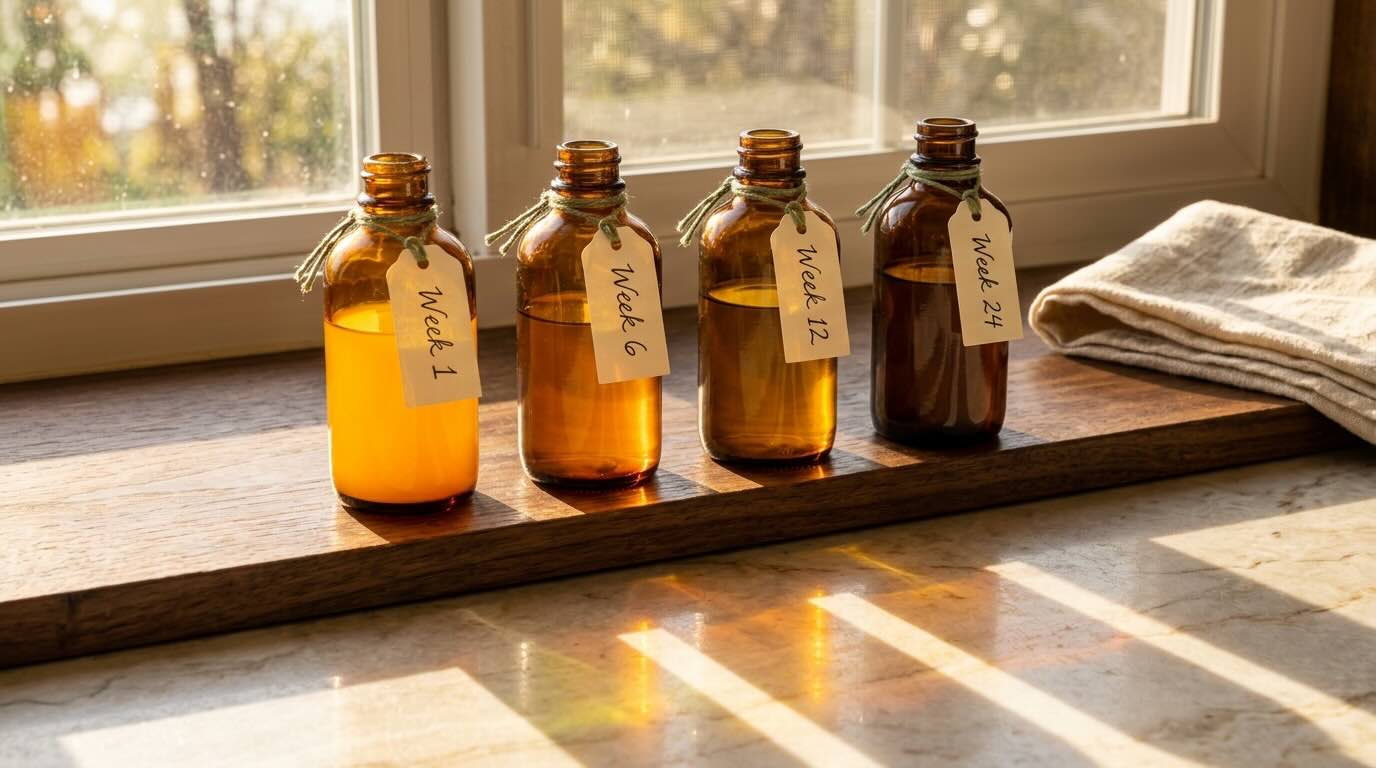
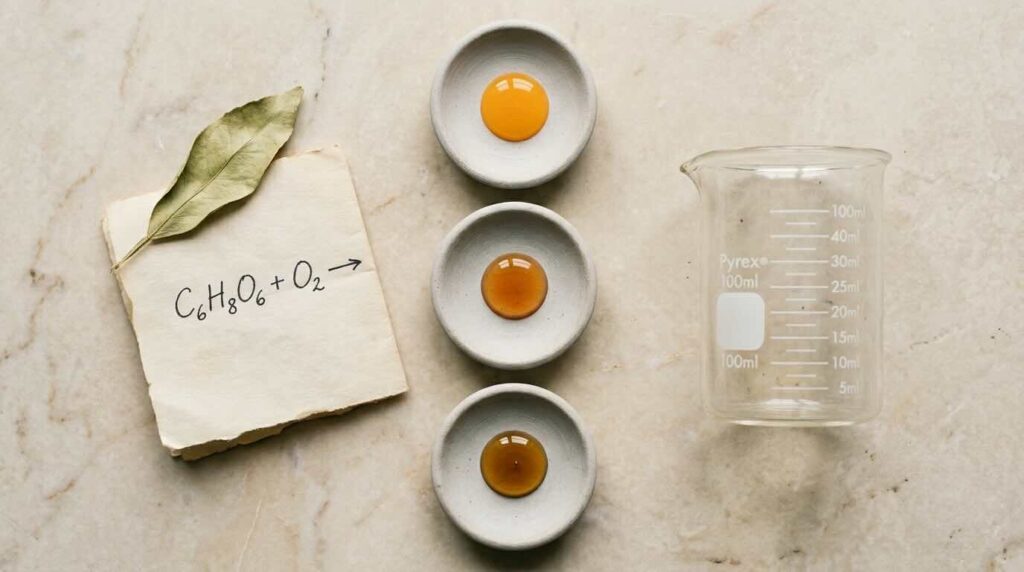
L-ascorbic acid, the most studied and most potent form, is also the most unstable molecule in mainstream skincare. It oxidises when exposed to air, light, heat, or alkaline pH. The chemistry is unambiguous. A clear-glass dropper bottle of 15 percent L-ascorbic acid stored on a sunny bathroom shelf loses meaningful potency within 6 to 12 weeks of opening. After 4 months it is mostly dehydroascorbic acid, the oxidised form, which has minimal antioxidant effect and may itself be slightly pro-oxidative. The colour change from clear or pale yellow to amber or brown is your visual cue. Brown means dead.
This is why the form, the packaging, and the rate at which you use the bottle matter as much as the brand. A $182 SkinCeuticals C E Ferulic used to completion in 8 weeks is genuinely effective. The same bottle stretched across 6 months delivers a fraction of the cost-per-use efficacy and a much smaller portion of the actual antioxidant work the post promises.
The Three Forms of Vitamin C You Need to Know
L-ascorbic acid (LAA)
The pure form, the most studied, the most potent gram-for-gram. Requires a low pH of 3 to 3.5 to penetrate the skin, which is why higher-concentration L-ascorbic acid serums can sting if your barrier is compromised. Oxidises fast once opened. Best in amber-glass airless pumps. Examples on this list: SkinCeuticals C E Ferulic, Paula’s Choice C15, Drunk Elephant C-Firma Fresh. If you use these, finish the bottle in 8 to 12 weeks or you are paying for oxidised serum.
Ascorbyl glucoside
A water-soluble derivative bound to glucose. Much more stable than L-ascorbic acid (resists oxidation for 6+ months once opened). Skin converts it back to active vitamin C through enzymatic action. Lower direct potency but better real-world delivery because the bottle does not die before you use it. Gentler, pH-neutral, suitable for sensitive skin. Examples: The Ordinary Ascorbyl Glucoside Solution 12%, included in many Korean serum formulations. The smartest pick for most women who do not finish serums quickly.
MAP (magnesium ascorbyl phosphate) and ascorbyl tetraisopalmitate
Two other stable derivatives. MAP is water-soluble and pH-neutral, good for sensitive skin. Ascorbyl tetraisopalmitate is oil-soluble, penetrates lipid-rich skin layers well, and is particularly useful for mature dry skin. Both are noticeably more stable than L-ascorbic acid and gentler on the barrier. Often found in K-beauty and dermatological-brand formulations.
Best Budget Vitamin C Serums (Under $40)
Budget vitamin C means accepting either slightly lower potency in exchange for stability (the derivative route) or accepting fast use-up timelines in exchange for L-ascorbic acid potency. Five picks across both strategies.
Vitamin C · The Stable Workhorse
The Ordinary Ascorbyl Glucoside Solution 12%
The smartest budget pick on this list. 12 percent ascorbyl glucoside, the stable derivative that does not oxidise the way L-ascorbic acid does. Stays potent for 6+ months once opened. Gentle, pH-neutral, suitable for sensitive skin. The texture is slightly tacky for the first 30 seconds, then sinks in. Layers under sunscreen without pilling. At $11 you can replace the bottle every 3 months for $44 a year and never worry about whether your vitamin C is still working. The pick for women who keep serums for more than 8 weeks, sensitive or rosacea-prone skin, and anyone who has had bad experiences with L-ascorbic acid stinging.
View on Amazon →
Vitamin C · The High-Concentration Risk
The Ordinary Vitamin C Suspension 23% + HA Spheres 2%
The cheapest serious vitamin C product on the market and the highest concentration on this entire ranking at 23 percent L-ascorbic acid. The catch. The formula is a suspension, meaning the ascorbic acid particles are suspended in silicone rather than dissolved in water. This makes it more stable than dissolved L-ascorbic acid (it does not oxidise as fast) but it feels gritty, requires good shaking before use, and can pill with other products. The pick for budget-conscious shoppers who want maximum L-ascorbic acid concentration and can tolerate the suspension texture. Use mornings only, finish within 4 months. Not for sensitive skin.
View on Amazon →
Vitamin C · The Brightening Booster
Garnier Bright Complete Vitamin C Booster Serum
Combines vitamin C with niacinamide and salicylic acid for multi-mechanism brightening. The drugstore vitamin C that punches above its weight. Stable formulation, lightweight texture, absorbs quickly without residue. The niacinamide pairing addresses the slight redness vitamin C can cause in sensitive skin and reinforces the brightening effect. The pick for everyday brightening on a tight budget, combination skin, and anyone who wants vitamin C without the L-ascorbic acid potency fade problem.
Amazon listing not currently verified.
Vitamin C · The Ceramide Combination
CeraVe Skin Renewing Vitamin C Serum
10 percent L-ascorbic acid plus three ceramides and hyaluronic acid. The barrier-supportive vitamin C, which is the right architecture for women over 30 whose skin tolerates actives best when they are formulated alongside reinforcing ingredients. Comes in opaque amber-glass airless pump packaging, which extends the stable life of the L-ascorbic acid significantly compared to clear-glass droppers. The pick for women with mature skin who want L-ascorbic acid potency but cannot afford SkinCeuticals, and anyone with a compromised barrier. (If you have seen the viral CeraVe cancer claims, read our calm evidence-based take before deciding.)
Amazon listing not currently verified.
Vitamin C · The Antioxidant Trinity Lite
Mad Hippie Vitamin C Serum
A cleaner-formulation pick. 10 percent sodium ascorbyl phosphate (a stable derivative) plus vitamin E plus ferulic acid plus hyaluronic acid. The same trinity architecture as SkinCeuticals C E Ferulic but built around the more stable derivative form. Genuinely effective at the price, gentle enough for daily use, opaque amber-glass airless pump packaging. Cult favourite in clean-beauty circles for a reason. The pick for women who want the C-E-ferulic stack without the SkinCeuticals price tag and without the L-ascorbic acid stability anxiety.
Amazon listing not currently verified.
Best Mid-Range and Luxury Vitamin C Serums ($45 to $182)
At this tier you are paying for formulation refinement, packaging engineering that genuinely extends stability, and (at the very top) the C-E-ferulic trinity that pioneered modern topical vitamin C. The premium is real if you finish the bottle on time.
Vitamin C · The French Pharmacy Pick
La Roche-Posay Pure Vitamin C10 Serum
10 percent pure L-ascorbic acid plus salicylic acid plus neurosensine (a calming peptide). The French pharmacy approach to vitamin C, formulated alongside sensitive-skin-friendly supporting ingredients. Comes in opaque amber-glass packaging that extends stability. Texture is lightweight and gel-like, absorbs without residue. The pick for women who want L-ascorbic acid potency but have reactive skin that struggles with higher-concentration formulations. Finish within 10 weeks for maximum potency.
Amazon listing not currently verified.
Vitamin C · The Concentrated Booster
Paula’s Choice C15 Super Booster
15 percent L-ascorbic acid plus vitamin E plus ferulic acid, the same C-E-ferulic trinity as SkinCeuticals at less than a third of the price. Comes in opaque amber-glass packaging. Designed to be added to your existing moisturiser or layered as a serum. Concentration is identical to SkinCeuticals, the difference at the top tier is formulation elegance and the L-ascorbic acid stabilisation chemistry. For most women this Paula’s Choice formulation delivers 85 to 90 percent of the SkinCeuticals result at 28 percent of the price. The pick for women who want the C-E-ferulic stack without paying $182.
Amazon listing not currently verified.
Vitamin C · The Sensory Experience
Drunk Elephant C-Firma Fresh Day Serum
15 percent L-ascorbic acid plus vitamin E plus ferulic acid plus pumpkin ferment plus marula oil. The luxury sensory take on the C-E-ferulic trinity, formulated to feel decadent on application. The “Fresh” in the name is meaningful. The product is sold as a two-chamber system you mix on first use to maximise stability at the moment of activation. Smart packaging engineering that extends the bottle’s working life. The pick for women who want the C-E-ferulic stack plus a luxurious sensory experience and are willing to pay for both. Finish within 8 to 10 weeks.
View on Amazon →
Vitamin C · The Niche Editorial Pick
Sunday Riley CEO 15% Vitamin C Brightening Serum
15 percent THD ascorbate (ascorbyl tetraisopalmitate), the oil-soluble stable derivative that penetrates lipid-rich skin layers exceptionally well. Different mechanism from the L-ascorbic acid camp. The oil-soluble derivative is gentler, more stable, particularly suited to mature dry skin, and does not require a low pH to work. Texture is silky and slightly emollient. The pick for women with dry mature skin who have struggled with the stinging or texture of L-ascorbic acid formulations and want vitamin C delivered through the oil-soluble pathway instead.
Amazon listing not currently verified.
Vitamin C · The Original Gold Standard
SkinCeuticals C E Ferulic
The serum that defined modern topical vitamin C. 15 percent L-ascorbic acid plus 1 percent vitamin E plus 0.5 percent ferulic acid in the patented stabilisation matrix that pioneered the whole category. The formulation is the standard everything else is measured against. The trinity provides 8x photoprotection enhancement when layered under sunscreen. Comes in opaque amber-glass with a dropper that limits air exposure. Genuinely effective. Genuinely expensive. The pick for women 40+ with the budget who want the formulation everything else copies, and women dealing with significant photoaging concerns who need maximum antioxidant protection. Finish within 8 weeks for maximum potency. If you stretch a $182 bottle to 6 months, switch to Paula’s Choice C15 instead.
View on Amazon →
How to Tell If Your Vitamin C Is Dead
The simplest test you can do at home with the bottle currently on your shelf.
- Look at the colour. Fresh L-ascorbic acid serums range from completely clear to pale yellow. Pale amber means oxidation has started but the serum is still mostly active. Deep amber, golden brown, or dark brown means the L-ascorbic acid has substantially oxidised to dehydroascorbic acid and the serum is mostly dead. Throw it out.
- Check the smell. Fresh vitamin C serums are largely odourless or have a faint citrus-like note. Oxidised serums develop a slightly metallic or burnt-sugar smell. Trust your nose.
- Check the packaging. If your serum is in a clear-glass dropper bottle on a sunny shelf and you opened it more than 12 weeks ago, it has likely oxidised regardless of how it looks. Store future serums in a cool dark cabinet, ideally a bathroom drawer rather than a bathroom counter.
- Check the form on the INCI list. If the active is ascorbyl glucoside, MAP (magnesium ascorbyl phosphate), sodium ascorbyl phosphate, or ascorbyl tetraisopalmitate, your serum is significantly more stable than L-ascorbic acid and probably still works even at 6+ months. If the active is L-ascorbic acid (often listed as “ascorbic acid”), the 8 to 12 week potency window applies.
How to Build a Morning Vitamin C Routine That Actually Works
Vitamin C is a morning product. Its primary value is daytime antioxidant defence and the 4 to 8x photoprotection boost it gives your sunscreen. Used at night it is still active but you are missing most of the point. Here is the morning sequence.
- Cleanser. A gentle cleanser appropriate for your skin type. Avoid stripping formulas that compromise the barrier before you apply actives.
- Vitamin C serum. Apply to clean dry skin. Two to three drops for the entire face and neck. Press in gently with your fingertips. Wait 60 seconds for absorption.
- Niacinamide or other supporting serum. Niacinamide pairs beautifully with vitamin C, contrary to outdated advice claiming they cancel each other out. They work through different mechanisms and the combination strengthens the barrier while vitamin C does its antioxidant work. See our skincare layering order guide for the full sequence.
- Moisturiser. Lock in the actives with a barrier-supporting moisturiser.
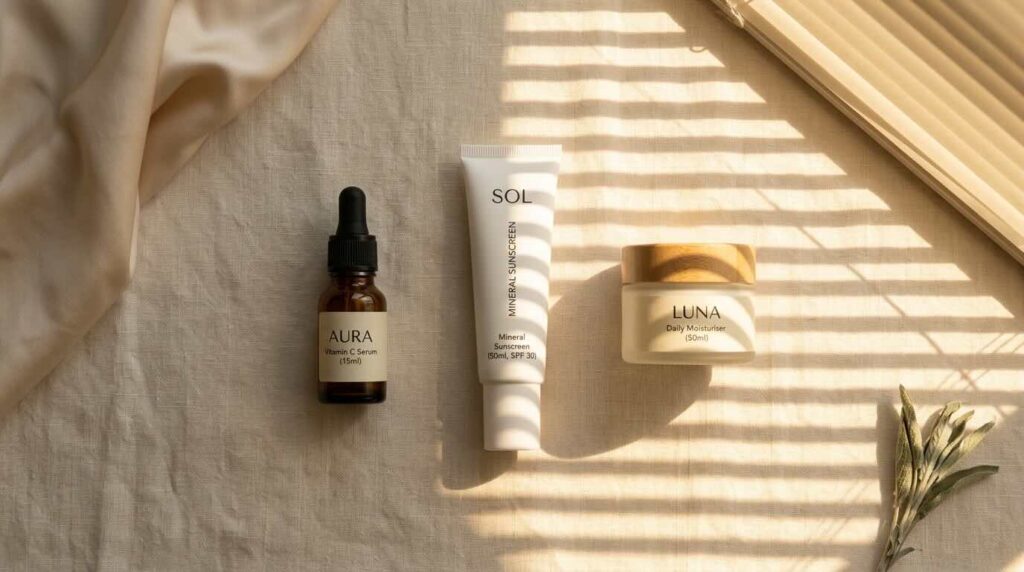
- Sunscreen. Non-negotiable. Mineral or chemical SPF 30+ as the final step. The vitamin C underneath multiplies the protection significantly. Skipping SPF after using vitamin C is the most common mistake on this routine.
For the night routine, pair vitamin C with the actives that work best at night. Tranexamic acid for pigmentation, peptides for collagen support, or azelaic acid for multi-concern routines. The morning vitamin C and the night actives together cover both the antioxidant defence and the repair work your skin needs after 30.
The Bottom Line
Vitamin C is one of the genuinely useful ingredients in modern skincare. The catch is that most women are using it wrong, either by buying a form that oxidises before they can use it up, or by storing it in conditions that kill the potency, or by stretching premium L-ascorbic acid serums across months when they should be finished in weeks.
If you finish serums in 8 weeks or less, the L-ascorbic acid options earn their price. Paula’s Choice C15 ($52) is the value pick. SkinCeuticals C E Ferulic ($182) is the gold standard if budget is no object.
If you take longer than 8 weeks to finish a serum, switch to a stable derivative. The Ordinary Ascorbyl Glucoside Solution 12% ($11) is the smartest move on this entire ranking. It costs $44 a year, stays potent the whole time, and delivers most of the brightening and antioxidant benefits without the stability anxiety.
Whichever you pick, use it in the morning, layer sunscreen on top, and finish the bottle. The vitamin C sitting half-used in your bathroom for 6 months is not protecting your skin. The one you actually finish is.
Sources
Research context: these sources cover ingredients, skin biology or specific tested formulations. Results depend on the concentration, delivery method and population studied. Product selections are editorial curation; these references are not head-to-head tests of all products listed.
- Telang PS (2013). Vitamin C in dermatology. Indian Dermatol Online J. PubMed 23741676
- Pinnell SR (2003). Cutaneous photodamage, oxidative stress, and topical antioxidant protection. J Am Acad Dermatol. PubMed 12522365
- Humbert PG, et al. (2003). Topical ascorbic acid on photoaged skin. Clinical, topographical and ultrastructural evaluation: double-blind study vs. placebo. Exp Dermatol. PubMed 12823436 Specific topical ascorbic acid trial; not all vitamin C products.
- Bissett DL, et al. (2005). Niacinamide: A B vitamin that improves aging facial skin appearance. Dermatol Surg. PubMed 16029679 Specific 5% niacinamide formula; 50 women, 12 weeks.
- Del Rosso JQ (2013). The role of skin care in acne vulgaris, Part 1: cleanser and moisturizer selection. J Clin Aesthet Dermatol. PubMed 24765221 Acne skincare review; not peptide efficacy evidence.
Additional reading: Build out the routine with our guides on tranexamic acid for dark spots and melasma, copper vs signal peptides comparison, best azelaic acid products, best peptide serums ranked, skin barrier repair, skincare layering order, great skin after 30, and our evidence-based take on the viral CeraVe cancer claim.
Affiliate Disclosure: This post contains affiliate links, which means we may earn a small commission if you make a purchase through these links at no extra cost to you. We only recommend products we've researched and believe offer real value. Our opinions remain our own and are not influenced by any brand or compensation.