Created using AI; curated by Glow Protocol. AI tools support research, product comparisons and writing. Our recommendations are editorial selections. How we work.
Quick answer
A dedicated eye cream is optional. Decide what you want to address and whether a product is intended and tolerated around your eyes; price and an eye-specific label do not guarantee better results. Creams also have limits when darkness or puffiness reflects anatomy or another underlying cause.
Background guidance: Johns Hopkins: under-eye bags · AAD: product reactions and testing.
Updated : Opening answer clarified and its supporting references checked; jump navigation added. Check current price, size and seller on the retailer listing.
Affiliate disclosure: This post contains Amazon affiliate links (tag: glowprotocol-20). If you purchase through our links, we earn a small commission at no extra cost to you. We only recommend products we have researched and believe in.
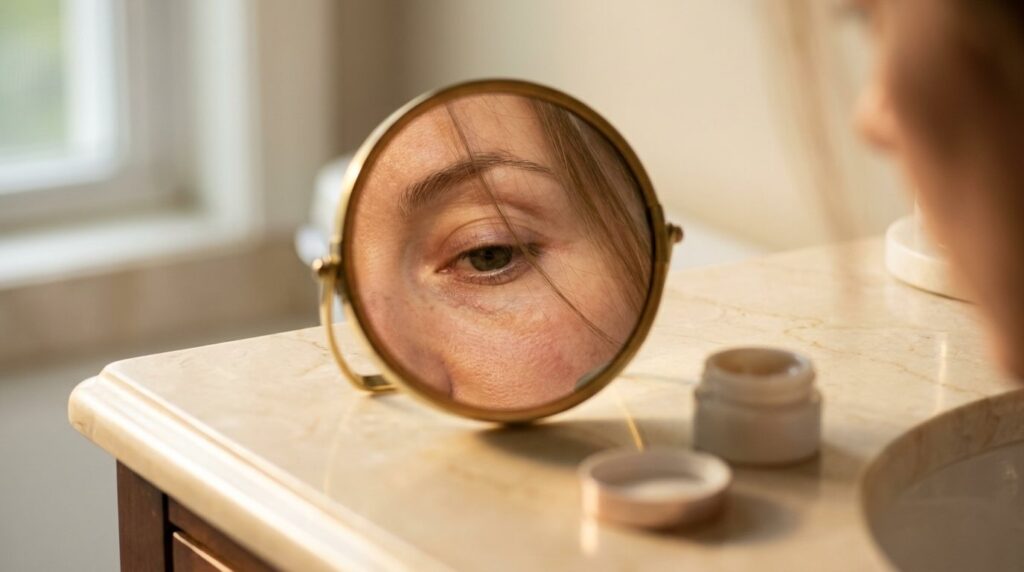
So I did what I always do now. I went and read the research. And what I found about whether eye cream is worth it after 30 changed how I think about that entire category of skincare. The honest answer is more nuanced than the beauty industry wants it to be. Some eye creams genuinely earn their place in your routine. Most do not.
This is the honest guide on eye cream worth it after 30. What changes around your eyes in your thirties and forties. Which ingredients actually work. When a face serum will do the same job for less. And the five products that, after all the research, are genuinely worth buying.
Eye cream is not a scam. But most eye creams are face moisturiser at five times the markup. Knowing the difference is the entire point.
What Actually Changes Around Your Eyes After 30
The skin around your eyes is not the same as the skin on the rest of your face. It is roughly forty percent thinner. It has fewer sebaceous glands, which means less natural oil and less natural moisture. The blood vessels sit closer to the surface, which is why tiredness and hormonal shifts show up there first. And it moves more than any other part of your face, every blink, every smile, every squint.
That fragility is baseline. After 30, a few things accelerate. Collagen production declines by roughly one percent per year. The under-eye fat pads, which gave your face that smooth, lifted look in your twenties, begin to shift and thin. Cell turnover slows from 28 days to closer to 45 by your forties, so any pigmentation under the eyes lingers longer. And the lymphatic drainage that used to handle a salty meal or a bad night of sleep gets less efficient.
The visible result is the cluster of concerns women in their thirties and forties suddenly find themselves googling. Darker circles. Crepey texture under the eyes. Fine lines that did not exist last year. Puffiness that takes longer to fade in the morning. None of this is unusual. All of it is biological.
So is eye cream worth it after 30? Sometimes yes, often no, and the difference matters more than you might think. The eye cream worth it question is really about whether a specific product addresses a specific concern, or whether you are paying a premium for a smaller jar of the same ingredients in your face routine.
The Eye Cream Lie
Here is the uncomfortable truth that most beauty editors will not write. The vast majority of eye creams on the market are face moisturiser, repackaged in a smaller jar, with a price tag two to five times higher per millilitre. Same humectants. Same emollients. Sometimes the exact same formulation with one or two added ingredients at concentrations too low to do anything measurable.
The cosmetic chemistry community has been saying this quietly for years. Pick up a high-end eye cream, then pick up that same brand’s face moisturiser. Read both ingredient lists. If the actives appear in the same order, at similar positions in the list, you are likely paying a 200 to 400 percent premium for a smaller jar and a more expensive font.
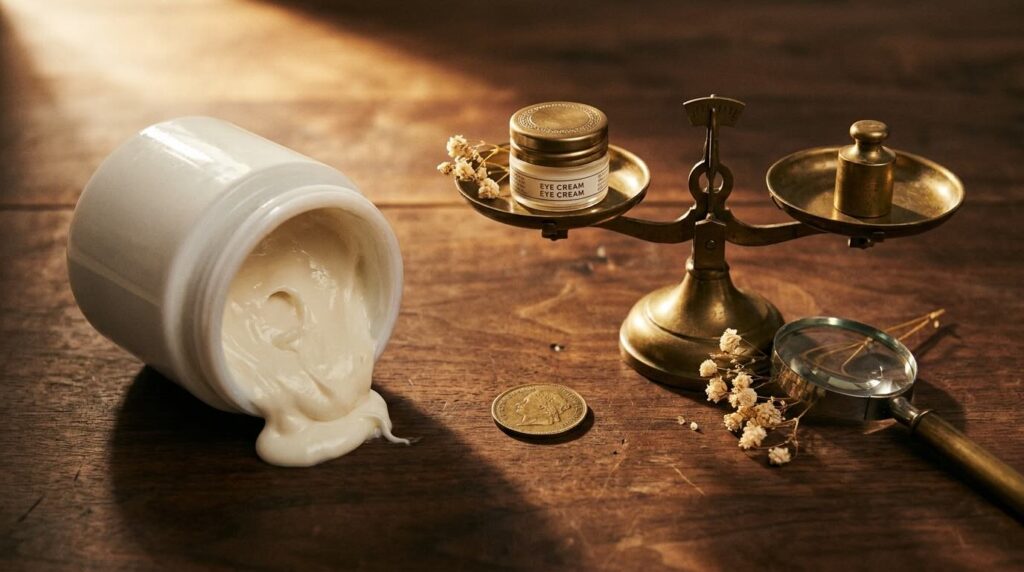
This does not mean every eye cream is a scam. It means most are. The eye cream worth it test is whether the formulation contains specific actives at meaningful concentrations, in a base that lets them work. The ones that are not, the small number genuinely worth buying after 30, share specific qualities. They use actives the eye area actually responds to. At concentrations that have been clinically tested. In formulations gentle enough for a thin, reactive skin area where most face actives are too harsh.
What Makes an Eye Cream Worth It
If you are going to spend on a separate eye product, these are the ingredients that make an eye cream worth it. Real evidence, real concentrations, for the specific concerns that show up around the eyes after 30.
Retinol or retinal, at low concentration
The single most evidence-backed anti-ageing ingredient also works around the eyes. The catch is concentration. Standard face retinol (0.5 to 1 percent) is often too irritating for the thin eye area. Look for eye-specific formulations at 0.025 to 0.1 percent, or retinal (the gentler conversion-step molecule) at low strength. Builds collagen, fades pigmentation, smooths fine lines. The slow, real change.
Peptides, particularly signal peptides
Peptides signal the skin to produce collagen. The strongest evidence is for palmitoyl tripeptide-1, palmitoyl tetrapeptide-7, and copper peptides (GHK-Cu). These take 8 to 12 weeks to show visible change, but the change is real and well-documented in the dermatology literature. Particularly useful for crepey texture and loss of firmness.
Caffeine, for puffiness and vascular dark circles
Caffeine is a vasoconstrictor. Applied topically to the under-eye area, it temporarily reduces the appearance of vascular dark circles (the bluish-purple tone caused by visible blood vessels) and helps with morning puffiness. The effect is real but short-lived, lasting two to four hours. This is one of the few eye cream claims that does what the marketing says, when the formulation has at least 3 percent caffeine.
Niacinamide and vitamin C, for pigmentation
For pigmentation-based dark circles (the brownish tone, common in deeper skin tones and after sun exposure), niacinamide at 4 to 5 percent and stable vitamin C at lower concentrations both have real evidence. Slower than caffeine, but they actually address the underlying pigmentation rather than masking it.
Ceramides and barrier-supporting humectants
If the active ingredients in an eye cream sit in a poorly-formulated base, none of them work. The best eye creams use the same barrier-supporting ingredients you should already be looking for in your face moisturiser. Ceramides. Glycerin. Hyaluronic acid. Squalane. The active does the work, the base lets it actually penetrate and lasts on the skin.
If your eye cream does not contain at least one of those five things at a meaningful concentration, you are paying for the jar.
When You Probably Do Not Need an Eye Cream
The honest answer that most beauty content avoids. For a lot of women, a well-formulated face serum and a barrier-supporting face moisturiser will do roughly 80 percent of what a separate eye cream does. If you are already using a peptide serum, a vitamin C serum, or a low-strength retinol on the rest of your face, you can extend those gently into the under-eye area in most cases.
The exceptions are when the active you are using on your face is too strong for the eye area (most prescription retinoids, high-percentage acids, strong vitamin C at 15 percent or above). In those cases, a separate, gentler eye product genuinely earns its place in the routine. Otherwise, you are likely fine extending what you already have.
When Eye Cream Is Worth It After 30
Eye cream worth it status, in practical terms, applies when your specific concern needs targeted treatment. Vascular dark circles benefit from caffeine in a way no face moisturiser will deliver. Deep crow’s feet respond to gentle retinol in formulations designed for the eye area. Hollowing under the eyes responds (modestly) to peptide-rich formulations. Persistent puffiness in the morning responds to caffeine and proper application technique.
If your under-eye concerns are mild, or general (slight dryness, a few faint lines, occasional puffiness from a bad night), you can probably skip the separate purchase. If they are specific and persistent, the right eye cream is genuinely worth it.
The 5 Eye Creams Genuinely Worth It After 30
These are the eye cream worth it picks after the research. Each one addresses a specific concern with an active at a meaningful concentration. Each one is in a well-formulated base. Each one is priced honestly for what it actually delivers.
Budget Pick · Puffiness and Dark Circles
The Ordinary Caffeine Solution 5% + EGCG
High-dose caffeine at 5 percent (well above the 3 percent threshold for measurable effect) plus EGCG, a green tea antioxidant that supports the vasoconstriction effect. Reduces vascular dark circles and morning puffiness within 20 minutes of application. Will not change the underlying cause, but the temporary effect is real, reliable, and the best value of any eye product on the market. Apply twice daily, store in the fridge for the puffiness use case.
View on Amazon →
Budget Pick · Daily Barrier Support
CeraVe Eye Repair Cream
Ceramides 1, 3, and 6-II, plus niacinamide and hyaluronic acid, in a fragrance-free formulation gentle enough for daily use. Not a treatment product. A genuinely good barrier-supporting eye moisturiser at a fair price. If your concern is dryness, mild fine lines, or general under-eye comfort, this does what most $40 eye creams claim to do, for a third of the price.
View on Amazon →
Mid-Range Pick · Retinol and Peptides
Paula’s Choice Resist Anti-Ageing Eye Cream
Low-concentration retinol (0.1 percent) combined with peptides, ceramides, and antioxidants. The retinol is buffered with barrier-supporting ingredients to make it tolerable around the eyes. One of the few eye creams that genuinely addresses fine lines and texture rather than just hydrating. Use at night, build up gradually starting with three times per week. Visible results around 12 weeks of consistent use.
View on Amazon →
Luxury Splurge · Regenerative
Augustinus Bader The Eye Cream
TFC8, the proprietary amino-acid and synthesised-molecule complex behind the brand’s reputation, in a lighter formulation designed for the eye area. Strong clinical evidence for cellular renewal and visible improvement in skin quality over 8 to 12 weeks. The most expensive option on this list, and the one with the strongest case for the luxury price tag. Worth it only if you have already invested in the rest of a serious skincare routine.
View on Amazon →
How to Actually Apply It
The technique matters as much as the product. Use the ring finger (it applies the least pressure of any finger). Tap, do not rub, the product around the orbital bone, not directly on the eyelid or the lash line. Work from the outer corner inward for puffiness, inner corner outward for darkness. A pea-sized amount is enough for both eyes. More is not better.
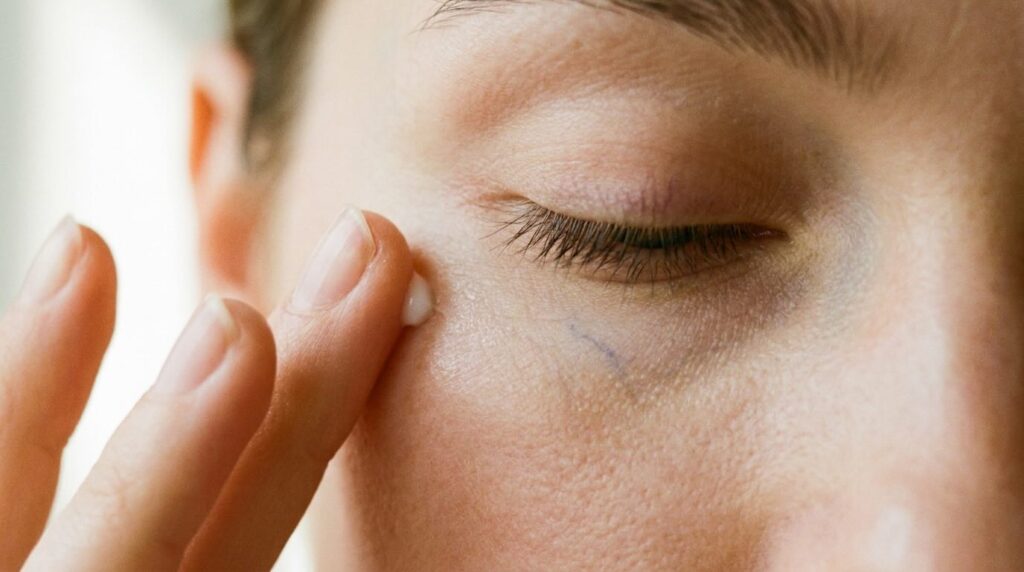
Layer order in your routine: cleanse, eye cream, face serum, face moisturiser, SPF in the morning. Eye cream goes early because the formulation is usually lighter than your face products and you do not want heavy creams blocking its absorption. Some skincare professionals will tell you to apply face products first and eye cream last. Both work. Consistency matters more than the order.
What to Skip Entirely
Anything labelled “lifting” without a peptide or retinoid behind the claim. Anything with heavy fragrance (the eye area is one of the most fragrance-sensitive parts of the face). Anything with high-percentage acids designed for the rest of the face. Anything in a clear glass jar that has been sitting under shop lighting (most luxury actives degrade under UV). And any eye cream that costs more than $80 without published clinical data behind it.
The Honest Verdict on Whether Eye Cream Is Worth It After 30
Is eye cream worth it after 30? It depends entirely on what you are trying to address. For specific, persistent concerns (vascular dark circles, deep crow’s feet, crepey texture, hollowing) the right targeted product is genuinely an eye cream worth it scenario. For general under-eye comfort and mild fine lines, you can probably extend your face routine and skip the separate purchase entirely.
The most expensive thing you can do in skincare is buy products that promise transformation but deliver moisturisation. Most of the eye cream market is exactly that. The small number of products genuinely worth buying after 30 are the ones with specific actives at meaningful concentrations, in well-formulated bases, at honest price points. Five of them are above. The rest, gently, are not the answer to the under-eye changes you noticed in the mirror this morning.
The skin around your eyes will keep changing through your thirties and forties. The honest goal is not to reverse that. It is to support your skin through it, with products that genuinely earn their place in the routine, and to skip the rest.

Eye cream worth it after 30 is a real question with a specific answer. The formulation has to be honest about what it does. Most are not. The five above are.
Related Reading
If your under-eye concerns are part of a wider sense that your skin has changed since your twenties, start with the 5 changes that happen to your skin after 30. If your face has felt reactive or sensitive recently, the barrier repair guide is the foundation. For a full evening routine that works alongside the eye products above, the luminous skin routine after 40 is the next step. If you are weighing the luxury picks in this list against other high-end skincare, the La Mer versus Augustinus Bader versus Dr Barbara Sturm comparison covers what the premium price actually buys you, and the honest La Mer review goes deeper on one of the most over-marketed names in the category.
Sources
Research context: these sources cover ingredients, skin biology or specific tested formulations. Results depend on the concentration, delivery method and population studied. Product selections are editorial curation; these references are not head-to-head tests of all products listed.
- Mukherjee S, et al. (2006). Retinoids in the treatment of skin aging: an overview of clinical efficacy and safety. Clin Interv Aging. PubMed 18046911 Review distinguishing retinoids, formulations and tolerability.
- Bissett DL, et al. (2005). Niacinamide: A B vitamin that improves aging facial skin appearance. Dermatol Surg. PubMed 16029679 Specific 5% niacinamide formula; 50 women, 12 weeks.
- Herman A, Herman AP (2013). Caffeine’s mechanisms of action and its cosmetic use. Skin Pharmacol Physiol. PubMed 23075568
- Gorouhi F, Maibach HI (2009). Role of topical peptides in preventing or treating aged skin. Int J Cosmet Sci. PubMed 19570099 Topical peptide review; evidence varies by formulation.
- Quan T, Fisher GJ (2015). Role of Age-Associated Alterations of the Dermal Extracellular Matrix Microenvironment in Human Skin Aging: A Mini-Review. Gerontology. PubMed 25660807
Glow Protocol · glowprotocol.beauty · Science-backed skincare for women 30+
Affiliate Disclosure: This post contains affiliate links, which means we may earn a small commission if you make a purchase through these links at no extra cost to you. We only recommend products we've researched and believe offer real value. Our opinions remain our own and are not influenced by any brand or compensation.