Created using AI; curated by Glow Protocol. AI tools support research, product comparisons and writing. Our recommendations are editorial selections. How we work.
Quick answer
Hyaluronic acid is a moisturising ingredient, and a separate serum is optional if your routine already hydrates comfortably. Research on one molecular weight or finished formula does not establish that every HA product performs alike. Choose the overall formulation and feel rather than the biggest molecular-weight claim.
Background guidance: Clinical study: topical hyaluronic acid.
Updated : Opening answer clarified and its supporting references checked; jump navigation added. Check current price, size and seller on the retailer listing.

Affiliate disclosure: This post contains affiliate links. If you buy through them, we may earn a small commission at no extra cost to you. We only recommend products we have researched and believe in.
Hyaluronic Acid After 30: Why Yours Might Be Drying You Out
If your HA serum isn’t doing what it promises, the product probably isn’t the problem. The way you’re using it might be. And if you live somewhere dry (or your skin barrier is already compromised, which is most women after 30) you might be making things worse every time you apply it.
This is the honest guide to what hyaluronic acid actually does, why it can dry your skin out instead of hydrate it, the molecular weight thing nobody explains properly, and how to use it so it works the way it should.
What Hyaluronic Acid Actually Is (And Isn’t)
It’s a humectant. That’s the entire job description. A humectant is a molecule that pulls water toward itself. In your body, it’s already there, holding moisture in your joints, your eyes, and the deeper layers of your skin. The hyaluronic acid in a serum is a synthesised or fermented version applied topically.
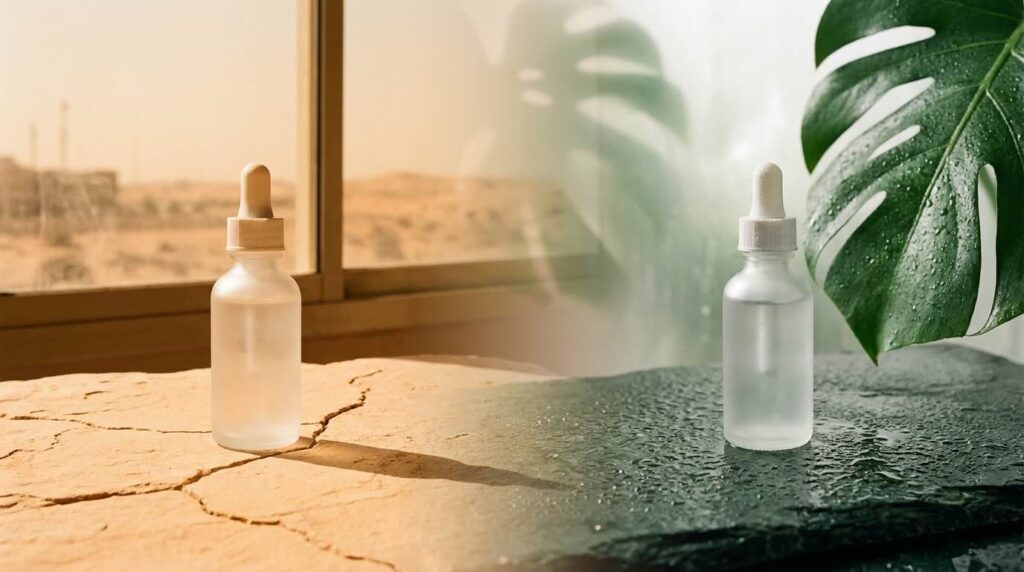
Here’s where the marketing gets misleading. “Holds 1,000 times its weight in water” is technically true, but it implies the water comes from somewhere helpful. In a humid environment, it pulls water from the air. Lovely. In a dry environment, where there isn’t much water in the air to grab, it pulls water from the next available source. That source is your own skin.
HA is not a moisturiser. It does not contain moisture itself. It is a magnet for water that needs water to be near it to do its job. That’s a fundamental difference from a ceramide cream or a squalane oil, both of which actually replace lipids and moisture your skin has lost. Treating it like a stand-alone moisturiser is the most common mistake in skincare for women over 30.
Why Hyaluronic Acid Can Backfire in Dry Climates
This is the part that almost no skincare blog will tell you, because admitting it complicates the marketing.
If you apply it to your skin in a dry environment, with low ambient humidity (think air conditioning, central heating, winter air, desert climate, aeroplane cabin) and you don’t seal it in with an occlusive moisturiser within a few minutes, the serum will pull water from the deeper layers of your skin (where there’s plenty) up to the surface (where it can evaporate). That’s transepidermal water loss. Your skin ends up drier than before you applied the serum.
The molecules are not picky about where the water comes from. They take whatever’s closest. In humid Brazil or Indonesia, the closest water is in the air. Beautiful. In dry Dubai or a centrally heated London flat in winter, the closest water is your own dermis. Painful.
The fix is not to abandon HA. It’s to use it correctly. Apply to damp skin (so there’s moisture for the molecules to grab onto) and seal immediately with a moisturiser that contains lipids (so the water stays trapped where you want it). If you skip either step in a dry climate, it will work against you.
The Molecular Weight Thing Nobody Explains Properly
You’ve probably seen serums boasting about “low molecular weight” or “multi-weight” HA. Here’s what that actually means.
High molecular weight HA sits on the surface of the skin. It can’t penetrate. It hydrates the very top layer and creates a smooth, plump appearance for a few hours. Cosmetic effect, real but temporary.
Low molecular weight HA is small enough to penetrate into the upper layers of the epidermis. It hydrates more deeply. It also has some emerging evidence for stimulating the skin’s own hyaluronic acid production over time, though the studies are smaller and more recent.
The best formulations use multiple molecular weights together (often called multi-MW or 5D HA in marketing). High weights for surface plumping, mid weights for the upper epidermis, low weights for deeper hydration. Hada Labo Gokujyun Premium is famous for using five molecular weights. The Ordinary’s HA 2% + B5 uses three. These are better designed than single-weight serums for genuine, multi-layered hydration.
If a serum doesn’t tell you the molecular weight (or weights) it uses, that’s a quiet signal that the formulation isn’t doing anything sophisticated. The premium isn’t always justified just because the bottle is pretty.
How to Actually Apply Hyaluronic Acid Correctly
Four rules. Get these right and the serum starts doing what it’s meant to do.
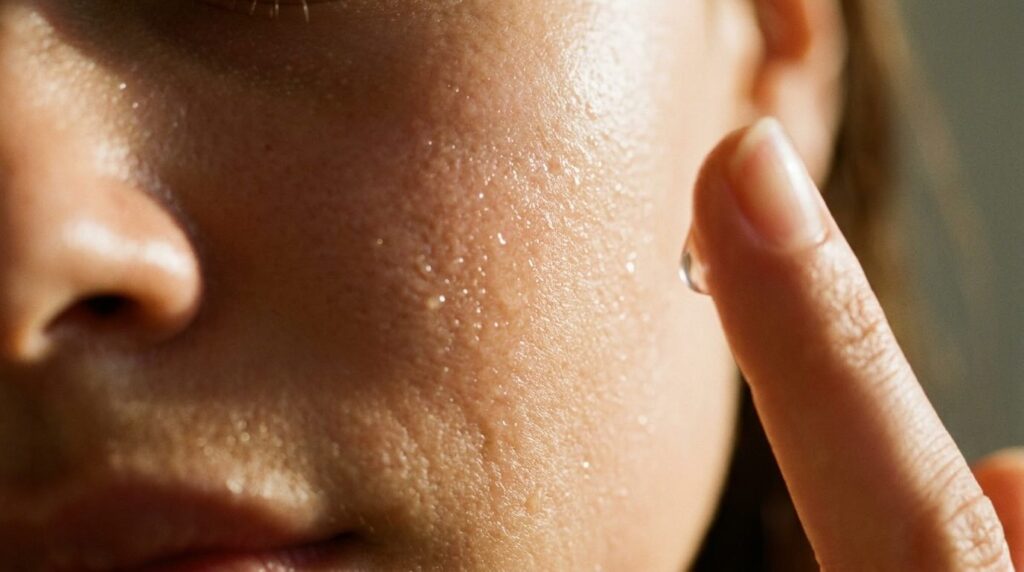
1. Apply to damp skin. Not soaking, not dripping, just damp. Cleanse, pat your face most of the way dry, then apply your serum while there’s still residual moisture. The molecules need water to grab onto. Damp skin gives them what they need without forcing them to pull from your dermis.
2. Seal within three minutes. A moisturiser with ceramides, squalane, or any meaningful occlusive on top of your serum is non-negotiable in dry climates. The moisturiser traps the water you’ve just attracted. Without it, the water evaporates and takes some of your skin’s natural moisture with it.
3. Less is more. Three to five drops for the whole face. It’s not dose-dependent in the way actives like retinoids or vitamin C are. More serum doesn’t equal more hydration; it equals more product sitting on the surface attracting water that has nowhere to go. Save your money.
4. Don’t use it before retinoids or strong actives. It increases the absorption of whatever goes on top, which is great for moisturisers and bad for actives that you don’t want penetrating deeper than designed. Apply your retinoid first on dry skin, then hyaluronic acid on damp, then moisturiser.
The Best Hyaluronic Acid Serums at Every Budget
The best HA serum isn’t the most expensive one. It’s the one with multiple molecular weights, no fragrance, and stable packaging that you’ll actually use correctly. These are seven products that meet that bar across three price tiers.
Budget pick
The Ordinary Hyaluronic Acid 2% + B5
30ml | Three molecular weights, B5 for added repair
The most-recommended HA serum on the internet for a reason. Three molecular weights, panthenol for barrier support, simple ingredient list, no fragrance. The texture is slightly tacky (a known characteristic) but it absorbs well into damp skin. The starting point most women should consider before spending more.
View on Amazon →Budget pick
Hada Labo Gokujyun Premium Hyaluronic Acid Lotion
170ml | Five molecular weights of hyaluronic acid
A Japanese cult product that’s been outperforming serums ten times its price for two decades. Five molecular weights of hyaluronic acid in a watery toner-style lotion. Apply to damp skin by patting, layer two or three times if your skin is very dehydrated. The bottle is huge and lasts months. Probably the best value hyaluronic acid product on the market.
View on Amazon →Budget pick
The Inkey List Hyaluronic Acid Serum
30ml | Two molecular weights, fragrance-free
If The Ordinary’s slight tackiness bothers you, The Inkey List’s version has a smoother feel and similar formulation strength. Two molecular weights, no fragrance, no fuss. Genuinely good for the price.
View on Amazon →Mid-range pick
La Roche-Posay Hyalu B5 Serum
30ml | Two molecular weights, B5 panthenol, madecassoside
For sensitive skin or anyone whose barrier is currently struggling, the LRP Hyalu B5 adds madecassoside (a centella asiatica derivative known for calming and barrier-supporting effects) to the standard hyaluronic acid plus panthenol pairing. Worth the step up if your skin is reactive and the budget options haven’t been gentle enough.
View on Amazon →Mid-range pick
Vichy Mineral 89 Hyaluronic Acid Serum
50ml | Hyaluronic acid plus 15 mineral-rich Vichy thermal water
Lighter than Hyalu B5 and works well as a daily morning step under SPF. The thermal water content adds trace minerals that have some evidence for supporting barrier resilience. A solid daily-driver if you want hyaluronic acid that pairs cleanly with vitamin C and SPF without competing for absorption.
View on Amazon →Luxury pick
Dr. Barbara Sturm Hyaluronic Serum
30ml | High and low molecular weight hyaluronic acid, purslane
Two molecular weights of hyaluronic acid combined with purslane, an antioxidant herb that has emerging evidence for cellular renewal. The luxury experience is genuinely luxurious. The clinical advantage over Hada Labo or The Ordinary is small to non-existent in the published evidence. If you love it and budget allows, enjoy. If you’re trying to figure out whether HA works for you, start at $9, not $310.
View on Amazon →Five Mistakes Almost Everyone Makes With Hyaluronic Acid
1. Applying it to dry skin. Without ambient or surface water for the molecules to attract, the serum will pull moisture from your dermis. Pat skin damp first.
2. Skipping the moisturiser on top. The serum attracts water, the moisturiser traps it. Without the moisturiser step, the water evaporates and you end up drier than before.
3. Treating it as a stand-alone moisturiser. HA does not contain moisture. It is a water magnet, not a water source. It cannot replace a proper ceramide cream.
4. Buying single-weight serums. It works best in multi-weight formulations. If the brand doesn’t disclose the molecular weights, the formulation probably isn’t sophisticated enough to justify the price.
5. Using it on a damaged barrier. If your skin is reactive, stinging, or breaking out, the priority is barrier repair (ceramides, fatty acids, niacinamide), not hyaluronic acid. Add hydration once the foundation is stable.
How Long Until You See a Difference
Hyaluronic acid is one of the few skincare ingredients that produces immediate (if temporary) results. You should see your skin look slightly plumper and feel softer the first time you apply it correctly. Surface hydration improves immediately, lasts a few hours, and is renewed each time you reapply.
For deeper, sustained hydration improvement, give it two to four weeks of daily, correct application. Most women notice their skin holds moisture better throughout the day, foundation sits more smoothly, and overall texture feels softer within four weeks.
What it won’t do, no matter how long you use it, is fade pigmentation, soften wrinkles structurally, or replace a retinoid. It hydrates. That’s the job. If you want collagen support, that’s a different ingredient (peptides, retinoids, vitamin C) and a different post.
The Honest Bottom Line
HA is a brilliant ingredient when used correctly and a frustrating one when used wrong. The two things that determine whether it works for you are application technique (damp skin, sealed with moisturiser, three to five drops) and climate awareness (in dry environments, the seal step is non-negotiable).
Start with a budget multi-weight serum, get the application right, and judge from there. If The Ordinary or Hada Labo doesn’t deliver, the problem isn’t the price tier. It’s almost certainly how you’re using it, what your barrier is doing underneath, or your climate working against you. Spending more on a luxury bottle won’t fix any of those things.
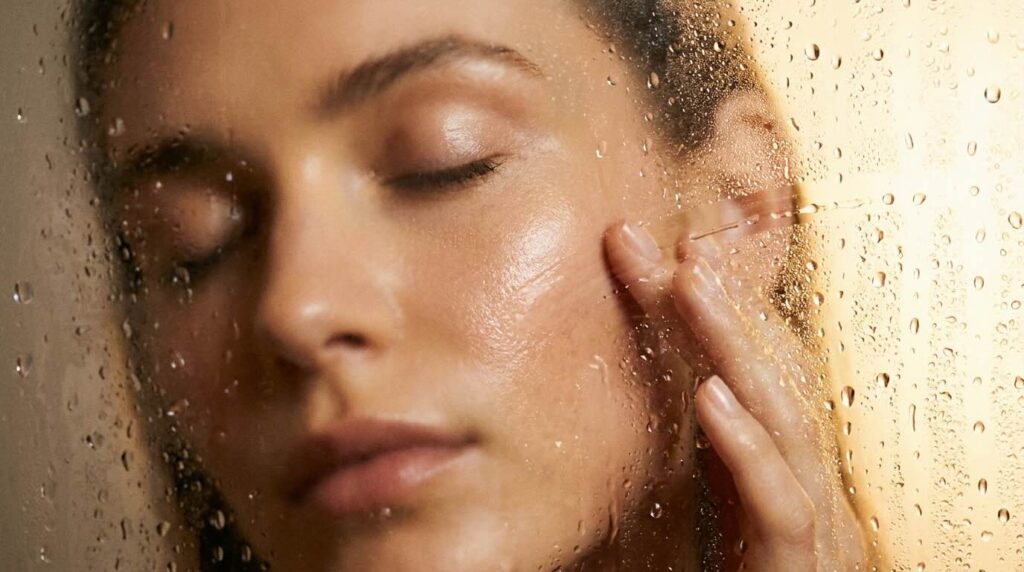
Hyaluronic acid isn’t a magic ingredient. It’s a magnet for water that needs water nearby to do its job. Once you understand that, it works exactly as promised. Until you do, it can quietly make things worse.
Related Reading
- What Is Your Skin Barrier and Why It Matters After 30. The foundation that hyaluronic acid depends on.
- Why Your Moisturiser Stings: The Real Cause and the Honest 4-Week Fix. If your skin is currently reactive.
- Vitamin C Serum Guide: Why Yours Is Probably Already Expired. The morning serum that pairs with hyaluronic acid.
Sources
Research context: these sources cover ingredients, skin biology or specific tested formulations. Results depend on the concentration, delivery method and population studied. Product selections are editorial curation; these references are not head-to-head tests of all products listed.
- Papakonstantinou E, et al. (2012). Hyaluronic acid: A key molecule in skin aging. Dermatoendocrinol. PubMed 23467280 Review of hyaluronic acid biology and skin ageing.
- Pavicic T, et al. (2011). Efficacy of cream-based novel formulations of hyaluronic acid of different molecular weights in anti-wrinkle treatment. J Drugs Dermatol. PubMed 22052267 Specific hyaluronic acid formulations and molecular weights.
- Bukhari SNA, et al. (2018). Hyaluronic acid, a promising skin rejuvenating biomedicine: A review of recent updates and pre-clinical and clinical investigations on cosmetic and nutricosmetic effects. Int J Biol Macromol. PubMed 30287361 Review includes different preparations and routes of use.
Get The Glow Report
Honest skincare guidance for women 30+. One short email each Tuesday. No fluff, no nonsense, no algorithms.
Affiliate disclosure: Glow Protocol is reader-supported. Some links in this post are affiliate links and we may earn a small commission if you purchase through them, at no extra cost to you. We only recommend products we have researched and believe in.
Affiliate Disclosure: This post contains affiliate links, which means we may earn a small commission if you make a purchase through these links at no extra cost to you. We only recommend products we've researched and believe offer real value. Our opinions remain our own and are not influenced by any brand or compensation.