Created using AI; curated by Glow Protocol. AI tools support research, product comparisons and writing. Our recommendations are editorial selections. How we work.
Quick answer
Exfoliation is optional. If you choose it, compare an AHA or BHA formula against your concern, existing treatments and tolerance; you do not need both. Begin cautiously, follow its directions and avoid exfoliating already irritated or injured skin. More frequent exfoliation can make irritation worse.
Background guidance: AAD: exfoliating safely.
Updated : Opening answer clarified and its supporting references checked; jump navigation added. Check current price, size and seller on the retailer listing.
Affiliate Disclosure: This post contains Amazon affiliate links. As an Amazon Associate, Glow Protocol earns from qualifying purchases. If you purchase through our links, we earn a small commission at no extra cost to you. We only recommend products we have researched and believe in.
AHA vs BHA: Which Exfoliant Does Your Skin Actually Need?
Why Exfoliation Changes After 30
In your twenties, your skin is a turnover machine. New cells come up, old ones shed. You probably never thought about exfoliation because your skin did it automatically. Then 30 hits, and suddenly your skin looks tired.
This isn’t in your head. Cell turnover slows by about 30 percent in your thirties compared to your twenties. Dead skin cells accumulate. You get texture, dullness, and even more pronounced fine lines because that dead cell layer is sitting on top of fresh skin underneath. Your serums and creams can’t penetrate through a barrier of dead cells. So they’re basically just sitting on your face, doing nothing.
Beyond ageing, our pores also get more congested as we get older. Hormonal shifts, environmental exposure, and years of makeup build up in our pores. Manual exfoliation, the scrubby stuff, can irritate mature skin and damage the barrier. That’s where chemical exfoliation comes in. It dissolves the bonds between dead cells without the harshness of physical scrubbing.
Chemical exfoliation isn’t optional after 30. It’s essential. But not all chemical exfoliants are the same. In fact, choosing the wrong one could actually make your skin worse.
AHA Explained: What It Does and Who It’s For
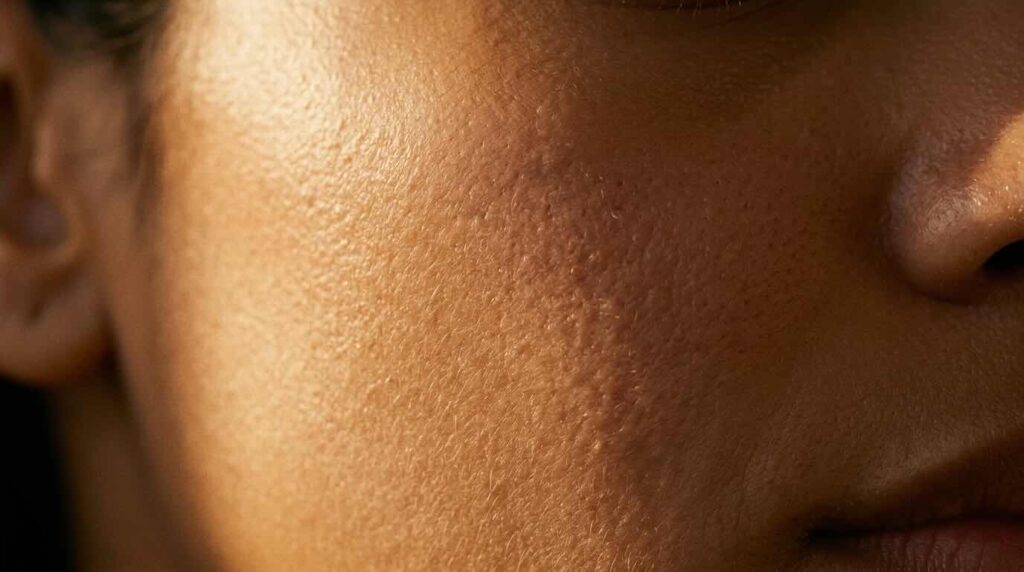
AHA stands for alpha hydroxy acid. Think of it as the surface-level exfoliant. AHAs are water-soluble, which means they work on the outermost layer of your skin. They dissolve the bonds between dead skin cells and encourage cell turnover. You shed that top layer of dead, dull cells and reveal the brighter, fresher skin underneath.
The most common AHA is glycolic acid, derived from sugar cane. It’s the smallest AHA molecule, which means it penetrates quickly and effectively. You’ll also see lactic acid (from milk) and mandelic acid (from almonds). These are gentler than glycolic acid because the molecules are bigger, so they work more slowly.
How AHA works: It breaks down the glue holding dead skin cells together, revealing fresh skin. This is fantastic for texture, dullness, fine lines, and surface-level hyperpigmentation. You get visible results quickly, usually within 1 to 2 weeks of consistent use.
Best for: Dry, dull, sensitive skin. Anyone dealing with fine lines, uneven texture, or sun damage. AHA is also better if your main concern is hyperpigmentation and dark spots. If you have acne-prone or congested skin, AHA alone might not be enough, but we’ll get into that.
The reality: AHA is stronger and faster-acting. You might experience some irritation at first, especially if your skin barrier is compromised. That’s why barrier repair is crucial when introducing AHA. Start slow. Two to three times per week is standard. Your skin will adjust.
BHA Explained: What It Does and Who It’s For
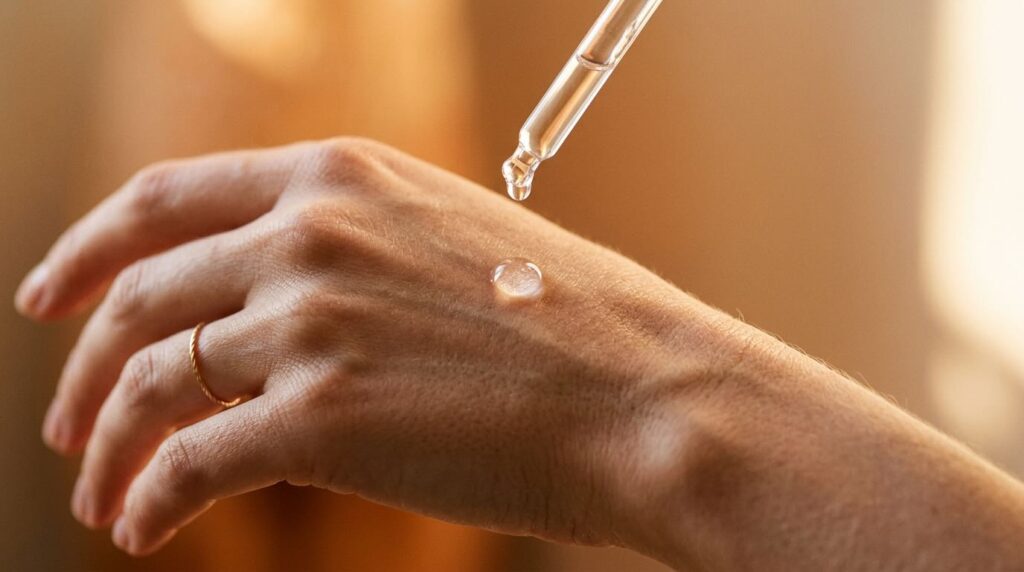
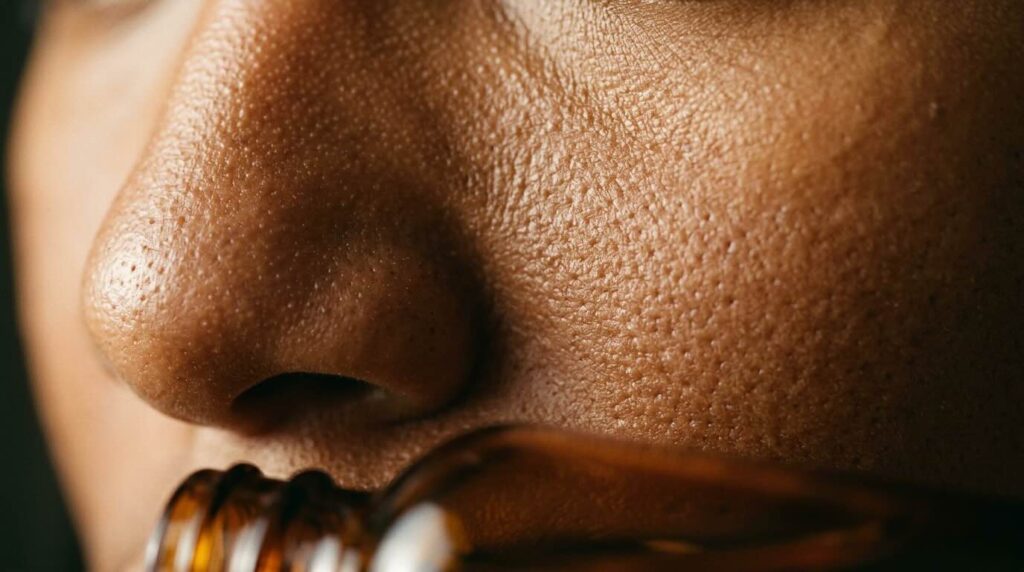
BHA stands for beta hydroxy acid. The most common BHA is salicylic acid. Here’s the critical difference: BHA is oil-soluble, which means it travels down into your pores. It doesn’t just exfoliate the surface, it goes deeper, unclogging congestion and preventing breakouts. This is game-changing if you have acne, clogged pores, or textured skin from congestion.
BHA has anti-inflammatory and antibacterial properties. It’s not just removing dead skin, it’s actively calming inflammation and fighting the bacteria that cause breakouts. If you have any level of acne or oily, congested skin, BHA is your friend.
How BHA works: It dissolves sebum and dead skin cells inside your pores, unclogging congestion at the source. Unlike AHA, which works on the surface, BHA gets to the root of the problem if your issue is breakouts or clogged pores.
Best for: Oily, acne-prone, congested skin. Anyone with blackheads, whiteheads, or hormonal breakouts. If your skin texture comes from clogged pores rather than dryness or sun damage, BHA is your answer. It’s also gentler than AHA, making it good for sensitive skin that’s prone to congestion.
The reality: BHA is gentler but slower-acting. You might need to use it regularly for 4 to 6 weeks before you see dramatic changes. But once it kicks in, the results are consistent. No more whiteheads. Less oiliness. Clearer skin without the irritation. I use BHA now, and honestly, I should have started with it years ago instead of jumping to the stronger AHA.
One note: if you have rosacea or very reactive skin, BHA might be irritating. But for most acne-prone people, it’s gentler than AHA while being more effective for breakouts.
AHA vs BHA: The Head-to-Head Comparison
| Feature | AHA (Glycolic / Lactic) | BHA (Salicylic Acid) |
| How it works | Water-soluble, surface exfoliation | Oil-soluble, pore penetration |
| Best for | Dullness, texture, fine lines, hyperpigmentation | Acne, clogged pores, oiliness |
| Skin type | Dry, sensitive, normal | Oily, acne-prone, congested |
| Strength | Stronger, faster-acting | Gentler, slower-acting |
| Results timeline | 1 to 2 weeks | 4 to 6 weeks |
| Irritation risk | Higher, especially at first | Lower, more forgiving |
| Frequency | 2 to 3 times per week | Daily or 4 to 5 times per week |
| Sun sensitivity | Yes, SPF 30+ daily | Minimal, but still use SPF |
The biggest takeaway: AHA and BHA solve different problems. AHA fixes dullness and surface-level damage. BHA fixes congestion and breakouts. Your skin concern determines which one you need, or if you need both.
Can You Use Both? Yes, But Here’s How
AHA and BHA address different exfoliation preferences, but you do not need both because you are over 30. Compare one option against your current routine before adding another active.
The cardinal rule: Never use both on the same night, especially when you’re first introducing them. Your skin barrier can’t handle that assault. Alternate instead. AHA on Monday and Wednesday. BHA on Tuesday and Thursday. Rest on the weekends.
As you build tolerance, you can get more strategic. Some people use BHA in the morning (it’s gentler) and AHA at night. Others stick with the alternating schedule. Listen to your skin. If it’s red, irritated, or tight, you’re overdoing it. Scale back.
The order matters: If you’re using both on different nights, apply your exfoliant to clean, dry skin. Let it sit for 5 to 10 minutes (yes, really, this is called the wait time and it matters). Then follow with your regular skincare layering routine. Don’t layer exfoliants on top of each other or before hydrating steps. It increases irritation without increasing benefit.
One more thing: If you have a compromised skin barrier, skip this section. Heal your barrier first. Use only one gentle exfoliant (probably BHA at low strength) one to two times per week. Once your barrier is solid, then you can experiment with combining them.
The Best Exfoliants at Every Budget
Here are curated exfoliant options, with their intended roles, formulation differences and price points to consider.
The Gold Standard BHA
Paula’s Choice 2% BHA Liquid Exfoliant A liquid BHA option for readers comparing leave-on exfoliants. Check the current directions and frequency before adding it to a routine that already contains acids or retinoids. This is a formula-based selection, with no claim of personal testing or irritation-free use. niacinamide View on Amazon →
The Luxury AHA
Sunday Riley Good Genes Lactic Acid Treatment An AHA treatment to compare if you prefer a lactic-acid formula. Check the exact regional version, directions and full ingredient list. Consider the cost against a simpler exfoliant; a higher price does not establish a faster result. View on Amazon →
The Budget-Friendly BHA
Medicube Zero Pore Pads 2.0 A pad format for readers who value convenience. Compare the current formula and directions with bottled exfoliants, and account for the number of pads in the pack. The pad format does not establish greater gentleness or better pore results. View on Amazon →
The Gentle Hydrator to Use After
The Ordinary Niacinamide 10% + Zinc 1%
You need something to calm and support your skin after exfoliation. This serum is pure niacinamide, which reduces oiliness, minimises pores, and strengthens your barrier. It’s cheap, effective, and works beautifully after any exfoliant. Apply after your wait time and let it dry before adding moisturiser.
View on Amazon →
The Korean Staple Support
COSRX Galactomyces 95 Tone Balancing Essence
This isn’t an exfoliant, it’s a support player. Galactomyces (a fermented ingredient) brightens, hydrates, and calms irritation. Use this after exfoliation to replenish your skin. It’s especially good if you’re using AHA, which can be drying. Your skin will feel hydrated and plumped, not stripped.
View on Amazon →
The Honest Bottom Line
Chemical exfoliation isn’t optional after 30. But choosing the right one matters. AHA is for brightness and texture. BHA is for clarity and clogged pores. They work differently, and your skin will thrive with the right one, or with both, used strategically.
Start with one. Give it 4 to 6 weeks. See how your skin responds. Once you’ve figured out what works, you can experiment with adding the other. And remember: sunscreen is non-negotiable when you’re exfoliating. Your skin barrier is temporarily compromised, and your skin is more vulnerable to sun damage. SPF 30+ every single day, no exceptions.
If your skin is sensitive or compromised, take the slow approach. Build your barrier first. Then introduce exfoliation gently. There’s no rush. Your 40s, 50s, and beyond deserve healthy, strong skin, not irritated, damaged skin from overdoing it too fast.
Most importantly: exfoliation should feel good. Not burning. Not tight. Not red. If it does, stop. Adjust. Your skin knows what it needs. Listen to it.
Sources
Research context: these sources cover ingredients, skin biology or specific tested formulations. Results depend on the concentration, delivery method and population studied. Product selections are editorial curation; these references are not head-to-head tests of all products listed.
- Ditre CM, et al. (1996). Effects of alpha-hydroxy acids on photoaged skin: a pilot clinical, histologic, and ultrastructural study. J Am Acad Dermatol. PubMed 8642081 Studied particular alpha-hydroxy acid treatments.
- Kornhauser A, et al. (2010). Applications of hydroxy acids: classification, mechanisms, and photoactivity. Clin Cosmet Investig Dermatol. PubMed 21437068 Review covers different hydroxy acids and concentrations.
- Farage MA, et al. (2008). Intrinsic and extrinsic factors in skin ageing: a review. Int J Cosmet Sci. PubMed 18377617
- Rodan K, et al. (2016). Skincare Bootcamp: The Evolving Role of Skincare. Plast Reconstr Surg Glob Open. PubMed 28018771
Affiliate Disclosure: This post contains affiliate links, which means we may earn a small commission if you make a purchase through these links at no extra cost to you. We only recommend products we've researched and believe offer real value. Our opinions remain our own and are not influenced by any brand or compensation.