Created using AI; curated by Glow Protocol. AI tools support research, product comparisons and writing. Our recommendations are editorial selections. How we work.
Quick answer
Gentle cleansing, a tolerated moisturiser and sun protection can support rosacea care. They do not replace diagnosis or a treatment plan. Choose products around your own triggers; fragrance-free does not guarantee zero irritation, and cosmetic azelaic acid should not be treated as interchangeable with a prescription.
Background guidance: AAD: rosacea skincare.
Updated : Opening answer clarified and its supporting references checked; jump navigation added. Check current price, size and seller on the retailer listing.

Affiliate Disclosure: This post contains Amazon affiliate links. If you purchase through our links, we earn a small commission at no extra cost to you. We only recommend products we have researched and believe in.
Rosacea After 30: The Gentle Routine That Calms Redness
This is a curated skincare guide for readers with rosacea concerns. It is not Carolina’s diagnosis story or a substitute for a clinician’s assessment.
Here is what most people do not tell you about rosacea after 30: it is not a phase, it is not just sensitivity, and it is not something you can ignore. But it is manageable. With the right routine, the right products, and a solid understanding of your triggers, you can significantly reduce flare-ups and maintain calm, resilient skin. This guide combines evidence-based dermatological approaches with three years of managing rosacea in my 30s. If you are dealing with persistent redness, flushing, or that telltale rosacea sting, you are not alone, and this routine works.
What Rosacea Is and Why It Gets Worse After 30
Rosacea is a chronic inflammatory skin condition characterised by persistent facial redness, visible blood vessels, and sometimes acne-like bumps. It typically affects the central face (cheeks, nose, forehead, chin) and can range from mild occasional flushing to severe persistent redness with significant bumps and eye involvement.
Rosacea can begin at different ages. It does not inevitably worsen at 30, and persistent redness should be assessed rather than attributed to a birthday or a single barrier change.
Hormonal shifts add another layer. Perimenopause-related changes, which can begin in the early 30s for some women, intensify flushing episodes. Cumulative trigger exposure compounds it further: years of using astringent products, hot showers, and spicy food build inflammation until it becomes visible. The good news is that once you understand rosacea and adjust your routine accordingly, you can manage it. I have gone from flare-ups 2 to 3 times a week to maybe once a month, sometimes less. And those flare-ups are significantly milder.
Triggers to Know: What Makes Rosacea Flare
Understanding your personal triggers is the foundation of managing rosacea. While triggers vary person to person, certain patterns are consistent across rosacea sufferers, particularly women over 30.
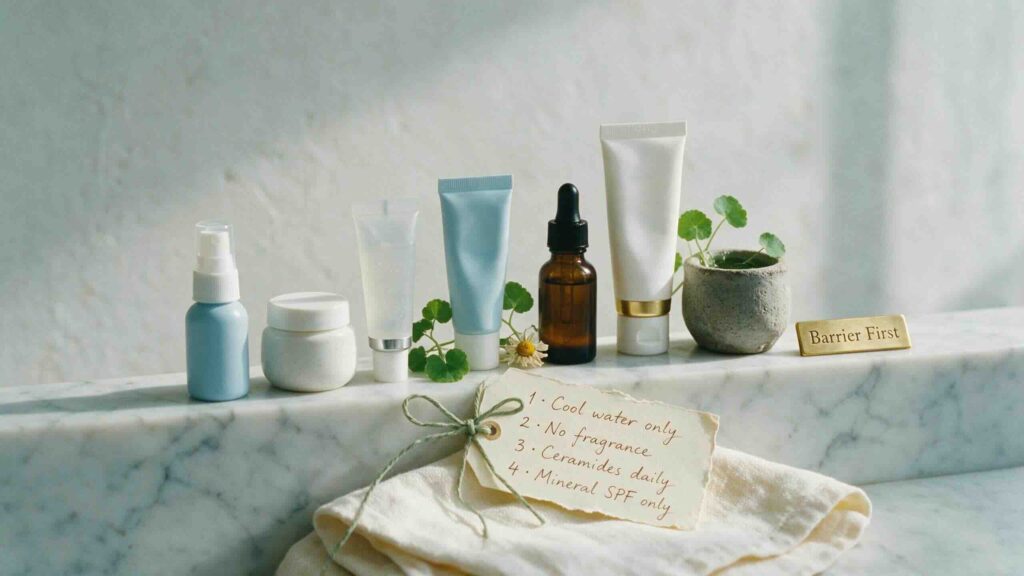
Common skincare triggers
- Astringent, actives-heavy routines. Retinoids, L-ascorbic acid, strong AHAs and BHAs are brilliant for aging skin but often devastate rosacea-prone skin. The inflammation they trigger typically outweighs the benefits.
- Fragrance. Even natural fragrance can trigger flushing and irritation. Switching to fragrance-free products cut my flare-ups in half.
- Alcohol denat (SD alcohol). Drying and inflammatory. I check every product label now.
- Menthol and peppermint. The cooling sensation feels nice, but menthol is a vasodilator, so it makes rosacea worse.
- Essential oils. Particularly cinnamon, clove, and citrus oils. Despite their natural reputation, they are inflammatory.
Lifestyle and environmental triggers
- Temperature extremes. Hot showers, steam rooms, saunas, and cold wind. Heat is the most common trigger. I learned to take lukewarm showers instead.
- Spicy foods. Not just capsaicin, but the whole flushing response for rosacea skin.
- Hot beverages. Tea, coffee, and hot chocolate all trigger my rosacea. Cooler drinks made a measurable difference.
- Alcohol. Especially wine and spirits. Beer is slightly less triggering for me, but I avoid it mostly.
- Extreme exercise. Intense cardio causes flushing. Moderate, consistent exercise works better than high-intensity workouts.
- Stress. Stress-induced flushing is one of the hardest triggers to manage because stress itself is unavoidable.
- Sun exposure. UV radiation is a primary rosacea trigger. SPF is not optional, it is essential.
My advice: keep a trigger diary for 2 to 3 weeks. Note what you eat, what you do, what products you use, and when flares happen. Patterns will emerge. I discovered that my worst trigger combo is hot shower plus spicy food plus stress. Understanding this helped me make strategic choices.
The Gentle Cleanser Guide: Starting Your Rosacea Routine Right
Cleansing is where most people make their first mistake with rosacea. Hot water, stripping cleansers, and vigorous scrubbing all trigger flare-ups. You need a gentle, non-stripping cleanser that removes makeup and daily grime without compromising your already-sensitive barrier. Look for pH-balanced formulas around 5.5, creamy or milky textures rather than foaming gels, no sulphates (SLS and SLES are too harsh), fragrance-free, and no alcohol denat.
CLEANSER · The Daily Workhorse
La Roche-Posay Toleriane Hydrating Gentle Cleanser
This is my daily workhorse. Specifically formulated for sensitive, rosacea-prone skin, it removes makeup effectively and may still sting or irritate some skin. I use it morning and evening with lukewarm water. The creamy formula means no tight, uncomfortable sensation after cleansing that other cleansers leave behind. The pick for reactive, easily flushed skin that still needs thorough cleansing.
View on Amazon →
CLEANSER · The Budget-Friendly Option
Vanicream Gentle Facial Cleanser
If you are looking for an affordable option, this is genuinely excellent. Free of dyes, fragrance, parabens, and masking fragrance. It is thorough without being harsh, and the price point means you can afford to use enough product rather than being stingy. I have recommended this to several friends with rosacea and it has become a staple for them too. The pick for anyone wanting a dermatologist-approved cleanser on a tight budget.
View on Amazon →
MAKEUP REMOVER · The First Cleanse
Bioderma Sensibio H2O Micellar Water A micellar-water format to compare when removing makeup or sunscreen. Avoid unnecessary rubbing, and follow the current product directions. A second cleanser is optional; this guide does not show a measured reduction in flushing. View on Amazon →
Technique matters as much as product. Use lukewarm water, never hot. Hot water dilates blood vessels and triggers flushing. Be gentle and do not scrub. Pat, do not wipe. Avoid washcloths and brushes because physical exfoliation is a flare-up waiting to happen. Pat dry gently, and apply moisturiser to damp skin to lock in hydration.
Calming Moisturisers: The Foundation of Your Rosacea Routine
If cleanser is your starting point, moisturiser is your foundation. Rosacea skin is fundamentally compromised. Your barrier is not functioning optimally, which means inflammation is always closer to the surface. A good moisturiser does not just hydrate, it calms, protects, and repairs. Look for barrier-repair ingredients like ceramides, centella asiatica, niacinamide, and allantoin. Look for anti-inflammatory compounds like thermal water (Avène, Vichy), azulene, and oat extract. Avoid all essential oils and fragrance.
MOISTURISER · The Reactive-Skin Cream
Avène Tolerance Control Cream
This is my go-to when my rosacea is acting up. The ceramides and centella asiatica combination calms redness effectively. It is richer than my daily moisturiser, so I reserve it for when I need extra support during high-stress periods, post-flare recovery, or winter. The texture is luxurious without being greasy. The pick for anyone with reactive skin that needs more than a basic moisturiser but cannot tolerate rich creams.
View on Amazon →
PREMIUM · The Compromised-Skin Rescue
Avène Cicalfate+ Restorative Protective Cream A protective cream format to compare by its current ingredients and directions. A cosmetic purchase should not replace assessment of severe, persistent or post-procedure symptoms. View on Amazon →
MOISTURISER · The Daily Driver
La Roche-Posay Toleriane Double Repair Face Moisturiser
When my rosacea is calm, this is my daily moisturiser. The niacinamide and ceramide blend keeps my barrier strong and my redness minimal. Lighter than the Avène creams but still nourishing, and the formula never feels heavy or occlusive. Suitable for daily use in a way that heavier creams are not. The pick for stable rosacea days and morning routines.
View on Amazon →
BARRIER BALM · The Targeted Fix
Avène Cicaplast Baume B5
This balm is thicker and more occlusive than the creams, but brilliant for targeted use. I apply it to the most reactive areas (around my nose, the sides of my cheeks) after my moisturiser when my rosacea is flaring. The panthenol and zinc combination calms inflammation, and it creates a protective barrier without feeling heavy. Also suitable for lips if your rosacea extends there. The pick for spot-treating hot zones during a flare.
View on Amazon →
Azelaic Acid: The Rosacea Hero Ingredient
Azelaic acid has evidence in rosacea care, particularly in studied prescription formulations. This does not establish that every 10% cosmetic controls redness or that it treats Demodex mites. Burning, stinging and irritation can occur.
AZELAIC ACID · The Best-Value Entry Point
The Ordinary Azelaic Acid Suspension 10%
This is my everyday azelaic acid. The 10 percent concentration is effective without being overly strong, and the suspension formula applies smoothly. Affordable enough that you are not overthinking product usage. I apply it morning and evening after cleansing but before moisturiser. There is no excuse not to include azelaic acid in your routine if you have rosacea. The pick for anyone starting with azelaic acid or looking for a daily driver.
View on Amazon →
AZELAIC ACID · The Elegant Premium Formula
Paula’s Choice 10% Azelaic Acid Booster An azelaic acid booster to assess as a complete formula. Compare the current ingredient list and instructions with alternatives; a more expensive texture is not proof that it is gentler on reactive skin. View on Amazon →
How to introduce azelaic acid
Follow the particular product directions or your prescriber’s advice. Do not treat worsening redness as a necessary adjustment phase. Sun protection matters for rosacea regardless of azelaic acid; the checked sources do not support the earlier claim that it necessarily increases photosensitivity.
For deeper detail on formulations and concentrations, see our best azelaic acid products guide.
Supporting Ingredients: Niacinamide for Enhanced Calming
Some niacinamide-containing moisturisers have been studied for barrier support in rosacea. That does not mean every niacinamide serum is gentle or that 10% is the best starting concentration.
NIACINAMIDE · The Most Affordable Complement
The Ordinary Niacinamide 10% + Zinc 1%
This is my secondary active for particularly reactive periods. The niacinamide strengthens my barrier and reduces redness, while the zinc has astringent properties that help with any congestion associated with rosacea. I use it a few times per week, typically in the evening after azelaic acid. At this price point it is practically criminal not to include it in your routine alongside azelaic acid. The pick for anyone wanting layered anti-inflammatory support at pocket-change pricing.
View on Amazon →
Sunscreen for Rosacea: Non-Negotiable Protection
I need to be absolutely clear: sunscreen is not optional for rosacea skin. It is foundational. UV radiation is one of the primary triggers for rosacea flare-ups, and it accelerates skin aging. If you do nothing else from this guide, use sunscreen daily.
Look for a tolerated broad-spectrum sunscreen with SPF 30 or higher. Mineral formulas may suit some reactive skin types, but the whole formula matters. An SPF 50 label alone does not tell you whether filters are mineral or chemical.
SPF · The Gold Standard for Rosacea
La Roche-Posay Anthelios Mineral SPF 50 A mineral sunscreen option to compare by the current regional label, tint and protection directions. We have not tested its finish across skin tones or demonstrated a rosacea-management result. View on Amazon →
SPF · The Budget-Friendly Option
Purito Relief Sun SPF50+ PA++++
I have been using this as my second-string sunscreen for the last year and it is impressive at this price point. The texture is lightweight, it is fragrance-free, and it does not irritate my rosacea. Not quite as elegant as Anthelios, but for daily use when budget matters this is an excellent option. The PA++++ rating is excellent for UVA protection, which matters for rosacea skin. The pick for anyone building a daily SPF habit on a tighter budget.
Find authorised retailers →
Use SPF 50 daily, even on cloudy days. Apply generously (most people under-apply). Aim for about a quarter teaspoon for your face. Reapply every 2 hours if you are outdoors. Consider physical barriers: a wide-brimmed hat and UV-protective sunglasses reduce sun exposure further. Since I made SPF 50 a genuine daily habit, my rosacea has stabilised significantly. For expanded sunscreen picks across skin types, see our best sunscreen after 30 guide.
The Complete Rosacea Routine: Morning and Evening
Theory is useful, but practical application is what matters. Here is exactly how I structure my routine now, three years into managing rosacea. This is not about complexity, it is about consistency and choosing products that work together.
Morning routine
- Gentle cleanser: La Roche-Posay Toleriane Hydrating (or Vanicream if budget is a concern).
- Pat dry, leave slightly damp.
- Moisturiser: compare one comfortable cream or lotion, rather than assuming two are needed.
- Sunscreen: La Roche-Posay Anthelios Mineral SPF 50, applied generously 15 to 20 minutes before going outside.
Evening routine (standard, non-flaring)
- Micellar water: Bioderma Sensibio H2O (removes makeup and sunscreen).
- Gentle cleanser: La Roche-Posay Toleriane Hydrating.
- Pat dry, leave slightly damp.
- Azelaic acid: The Ordinary 10 percent (daily).
- Moisturiser: La Roche-Posay Toleriane Double Repair.
- Optional: Niacinamide 3x weekly (The Ordinary 10 percent + Zinc).
Evening routine (flaring or highly reactive)
- Micellar water: Bioderma Sensibio H2O.
- Gentle cleanser: La Roche-Posay Toleriane Hydrating.
- Pat dry, leave slightly damp.
- Skip actives (azelaic acid, niacinamide) during active flares.
- Moisturiser: Avène Tolerance Control Cream (or Cicalfate for severe flares).
- Optional barrier support: Avène Cicaplast Baume B5 to reactive areas.
This is the key insight I wish I had understood earlier: during a flare, you do not add more actives. You scale back and focus on calming and barrier repair. It seems counterintuitive if you are used to traditional skincare logic, but it is exactly right for rosacea.
NIGHT ADDITION · The Ceramide Layer
CeraVe PM Facial Moisturising Lotion A facial lotion with ceramides and niacinamide. Consider it as your moisturiser choice if the formula suits you. Layering it under another moisturiser is optional and does not establish extra recovery benefits. View on Amazon →
A rosacea routine should fit your triggers and treatment plan. AAD recommends gentle cleansing, moisturising and sun protection. Persistent difficulty finding comfortable products is a reason to ask a dermatologist for guidance. AAD rosacea skincare advice. best ceramide moisturisers guide skin barrier repair walkthrough
What to Avoid: The Hard Stops for Rosacea Skin
Knowing what to avoid is as important as knowing what to use. These are the products and practices that will consistently trigger flare-ups or compromise your barrier.
Avoid products that reliably trigger your symptoms. Fragrance, harsh exfoliation and an overloaded routine can be troublesome, but treatment decisions should be individual. Do not stop or substitute a prescribed rosacea medicine based on a blanket ingredient ban.
Practices to avoid. Over-cleansing (twice daily with a gentle cleanser is plenty). Hot water. Scrubbing or physical exfoliation, because even gentle exfoliating mitts can trigger flares. Layering too many actives. Testing new products during a flare (wait until your skin is stable). Expecting overnight results, because rosacea management is about consistency over months and years. Comparing your skin to others, because rosacea triggers and severity vary wildly person to person.
Rosacea Alongside Pigmentation: A Common Overlap
One thing that surprised me at 32 is how often rosacea coexists with pigmentation concerns like melasma. The same triggers (heat, UV, hormones) drive both, and the gentle rosacea-safe routine happens to work well as a melasma-friendly base. If you are managing both, azelaic acid is doing double duty because it addresses inflammatory redness and pigmentation through tyrosinase inhibition. For a deeper look at the overlap, see our melasma after 30 guide.
The Bottom Line
A simple routine can support rosacea care: gentle cleansing, a tolerated moisturiser and sun protection, alongside any prescribed treatment. No single cosmetic active or brand is mandatory.
Choose basics that your skin tolerates. The products here are editorial options; the listed 10% azelaic acid cosmetic is not interchangeable with a prescription rosacea treatment. See La Roche-Posay Toleriane Hydrating Cleanser, The Ordinary Azelaic Acid Suspension 10%, La Roche-Posay Toleriane Double Repair, La Roche-Posay Anthelios Mineral SPF 50.
Guidance reference: AAD rosacea skincare guidance covers gentle cleansing, moisturising and sun protection. Product curation does not replace diagnosis or a prescribed treatment plan. Checked 5 September 2026.
Sources
Research context: These sources cover ingredients, skin biology or specific tested treatments. Results depend on the formulation, delivery method and population studied. Product selections are editorial curation; these references are not head-to-head tests of the products listed.
- National Institute of Arthritis and Musculoskeletal and Skin Diseases (2024). Rosacea. NIAMS. Read source Patient information; checked 5 September 2026.
- Draelos ZD, et al. (2005). Niacinamide-containing facial moisturizer improves skin barrier and benefits subjects with rosacea. Cutis. PubMed 16209160
- Levin J, Miller R (2011). A Guide to the Ingredients and Potential Benefits of Over-the-Counter Cleansers and Moisturizers for Rosacea Patients. J Clin Aesthet Dermatol. PubMed 21909456
- Sieber MA, Hegel JK (2014). Azelaic acid: Properties and mode of action. Skin Pharmacol Physiol. PubMed 24280644 Mechanism review; not evidence for every cosmetic concentration.
Additional reading: skin barrier repair complete guide, best azelaic acid products, best ceramide moisturisers, best sunscreen after 30, and melasma after 30.
Affiliate Disclosure: This post contains affiliate links, which means we may earn a small commission if you make a purchase through these links at no extra cost to you. We only recommend products we've researched and believe offer real value. Our opinions remain our own and are not influenced by any brand or compensation.