Created using AI; curated by Glow Protocol. AI tools support research, product comparisons and writing. Our recommendations are editorial selections. How we work.
Quick answer
Use a manageable routine and respond to the concern you actually have, rather than a mandatory postpartum timetable. Before restarting treatment products, check pregnancy or breastfeeding considerations with your clinician. A product described as gentle is not automatically appropriate for everyone after birth.
Background guidance: AAD: pregnancy skincare.
Updated : Opening answer clarified and its supporting references checked; jump navigation added. Check current price, size and seller on the retailer listing.

Affiliate Disclosure: This post contains affiliate links. If you purchase through our links, we earn a small commission at no extra cost to you. We only recommend products we have researched and believe in.
Postpartum Skincare: How to Simplify and Reassess Your Routine
Skin changes after delivery vary widely. This guide offers a flexible way to simplify a routine; it is not a clinically validated twelve-week treatment programme. See pregnancy-safe skincare guide.
Postpartum routines should reflect your own needs and any relevant medical advice. This guide brings together published information and curated options with AI support; it does not report a verified community study or guarantee a particular recovery.
Why Postpartum Skin Changes Happen (The Science)
Understanding what is happening chemically in your body helps you stop blaming yourself and start treating your skin strategically. During pregnancy, estrogen surges (some sources cite increases of 100x non-pregnant baseline). This hormone does remarkable things: it increases skin hydration, boosts collagen production, and improves barrier function. It also increases blood flow, which produces that pregnancy glow. After delivery, estrogen crashes. Within days, levels plummet back toward pre-pregnancy baseline. This sudden drop triggers a cascade of changes.
Hormonal acne returns. Without elevated estrogen, androgens become more prominent. Even women who never had hormonal acne before pregnancy can develop it postpartum. Community reports skew toward severe, concentrated breakouts on the lower face and jawline.
Melasma intensifies or appears. The placenta produces higher levels of melanocyte-stimulating hormone (MSH). Combined with sun exposure and genetic predisposition, this can trigger melasma, those stubborn brown patches. For many women, melasma that appears during pregnancy worsens in the postpartum period rather than fading.
Barrier function declines. Estrogen supports the skin barrier by helping maintain ceramide and lipid production. When estrogen drops, barrier integrity can drop with it, leading to increased sensitivity, dryness, and reactivity.
Stress and sleep deprivation compound everything. If you are breastfeeding or doing nighttime feedings, cortisol is elevated. Sleep deprivation increases inflammation. The skin barrier becomes even more reactive, and acne-causing bacteria thrive.
Some changes settle as time passes; others, including melasma or acne, can persist. There is no guaranteed three-to-six-month recovery for everyone.
The Three Postpartum Skin Issues (And How They Connect)
Most women in this phase deal with more than one problem simultaneously. Understanding each, and how they interconnect, is what allows a smarter recovery routine.
1. Postpartum melasma: the dark patches that linger
Melasma, those symmetric brown or gray patches on the cheeks, forehead, or upper lip, affects up to 70 percent of pregnant women in certain populations. It often shows up as bilateral patches on the upper cheeks. It does not always fade after delivery. In many community reports, it darkens.
Pregnancy melasma can persist for months or years postpartum. The key is that melasma is not just about melanin production, it is about melanin overproduction triggered by UV exposure, heat, and inflammation. Postpartum skin is inflamed and sensitive, which makes melasma worse. Our guide to melasma after 30 goes deeper into causes and treatment options. For postpartum specifically, the approach is different because the barrier is compromised. You need targeted melanin-suppressing ingredients, applied gently.
2. Postpartum acne: more than just hormones
The acne women develop postpartum is often unlike anything they experienced before: deep, inflamed, concentrated on the lower face, and resistant to previous skincare routines. It is multifactorial. Yes, hormones play a role. The drop in estrogen lets androgens dominate, and sebaceous glands respond by producing more oil. But there is more happening.
The barrier is compromised. Weakened barrier function means bad bacteria colonize skin more easily. Cutibacterium acnes thrives when natural defenses are down.
Inflammation is elevated. Postpartum skin is in a state of systemic inflammation from the hormonal reset. That inflammation creates the environment for more severe, cystic breakouts.
Stress and sleep deprivation. Cortisol dysregulation from sleep loss further increases sebum production and inflammation. Many postpartum women report their worst acne during the most sleep-deprived stretches.
The right approach to postpartum acne addresses all three factors: gently regulating sebum, restoring barrier function, and reducing inflammation. This is not the time for aggressive retinoids or high-dose salicylic acid.
3. Barrier damage: the root cause of everything
If melasma is the visible problem and acne is the immediate crisis, barrier damage is the underlying cause that makes everything worse. The skin barrier, that thin lipid-rich layer that protects against water loss and bacterial infiltration, is compromised postpartum. Estrogen supports barrier function; when it drops, integrity drops with it.
This is why postpartum women commonly report stinging or burning when products touch the skin, excessive dryness that no amount of moisturizer seems to fix, increased sensitivity to ingredients used for years, and redness or reactivity that was not there before.
If skin is irritated, simplify the routine and seek advice when symptoms persist. A mandatory three-to-four-week barrier phase is not required before every postpartum treatment. See skin barrier repair.

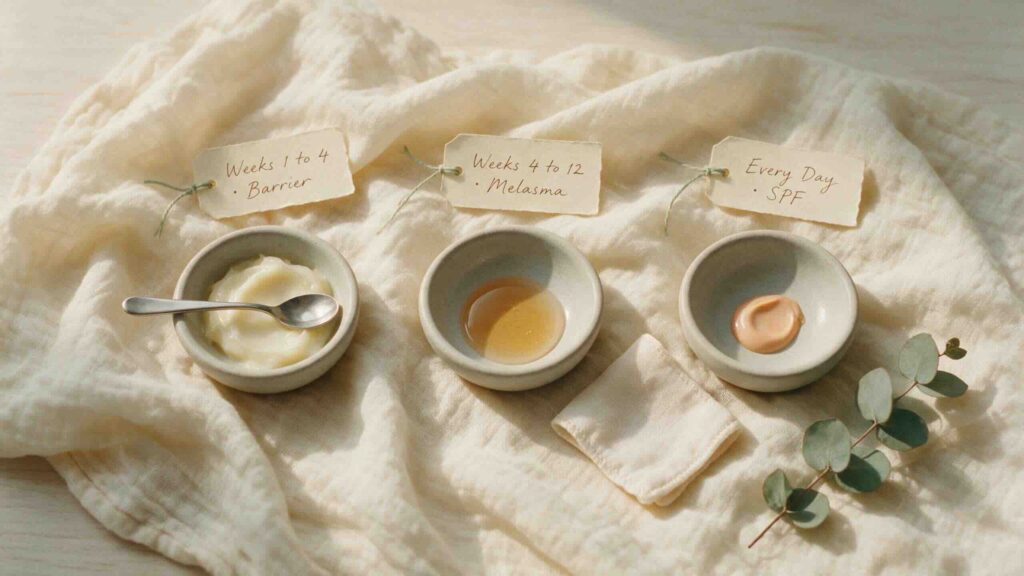
Phase 1: The Gentle Rebuild, Cleansing (Weeks 1 to 4)
The first four weeks postpartum are about protection, not correction. Skin does not need aggressive treatment right now. It needs to be cleaned gently and protected thoroughly. Cleansing is where many women go wrong. They abandon their cleanser out of fear it is causing irritation, or they switch to something “stronger” to fight the new acne. Both are mistakes. The right cleanser during this phase removes makeup, sunscreen, and daily grime without stripping, contains humectants that hydrate while cleansing, is free from essential oils, fragrance, and sensitizing alcohols, and will not disturb a compromised barrier. Start with one of these two.
Phase 1 Cleanser · The Barrier-First Pick
CeraVe Hydrating Cleanser
The default cleanser for any barrier crisis. Contains ceramides (which a postpartum barrier desperately needs), hyaluronic acid for hydration, and a creamy texture that never strips. Fragrance-free and non-comedogenic. Use once daily in the evening. In the morning, rinse with lukewarm water only. Skin is reactive right now; twice-daily cleansing is unnecessary.
View on Amazon →
Phase 1 Cleanser · The Reactive-Skin Alternative
La Roche-Posay Toleriane Hydrating Gentle Cleanser
If skin is extremely reactive, this is the gentlest option. A makeup-removing cleanser that uses prebiotic thermal water to support the microbiome while cleansing. Leaves skin soft, never tight. Ideal if the CeraVe formulation feels too rich or your skin flares from any hint of foaming action.
View on Amazon →
Phase 2: Barrier Repair, The Foundation (Weeks 1 to 8)
A tolerated moisturiser can support comfort and hydration. Do not delay assessment of painful acne or other significant symptoms while waiting for a fixed barrier-repair phase to finish.
Phase 2 Moisturizer · The Ceramide Workhorse
CeraVe Moisturizing Cream (16 oz tub)
An old-school ceramide cream that repairs barrier function. Thicker than a lotion, which is what compromised skin needs right now. Apply to damp skin to lock in hydration. Do not be afraid of how rich it feels; the postpartum barrier needs the density.
View on Amazon →
Phase 2 Moisturizer · The Lighter Alternative
La Roche-Posay Toleriane Double Repair Face Moisturizer
If CeraVe feels too heavy or your skin is sensitive to certain ingredients, this is an excellent alternative. Prebiotic thermal water, ceramides, and niacinamide combine into a lighter formula that still supports the barrier. A good match for oilier postpartum skin types or humid climates.
View on Amazon →
Phase 2 Targeted Balm · The Panthenol Rescue
La Roche-Posay Cicaplast B5 Baume
Once the main routine is established, add this as a targeted treatment over the most irritated or flaky patches. Panthenol (provitamin B5) accelerates barrier repair. Use it on active problem areas at night, layered on top of moisturizer. Safe for use around the nose, mouth, and any nursing-adjacent chest irritation.
View on Amazon →
Comfort and reduced reactivity can help you judge whether basic care suits your skin. They are not guaranteed by week three or four, and worsening symptoms deserve reassessment.
Phase 3a: Targeting Melasma and Dark Spots (Weeks 4 to 12)
If considering a pigmentation treatment while breastfeeding, check the exact ingredient and product with your clinician. Reaching week four postpartum does not establish that alpha arbutin or any other active is appropriate. See certain ingredients work specifically on dark spots.
Phase 3a Melanin Inhibitor · The Gentle Starter
The Ordinary Alpha Arbutin 2% + HA
Alpha arbutin is a gentle, evidence-backed ingredient that suppresses melanin production without irritation. Ideal for postpartum skin because it does not exfoliate. Start with this two to three times per week, then increase frequency as the barrier strengthens. Apply to problem areas after cleansing, before moisturizer.
View on Amazon →
Phase 3a Melanin Inhibitor · The Dual-Duty Pick
The Ordinary Azelaic Acid Suspension 10%
Azelaic acid is underrated for postpartum skin. Gentler than most acids because it is a suspension, not a true chemical exfoliant, and it addresses both melasma and acne. Works by reducing inflammation and suppressing melanin. Start two to three times per week. The grainy texture is normal.
View on Amazon →
Setting realistic expectations. Melasma does not vanish overnight. With consistent use of melanin-suppressing ingredients, gradual lightening over 8 to 12 weeks is a reasonable expectation. The patches will not disappear completely for many women. The goal is to fade them enough that they are not the first feature people notice. And remember: sunscreen is non-negotiable, or melasma will return stronger than before.
Phase 3b: Addressing Postpartum Acne (Weeks 4 to 12)
Once the barrier is stable, acne can be addressed, but with gentleness and strategy. Aggressive acne treatments during postpartum can backfire because skin is still hormone-sensitive and barrier-compromised. The goal is not to kill acne-causing bacteria with force. It is to reduce inflammation, gently regulate sebum, and make skin inhospitable to bacterial overgrowth. The star ingredient at this stage: niacinamide.
Phase 3b Anti-Acne · The Niacinamide Turnaround
The Ordinary Niacinamide 10% + Zinc 1%
Perhaps the most underrated ingredient for postpartum acne. Reduces sebum production without drying, strengthens barrier function, and offers anti-inflammatory properties. The zinc supports bacterial control. Start one to two times per week; it is stronger than the affordable price suggests. This is the product community members most often credit with turning postpartum acne around. More on niacinamide for acne-prone skin.
View on Amazon →
Azelaic acid and niacinamide are not universally incompatible. Whether to combine or alternate products depends on the formulas and tolerance. Painful or cystic acne deserves assessment rather than a promise that cosmetics will clear it by week twelve.
During breastfeeding, ask your clinician about the exact active ingredients you plan to use. Pregnancy and breastfeeding are different situations; a general cosmetic safety label or a postpartum week number does not settle product suitability.
Sunscreen Is Non-Negotiable
If you skip daily sunscreen during postpartum recovery, you are sabotaging your own protocol. UV exposure is the primary trigger for melasma production. The melanocyte-stimulating hormone mentioned earlier is activated by sun exposure. Without broad-spectrum SPF 50, dark patches will get darker and take longer to fade. You would be treating melasma with corrective serums on one side while allowing UV radiation to intensify it on the other.
Do not use deliberate unprotected sun exposure as part of this skincare routine. Keep sun protection consistent and discuss vitamin D concerns with a healthcare professional.
Sunscreen · The Everyday Chemical Pick
Beauty of Joseon Relief Sun SPF50+ PA++++
A lighter, hydrating chemical sunscreen ideal for daily postpartum use. No white cast. Pleasant finish. Does not feel heavy on compromised skin. Reapply every two hours if you are outside with your baby.
Find authorised retailers →
Sunscreen · The Mineral Pick for Reactive Days
La Roche-Posay Anthelios Mineral SPF 50
On days when skin is particularly reactive, a mineral sunscreen is often the better call. Hypoallergenic, fragrance-free, non-comedogenic. Zinc oxide and titanium dioxide sit on top of the skin instead of absorbing, which many barrier-compromised women tolerate better. Slight white cast is the trade-off.
View on Amazon →
How to apply. Use one-quarter teaspoon for your face. Apply after your last serum or treatment, but before or after moisturizer depending on whether the sunscreen is hydrating or lightweight (read the instructions). Let it set for one to two minutes before applying makeup. That prevents pilling.
The Postpartum Routine, Week by Week
After all the explanation, here is what the routine looks like at each phase.
Weeks 1 to 4: The Barrier Reset
Morning (30 seconds): Rinse face with lukewarm water only. Apply moisturizer to damp skin (CeraVe or La Roche-Posay). Apply SPF 50 (Beauty of Joseon or La Roche-Posay Mineral).
Evening (2 minutes): Cleanse with CeraVe Hydrating Cleanser or La Roche-Posay Toleriane. Pat skin dry (do not rub). Apply moisturizer to damp skin. Optional: apply Cicaplast B5 to any extremely red or flaky areas. That is it. Nothing else added right now. The only job is barrier repair.
Weeks 5 to 8: Introducing Actives (Slowly)
Morning: Rinse with water. Moisturizer. SPF 50.
Optional treatment evenings: after checking breastfeeding suitability and product directions, introduce one appropriate product at a time, then moisturise. The week number does not automatically approve alpha arbutin or another active.
Evening, four nights per week (Tue/Thu/Sat/Sun): Cleanse. Pat dry. Apply moisturizer. Optional Cicaplast B5.
Weeks 9 to 12+: Building Your Maintenance Routine
Morning: Rinse with water (or gentle cleanser if you like). Niacinamide one to two times per week (optional but recommended). Moisturizer. SPF 50.
For maintenance, use only treatments that suit your skin and any breastfeeding considerations. More frequent applications or rotating several serums is not automatically better.
Maintenance Moisturizer · The Lighter Nighttime Pick
CeraVe PM Facial Moisturizing Lotion
Lighter than the CeraVe cream but still barrier-supporting. Contains niacinamide, ceramides, and hyaluronic acid. A community favorite as an evening workhorse once skin is past the crisis phase and you want something less occlusive.
View on Amazon →
Understanding Product Layering for Postpartum Skin
If you are adding serums and treatments, order matters. Water-based products go on first, oil-based products go last. But there are postpartum-specific nuances. The simplified postpartum layering order:
- Cleanser.
- Water-based treatment (Niacinamide, Alpha Arbutin, or Azelaic Acid).
- Moisturizer.
- Occlusive or heavy balm if needed (Cicaplast B5).
Do not layer multiple active treatments in one night postpartum. Combining actives on a compromised barrier causes irritation and damage. Rotate them on different nights instead. If your skin type is shifting toward the concerns covered in perimenopause skincare after 40, note that the same barrier-first logic applies at any life stage of hormonal transition.
When to Seek Professional Help
Most postpartum skin issues resolve within three to six months with a consistent, gentle routine. Some situations warrant professional intervention.
Painful, deep or scarring acne is a reason to seek professional care without waiting eight weeks for a cosmetic routine. A clinician can choose treatment with breastfeeding and other individual factors in mind.
Melasma that is not fading. If dark patches are still prominent after three months of consistent sun protection and melanin-suppressing ingredients, professional treatments like laser therapy or stronger chemical peels may help. These should be done by a dermatologist experienced with melasma. DIY approaches can worsen it.
A barrier that will not heal. If weeks of gentle care and ceramide moisturizers do not improve reactivity, you may have contact dermatitis or another underlying condition. A dermatologist can diagnose.
Postpartum depression or severe stress. Mental health affects skin significantly. If you are struggling, address that first. Skin improvements will follow. Your mental health is more important than your skincare routine.
Things Not to Do Postpartum
This is as important as what to do.
There is no universal twelve-week postpartum ban followed by automatic approval for retinoids. Avoid retinoids in pregnancy; discuss postpartum and breastfeeding use with your clinician.
Avoid aggressive exfoliation on irritated skin. Passing twelve weeks postpartum does not automatically make a strong peel appropriate.
Do not switch products constantly. Changing products every week sends skin into a reactive loop. Commit to a routine for at least four to six weeks before deciding it is not working.
Do not stack extra SPF on the melasma patches. More sunscreen on one zone does not equal better results. Consistent, even application does. Cover the whole face with SPF 50.
Do not blame yourself. Postpartum skin changes are not your fault. They are a normal, temporary side effect of massive hormonal shifts. You are not “breaking out,” you are recovering.
The Bottom Line
Postpartum skin recovery is not complicated. It is patient. Your skin is going through one of the most dramatic hormonal shifts of your life, and it needs time to readjust. The three-phase routine outlined here prioritizes what matters most: barrier healing first, then gentle targeting of melasma and acne. It is not sexy. It will not deliver Instagram-worthy results in two weeks. It works.
Skin does recover. Melasma fades (though it may not disappear completely). Acne resolves. Dryness and reactivity improve. By six months postpartum, most women in the community find skin is in better shape than when the crisis hit. The women whose skin recovers well are patient, consistent, and kind to themselves during the transition. They protect the barrier, stick to one routine, and do not sabotage progress with aggressive treatments.
Start with the Phase 1 starter kit: CeraVe Hydrating Cleanser ($16), CeraVe Moisturizing Cream ($16), and Beauty of Joseon Relief Sun SPF50+ ($18). Add Cicaplast B5 ($19) for reactive patches. Under $70 for the entire barrier-repair kit. Give it four weeks before layering in Phase 3 actives.
Sources
Research context: These sources cover ingredients, skin biology or specific tested treatments. Results depend on the formulation, delivery method and population studied. Product selections are editorial curation; these references are not head-to-head tests of the products listed.
- American Academy of Dermatology (2025). Hair loss in new moms: Dermatologist tips. AAD. Read source Postpartum shedding guidance; checked 5 September 2026.
- American Academy of Dermatology (2025). Dermatologist-approved pregnancy skin care. AAD. Read source Pregnancy guidance; discuss product choices during breastfeeding with your clinician. Checked 5 September 2026.
- Ogbechie-Godec OA, Elbuluk N (2017). Melasma: an Up-to-Date Comprehensive Review. Dermatol Ther (Heidelb). PubMed 28726212 Review of melasma causes and treatment limitations.
- Draelos ZD (2018). The science behind skin care: Moisturizers. J Cosmet Dermatol. PubMed 29319217 Moisturiser review; not evidence that all creams perform equally.
- Dréno B, et al. (2013). Adult female acne: a new paradigm. J Eur Acad Dermatol Venereol. PubMed 23302006 Adult female acne review; treatment is individual.
Additional reading: pregnancy-safe skincare, melasma after 30, best dark spot correctors, skin barrier repair, and perimenopause skincare after 40.
Affiliate Disclosure: This post contains affiliate links, which means we may earn a small commission if you make a purchase through these links at no extra cost to you. We only recommend products we've researched and believe offer real value. Our opinions remain our own and are not influenced by any brand or compensation.